


Bollywood Meets Billions: A Playful Punch, a Record Chase, and IPL’s Enduring Commercial Choreography
POLICY WIRE — New Delhi, India — It wasn’t the searing pace of a fast bowler nor the audacious arc of a six that truly defined the spectacle of IPL 2026’s latest installment. No, the...

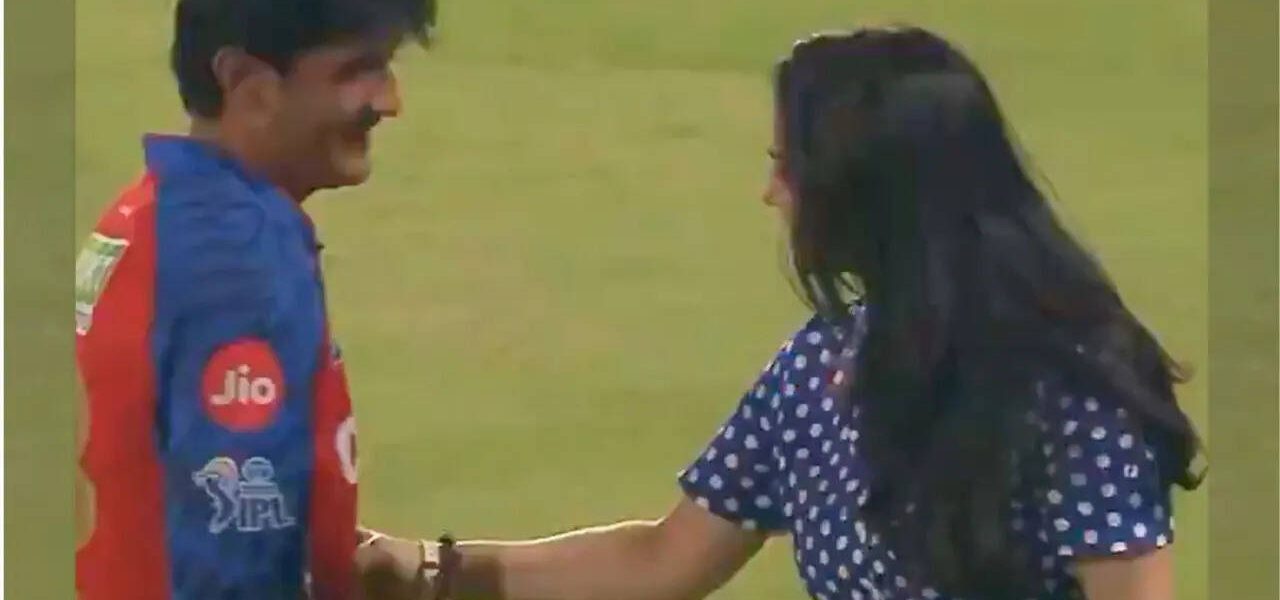
POLICY WIRE — New Delhi, India — It wasn’t the searing pace of a fast bowler nor the audacious arc of a six that truly defined the spectacle of IPL 2026’s latest installment. No, the moment that arguably resonated most deeply across India’s fervent digital landscape—and beyond—was a playfully delivered punch to a young batter’s midsection from a Bollywood starlet turned team co-owner. This isn’t just sport; it’s a meticulously choreographed ballet of celebrity, capitalism, and collective euphoria, and last Saturday’s clash between Punjab Kings and Delhi Capitals offered a masterclass in its intricate movements.
Behind the headlines of Punjab Kings’ utterly astounding, record-breaking chase — a feat of sporting belligerence that saw them overhaul Delhi Capitals’ colossal 264/2 — lay the true genius of the Indian Premier League. Its capacity, you see, isn’t merely to produce world-class cricket. It’s to generate indelible, shareable moments, a tapestry woven from athletic brilliance and unscripted (or perhaps, deftly encouraged) human interaction. Preity Zinta, co-owner of the victorious Punjab franchise, delivered precisely that, punctuating a historic victory with a lighthearted jab at batter Priyansh Arya, his surprised grin instantly immortalised across social media feeds.
And what a chase it was. Delhi Capitals, riding on Captain KL Rahul’s blistering 152 not out off a mere 67 balls—a knock punctuated by boundaries that seemed to defy geometry—and Nitish Rana’s fluent 91, had posted a truly intimidating 264/2. Few would’ve wagered against them. But Punjab Kings, with an almost insolent disregard for the scoreboard, commenced their pursuit. Openers Prabhsimran Singh and Arya launched an assault that amassed 126 runs in just 6.5 overs; they didn’t just shift momentum, they detonated it. Captain Shreyas Iyer then shepherded the innings with a composed 71 not out, ensuring Punjab reached their target with seven balls to spare, etching their names into the IPL annals with the highest successful chase ever.
But back to the punch. It’s a seemingly trivial anecdote, a fleeting interaction, yet it embodies the very essence of the IPL’s commercial prowess. This isn’t just about cricket; it’s about personality, brand, — and the carefully cultivated illusion of access. “This isn’t just about winning; it’s about building a connection, a narrative. Our fans crave authenticity—even if it’s delivered with a bit of a theatrical flourish, don’t they?” Zinta reportedly quipped later, embodying the league’s dual identity. It’s a genius stroke, blending the raw emotion of sport with the polished veneer of celebrity. The cameras caught it, the internet devoured it, and the IPL’s brand—already gargantuan—grew a little larger.
Still, the stakes are undeniably high. According to a 2023 report by Duff & Phelps (now Kroll), the Indian Premier League’s brand value soared to an estimated $10.9 billion, cementing its status as a behemoth in global sports entertainment. This isn’t merely a testament to the quality of cricket, but to the meticulous crafting of an ecosystem where every boundary, every wicket, and every viral moment is a currency. The league functions as a relentless economic engine, churning out superstars and storylines with equal efficiency.
Dr. Rohan Gupta, an independent sports economist based in Mumbai, articulated this phenomenon with characteristic precision. “The IPL has become a masterclass in monetising collective euphoria,” he observed. “Every interaction, every triumph, even every seemingly spontaneous gesture, reinforces its unparalleled market dominance in the subcontinent. It’s a cultural phenomenon that has consecrated India’s economic ascendancy in a region long dominated by other narratives.” Indeed, the IPL isn’t just a sporting league for India; it’s a significant projection of soft power across South Asia and among the vast Muslim diaspora, where its viewership figures are astronomical.
📄 POLICY WIRE WHITEPAPER PUBLISHED: PAKISTAN'S NATIONAL SECURITY POLICY PRIORITIES
👉 READ BY CLICKING HEREThe league has become the undisputed hegemon of regional sporting entertainment, often eclipsing national teams’ sagas in terms of sheer commercial wattage and fan engagement. It’s a vivid illustration of how a well-packaged product, blending local passion with global star power, can transcend mere sporting ambition to become a profound economic and cultural force, reshaping the very contours of leisure and aspiration across a continent. And yes, sometimes, all it takes is a playful punch to remind everyone of the dazzling showmanship behind the numbers.
What This Means
At its core, this seemingly trivial incident of a celebrity co-owner engaging playfully with a player—amplified by the league’s official channels and devoured by social media—underscores the intricate commercial tapestry underpinning modern sports, particularly in a market as immense as South Asia. It’s a deliberate blurring of lines between athletic achievement and entertainment, where the ‘human element’ (however orchestrated) is as valuable a commodity as runs scored or wickets taken. For the IPL, this isn’t a distraction from the game; it’s an intrinsic part of the brand, a continuous feedback loop that ensures constant engagement even when the ball isn’t in play. This fusion has broader implications for how major sporting leagues manage their public image — and economic trajectory. Like the frenetic economy of European football, IPL’s sustained growth relies on spectacle as much as skill.
Politically, the IPL continues to be an unparalleled instrument of Indian soft power. Its reach across South Asia, particularly in nations like Bangladesh and Afghanistan, and among the South Asian diaspora globally, is immense. It fosters a sense of shared cultural consumption, subtly asserting India’s cultural and economic leadership in the region. This isn’t to say it’s without friction; the absence of Pakistani players, for instance, remains a point of contention and a reminder of persistent geopolitical fault lines. Economically, the league is a job creator and a massive advertising platform, driving significant revenue not just for the teams and players, but for ancillary industries ranging from media production to hospitality. It’s a potent symbol of India’s ascent, showcasing its ability to host, manage, and monetise a global-calibre sporting event on an unprecedented scale.