


The Dynasty’s Relentless Hunger: Chiefs Bolster Backfield in Perpetual Pursuit of Gridiron Hegemony
POLICY WIRE — Kansas City, USA — In the cutthroat calculus of professional sports, where multi-billion dollar franchises are built on the fleeting brilliance of young men, the NFL Draft unfurls...

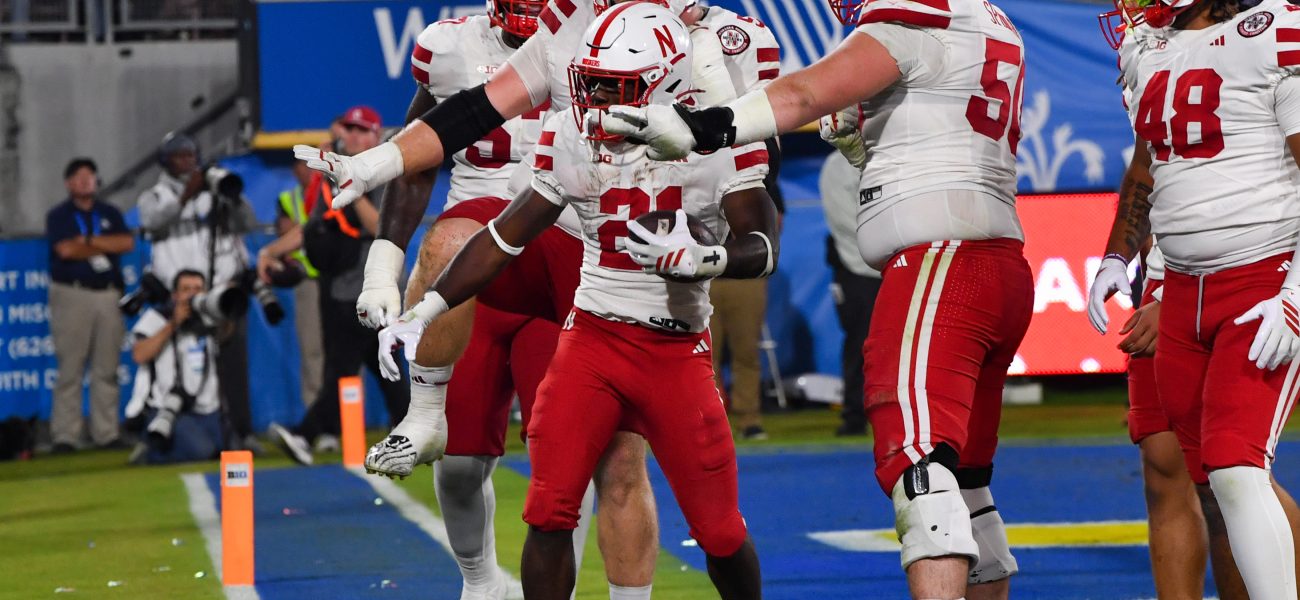
POLICY WIRE — Kansas City, USA — In the cutthroat calculus of professional sports, where multi-billion dollar franchises are built on the fleeting brilliance of young men, the NFL Draft unfurls annually as both a spectacle and a profoundly consequential economic transaction. It’s a day when livelihoods pivot, dreams materialize, and—for a select few—the gilded gates of an athletic dynasty swing open. Such was the case for Emmett Johnson, a running back from Nebraska, whose life course veered sharply when the Kansas City Chiefs, those perennial Super Bowl contenders, called his name as the 161st pick overall in the fifth round.
It wasn’t a first-round splash, nor a prime-time coronation. But for Johnson, it was an invitation to the league’s most exclusive club. His selection wasn’t merely about adding a body to the roster; it represented a cold, deliberate move by an organization ruthlessly committed to maintaining its chokehold on the AFC West—and, indeed, the entire league. This isn’t just about football; it’s about strategic asset acquisition, a perpetual reinvestment in a winning formula that’s become the envy of every other franchise. They’re not just picking players; they’re calibrating their competitive advantage.
And what an advantage it’s. The Chiefs, under General Manager Brett Veach, have become masters of finding value where others see only mid-round prospects. “We’re always looking for players who fit our culture, our system, and who possess that intangible drive,” Veach shot back during a post-draft press conference, sidestepping specifics but emphasizing a broader philosophy. “Emmett brings a versatile skillset, and we believe he’ll thrive in our competitive environment.” It’s a boilerplate statement, yes, but it underscores a deep institutional belief in their talent evaluation process.
Johnson’s arrival comes amidst a subtle, yet significant, reshuffling in the Chiefs’ backfield. Long-time fan favorite Isiah Pacheco, a thunderous presence, apparently inked a one-year deal with the Detroit Lions last week—a move that certainly raised an eyebrow or two in Chiefs Kingdom. This departure leaves Kenneth Walker III and Emari Demercado as the top two backs, with Johnson immediately slotted into the RB3 position on the depth chart. It’s a clear signal: the Chiefs see him as a rotational piece, a potential workhorse, or at the very least, a significant upgrade to their backfield depth. Don’t underestimate the impact of such decisions on team chemistry, either; every new face shifts the internal dynamic.
Still, the stakes are undeniably high for Johnson. He’s the first running back from Nebraska to be drafted since Ameer Abdullah in 2015—a span that feels like an epoch in the fast-paced world of collegiate athletics. As a Doak Walker Award — and Maxwell Award semifinalist in 2025, Johnson’s college accolades are formidable. He notably ranked second nationally with 1,821 yards from scrimmage, averaging an impressive 5.8 yards per carry, according to NCAA statistics. Those are not negligible numbers; they scream production. Yet, the leap to the professional ranks is a chasm, not a step, — and past collegiate glories offer no guarantees.
Behind the headlines and the draft-day jubilation, there’s a fascinating global dimension to this American sporting obsession. While millions in the U.S. meticulously track every pick, dissecting player profiles and team needs, vast swathes of the world, particularly in South Asia and the broader Muslim world, remain largely unconcerned with the gridiron’s intricacies. Their own national passions—cricket, football (soccer), kabaddi—dominate local airwaves and ignite fervent loyalties. The relentless pursuit of athletic perfection and billion-dollar entertainment, epitomized by the NFL, sometimes feels like an insular phenomenon when viewed through a global lens. Yet, the universal themes of aspiration, economic mobility, — and the brutal meritocracy of talent resonate everywhere. A young man’s chance to lift his family out of obscurity through physical prowess isn’t unique to Nebraska; it’s a narrative that echoes from Lahore to Liverpool.
📄 POLICY WIRE WHITEPAPER PUBLISHED: PAKISTAN'S NATIONAL SECURITY POLICY PRIORITIES
👉 READ BY CLICKING HERE“The NFL draft is a micro-economy of talent, operating on a macro stage,” observed Dr. Zara Ali, a sports economist and cultural commentator, whose analysis frequently touches on the global perception of Western sports. “For Johnson, it’s not just a job; it’s a portal to generational wealth — and a platform to inspire. That narrative, the triumph of individual ambition, crosses borders, even if the specific sport doesn’t.” It’s a compelling point, isn’t it? The dream of ‘making it’ isn’t confined to any single culture or continent.
The Chiefs’ ongoing success, frequently attributed to the Mahomes-Kelsey tandem and (much to the chagrin of rival fans) a seeming proclivity for advantageous officiating, creates a unique environment for any rookie. It’s a pressure cooker, yes, but also a crucible where champions are forged. Johnson isn’t heading to a floundering franchise—he’s joining an impeccably managed operation, a well-oiled machine that doesn’t just win; it dominates. That’s got to be a relief for him (and his agent), especially considering the historical graveyard of talent in teams like Cleveland, Carolina, or that perennially bleak Denver outfit. The familiar gamble of the NFL draft always comes with a dose of existential dread for many.
What This Means
Johnson’s selection isn’t just another name on a roster; it’s a strategic underpinning of the Chiefs’ sustained dominance. His role as RB3 immediately suggests a commitment to a committee approach in the backfield, vital for player longevity and versatility against diverse defensive schemes. Economically, this fifth-round pick represents a high-value acquisition for Kansas City, securing a proven collegiate producer at a relatively modest salary—a testament to efficient resource allocation in a league where salary caps reign supreme. For Johnson, it’s a career trajectory redefined. He steps into a winning culture, which, while demanding, often provides a clearer path to success and exposure than struggling franchises. This move underscores the ruthless efficiency of modern NFL front offices, constantly cycling through talent, never resting on past laurels. They’re always, always looking for that next edge, aren’t they? It’s a relentless, almost predatory, pursuit of excellence that defines the modern sports empire.