
West Bank’s Quiet Ballot Boxes: A Local Reckoning Amidst a Regional Conflagration
POLICY WIRE — Ramallah, Palestinian Territories — While much of the world’s gaze remains fixed on the apocalyptic humanitarian crisis unfolding in Gaza, a far quieter, though no less poignant,...

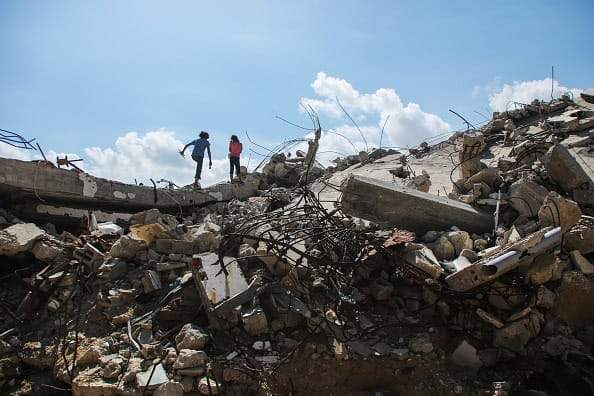
POLICY WIRE — Ramallah, Palestinian Territories — While much of the world’s gaze remains fixed on the apocalyptic humanitarian crisis unfolding in Gaza, a far quieter, though no less poignant, democratic ritual recently transpired in parts of the West Bank. Not a referendum on statehood, nor a defiant roar against occupation, but the prosaic business of electing local councils—a stark, almost surreal juxtaposition of priorities. It’s an electoral exercise that, at its core, asks residents to ponder potholes and school budgets when the very foundations of their national identity seem to be crumbling.
These weren’t national elections, mind you, nor were they comprehensive. Hamas, the de facto authority in Gaza, boycotted the polls, as they’ve consistently done, leaving many key areas uncontested. Still, in municipalities across the West Bank, Palestinians navigated polling stations, a familiar gesture of civic participation that felt profoundly alien given the larger, more existential battles raging just miles away. One couldn’t help but observe the peculiar theatre of it all—voters meticulously marking ballots for sewage systems and streetlights, while news feeds blared of aerial bombardments and mass displacement. It’s a testament, perhaps, to humanity’s stubborn insistence on some semblance of normalcy, even when normalcy itself has become an endangered species.
And what did they vote for? For local administrators who, theoretically, would enhance the quality of life within their limited spheres of influence. The fact that such elections even occurred, however fragmented, speaks volumes about the Palestinian Authority’s (PA) persistent, if increasingly tenuous, commitment to institutional mechanisms. For Fatah, the dominant party within the PA, these polls served as a crucial, albeit constrained, legitimizing act. They’re clinging to what little governance they can exert, hoping to demonstrate functional capacity even as their broader political project faces unprecedented challenges.
Dr. Fadi Hassan, spokesperson for the Palestinian Central Elections Commission, didn’t mince words about the circumstances. “Holding these polls, however constrained, underscores our unwavering dedication to self-governance,” he opined to Policy Wire. “It’s about ensuring communities can elect those who’ll pave their roads and manage their schools, even as existential battles rage elsewhere.” His tone, though measured, betrayed a certain weariness—a bureaucrat trying to uphold process amidst chaos.
But not everyone shared such a sanguine view. Dr. Leila Hamdan, a political sociologist at Birzeit University, shot back with a more acerbic assessment. “To pretend these local skirmishes for municipal seats address the profound despair felt across Palestine is a tragic farce,” she stated bluntly. “People want freedom, not just better garbage collection. The symbolism is utterly lost on a populace scarred by war and occupation.” Her sentiment resonates with a significant portion of the Palestinian street, who often view the PA’s activities as largely irrelevant to their core struggle.
The voter turnout in these limited West Bank elections hovered around 50% according to the CEC, a figure that’s respectable enough for local polls in more stable environments, but arguably fraught with deeper meaning here. It reflects a populace deeply fractured: some clinging to the familiar, others disengaged by despair, and still others perhaps deliberately abstaining in protest. This internal fragmentation echoes broadly across the Muslim world, where the Palestinian cause remains a potent, unifying, yet often frustratingly intractable issue. Nations like Pakistan, for instance, frequently express fervent solidarity, yet their own internal political and economic struggles often parallel, in miniature, the challenges of governance amidst grander geopolitical narratives.
📄 POLICY WIRE WHITEPAPER PUBLISHED: PAKISTAN'S NATIONAL SECURITY POLICY PRIORITIES
👉 READ BY CLICKING HEREStill, for the residents of these West Bank municipalities—the ones lucky enough to participate—the elections were a tangible, if temporary, diversion from the grinding reality of conflict. They’ve decided on who manages their local water supply, their sewage, their municipal budgets. These aren’t minor concerns for daily life, but they can feel painfully inconsequential when weighed against the scale of death and destruction in neighboring territories.
What This Means
This localized electoral exercise, however modest, carries significant implications. Politically, it signals the PA’s dogged determination to maintain some semblance of administrative control and legitimacy in the West Bank, even as its authority erodes under Israeli pressure and internal dissent. For Fatah, winning these local races provides a minimal, yet vital, shot of political oxygen, proving they can still mobilize and govern, albeit within a severely constricted framework. Economically, elected councils, if empowered, could marginally improve local service delivery, which—however small a comfort—can mitigate daily hardships. Don’t underestimate the psychological impact of functioning local institutions, however imperfect. Yet, the persistent absence of Hamas and the limited geographical scope underscore the profound governance chasm within the Palestinian territories. It’s a stark reminder that true national unity and a cohesive political strategy remain elusive, a tragic backdrop against which even basic municipal functions become fraught with symbolism. It won’t bring peace, it won’t end the occupation, but it might, just might, ensure fewer potholes for a while.
Behind the headlines of war, these quiet ballots offer a glimpse into the complicated, often contradictory, pulse of Palestinian life. It’s a struggle for survival, yes, but also a quiet, defiant effort to maintain civil society’s frail architecture, one local council at a time. It’s a perennial charade, really, where the pursuit of local order plays out against the backdrop of a perpetually deferred national destiny.