


Emerging Constellation: A New Middle East Bids for Self-Determination
POLICY WIRE — Washington D.C. — The specter of a bygone geopolitical order, long assumed dormant by Western strategists, has begun to stir. Not with a belligerent roar, but with the calculated...

POLICY WIRE — Washington D.C. — The specter of a bygone geopolitical order, long assumed dormant by Western strategists, has begun to stir. Not with a belligerent roar, but with the calculated murmurs of a new consortium of regional actors – nations quietly, yet pointedly, asserting their own agency in a landscape perpetually defined by external interventions. It’s a subtle but consequential shift, one that aims to redraw the very lines of influence in an already fractious Middle East.
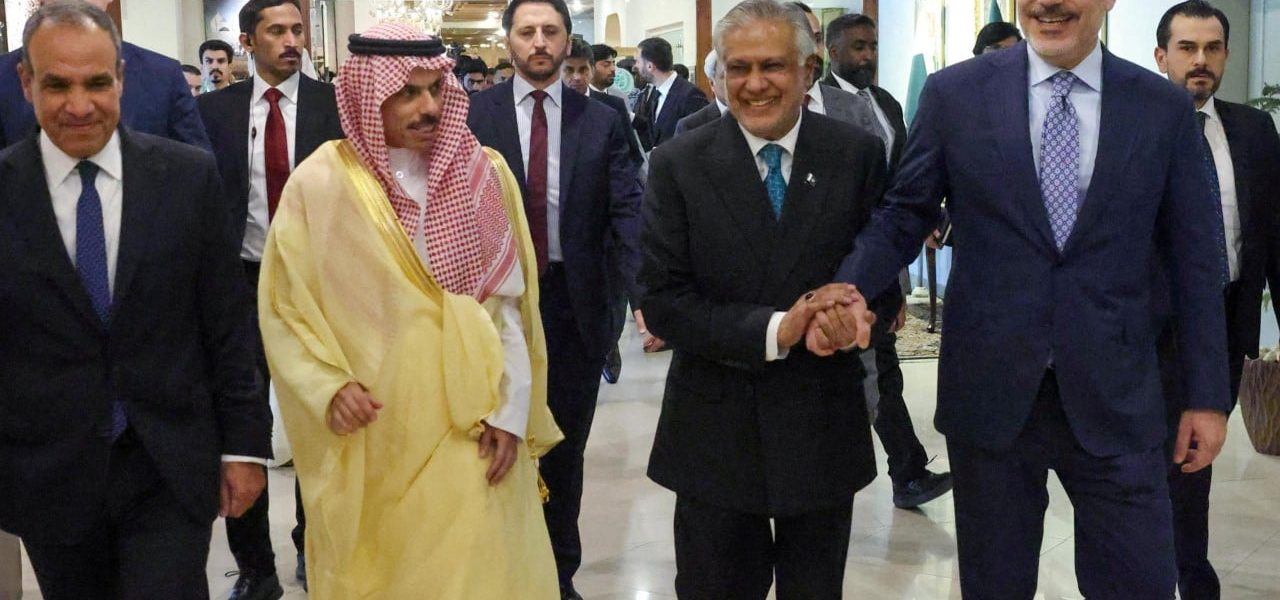
Behind the headlines of ongoing conflicts — and diplomatic impasses, a loose, yet potent, alignment is taking shape. Led primarily by Ankara and Riyadh, this burgeoning bloc stretches far beyond the conventional confines of the Arabian Peninsula, encompassing Cairo and extending eastward to Islamabad. These aren’t historical bedfellows, not always, but their shared conviction is clear: the region’s destiny shouldn’t be a unilateral decree from Washington, or Tehran for that matter. It’s a direct challenge to the entrenched post-war architecture, a quiet insurgency against established power brokers.
At its core, this realignment isn’t merely about shared religious identity – though that’s an undeniable undercurrent – but pragmatic imperatives. Economic diversification, security against both internal and external threats, and a collective yearning for greater strategic autonomy drive this confederation. They’re wary, you see, of becoming pawns in a larger geopolitical chess match. For decades, the narrative was often dictated by a binary choice between American and Iranian influence. Now, a third way, perhaps a multitude of ways, is being charted.
Consider Turkey, a NATO member grappling with its own distinct identity, often charting a course that ruffles feathers in European capitals. And then there’s Saudi Arabia, once a staunch pillar of American Mideast policy, now vigorously pursuing its Vision 2030, a blueprint for economic transformation demanding stability and diverse partnerships. Egypt, a historical heavyweight in the Arab world, seeks renewed regional gravitas, while Pakistan, a nuclear-armed Muslim-majority state with a sprawling population exceeding 240 million, anchors the eastern flank of this ambitious alignment, providing strategic depth and a unique perspective on South Asian security.
These nations, diverse in their internal politics and historical grievances, are finding common ground in pushing back against what they perceive as an outdated framework. They’re not necessarily forming a formal military alliance – that would be far too simplistic – but rather an intricate web of economic agreements, intelligence sharing, and coordinated diplomatic endeavors. “This isn’t about replacing one hegemony with another; it’s about building a future where our region’s destiny is determined by its own people, free from external diktats,” offered Hakan Fidan, Turkey’s Foreign Minister, during a recent Ankara briefing, his tone measured but firm. “We’re not asking for permission to prosper.”
Still, the path is fraught with complexities. Historical rivalries, differing national interests, and the sheer scale of the challenges (economic stagnation in some areas, persistent radicalism in others) mean this unity is more an aspiration than a fully formed reality. But the intent is palpable. “Stability in our neighborhood demands a unified approach, an economic renaissance, and a robust defense against those who seek to destabilize it, whether from within or without,” remarked Prince Faisal bin Farhan Al Saud, Saudi Arabia’s Minister of Foreign Affairs, in a rare public statement recently. He wasn’t just talking about Iran; he was articulating a broader vision of regional self-reliance.
📄 POLICY WIRE WHITEPAPER PUBLISHED: PAKISTAN'S NATIONAL SECURITY POLICY PRIORITIES
👉 READ BY CLICKING HEREThe numbers don’t lie. According to the World Bank, the combined Gross Domestic Product of Turkey, Saudi Arabia, Egypt, and Pakistan exceeded $2.6 trillion in 2023, representing a significant economic heft that, if effectively leveraged, could reshape global trade routes and investment flows. This collective economic muscle is a powerful incentive for cooperation, even among states that have, at times, found themselves at odds.
What This Means
This nascent grouping represents a profound recalibration of power dynamics in the Middle East — and beyond. Politically, it signals a further erosion of the post-Cold War unipolar moment, suggesting that the United States’ long-standing role as the region’s indispensable arbiter is being actively contested, not just by adversaries, but by erstwhile partners. It creates a more multipolar landscape, one where regional blocs wield greater influence and demand a louder voice on the global stage. For Washington, it means a more complex diplomatic tightrope walk, requiring nuance and an understanding that old alliances mightn’t translate into unquestioning loyalty.
Economically, this constellation could lead to diversified trade routes and investment opportunities, potentially reducing reliance on traditional Western partners. Imagine, for a moment, a unified infrastructure push spanning from the Levant to South Asia, facilitating trade and cultural exchange – it’s a powerful, if challenging, prospect. It also presents a challenge to established institutions, as these nations seek to exert influence in forums like the Organization of Islamic Cooperation (OIC) or even in broader global bodies. The internal rivalries, however, shouldn’t be underestimated. Egypt’s traditional leadership ambitions in the Arab world, coupled with Saudi Arabia’s burgeoning economic power and Turkey’s neo-Ottoman aspirations, mean that this grand vision of unity will always be tempered by individual national interests. It’s a delicate dance, but one that’s undeniably underway, shifting the very tectonic plates of international relations in its wake.