


Beyond Tehran’s Shadow: A New Axis Rises in the Middle East
POLICY WIRE — Istanbul, Turkey — The world’s long gazed upon the Middle East through a myopic aperture of superpower rivalry and entrenched regional feuds — a labyrinth of historical grievances...

POLICY WIRE — Istanbul, Turkey — The world’s long gazed upon the Middle East through a myopic aperture of superpower rivalry and entrenched regional feuds — a labyrinth of historical grievances and modern power plays, endlessly fascinating yet tragically opaque — often oblivious to the tectonic plates shifting beneath the surface.
But amidst the hypothetical fallout of any major regional conflict, a far more intricate tapestry of power’s being woven, stitching together nations once seen as disparate players into a formidable new constellation. It’s a seismic shift, isn’t it?
For years, the narrative stubbornly pushed a bipolar struggle: the Western-backed order versus an assertive Iran. Now, that framework looks increasingly antediluvian, giving way to a multi-polar reality driven by a shared ambition for strategic autonomy. The old edifice, it seems, is crumbling.
And yet, few foretold the precise alignment now taking shape, linking powerhouses from the Levant to the subcontinent in an increasingly cohesive, if still fledgling, bloc.
Redrawing the Map – Or, You Know, Just Shredding the Old One
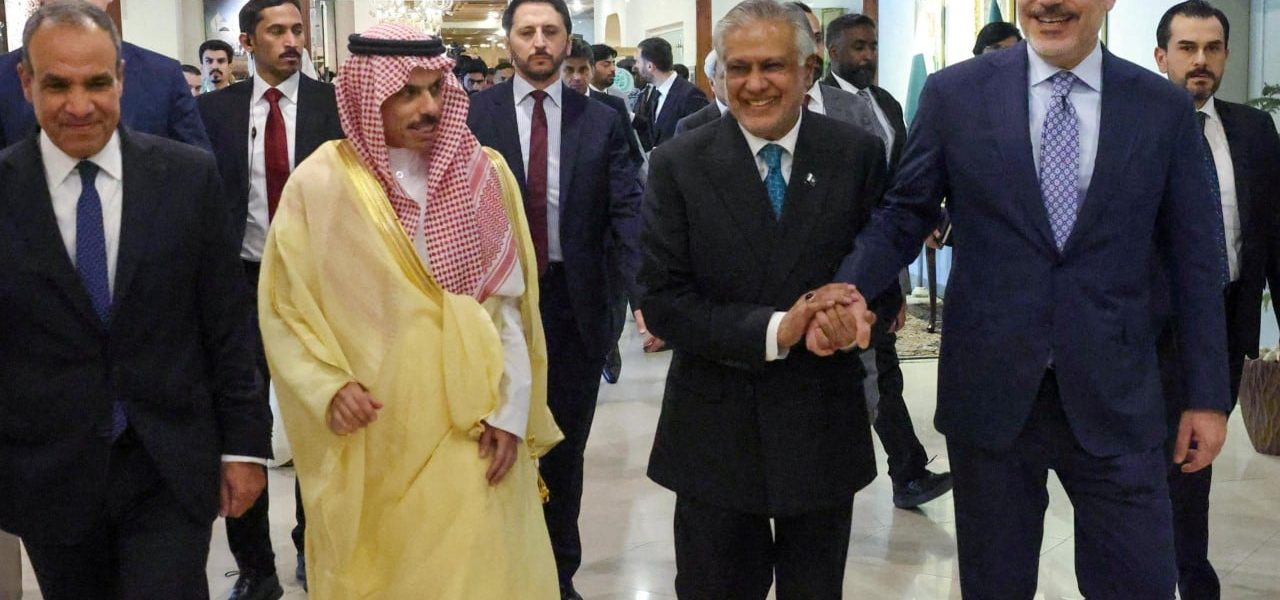
This isn’t merely an economic pact or a temporary military alliance. Instead, it appears to be a deeply considered geopolitical upheaval, orchestrated by Turkey and Saudi Arabia — a colossal game of 3D chess, if you will — enlisting nations like Egypt and, crucially, Pakistan.
Their collective ambition? To sculpt a post-conflict regional order that isn’t dictated by Washington, Tel Aviv, or even the revolutionary fervor of Tehran.
Just peek at the recent pronouncements from Riyadh.
“Our vision for the region isn’t about exclusive alliances, but about building bridges of prosperity and stability,” Crown Prince Mohammed bin Salman declared in a recent address to the Future Investment Initiative. “The era of external powers dictating our future is drawing to a close; we’re charting our own course, hand-in-hand with partners who share that commitment.”
That’s a significant shift from decades of deference. One almost wonders what took ’em so long.
The grouping extends beyond the traditional Arab heartland, reaching into South Asia, where Pakistan plays an undeniably pivotal role (and don’t you forget it). Its strategic location, robust military capabilities, and deep historical and religious ties to both the Gulf and Turkey provide a unique anchor.
Pakistan’s participation lends the alliance a geographical breadth and demographic heft that few other regional groupings can claim (a truly rare beast, this), potentially linking energy corridors, trade routes, and defense doctrines.
📄 POLICY WIRE WHITEPAPER PUBLISHED: PAKISTAN'S NATIONAL SECURITY POLICY PRIORITIES
👉 READ BY CLICKING HEREIndeed, the collective population of these four nations alone — Turkey, Saudi Arabia, Egypt, and Pakistan — stands at over 470 million people, according to recent World Bank estimates, representing a colossal market and a vast human resource pool.
This immense demographic and economic potential isn’t lost on leaders like Turkish President Recep Tayyip Erdoğan — a figure known for his grand pronouncements and strategic foresight, whose vision often stretches far beyond immediate horizons — seeing not just numbers, but nations primed for a collective rise.
“The Muslim world, stretching from Anatolia to the subcontinent, holds immense potential,” President Erdoğan thundered at a recent Organization of Islamic Cooperation summit. “We must not merely react to events but actively shape a new global equilibrium, one that reflects our collective strength and shared aspirations for justice and development.”
His words? They carry weight. Immense weight, actually. Resonating deeply across a diverse, interconnected Muslim world.
What This Means
So, the emergence of this new axis unleashes seismic ramifications across diplomatic, economic, — and security spheres. Politically, it signals a forceful assertion of regional autonomy, aiming to stifle the sway of external powers and forge a more multi-polar international system.
Economically, closer collaboration among these states could unlock massive trade opportunities, cultivate joint infrastructure projects, and create new supply chains less dependent on traditional global hubs. We’re talking about a potential reshaping of global commerce. Huge, really.
Diplomatically, it presents both opportunities — and challenges for established alliances. How’s the United States, Europe, and even China going to grapple with a bloc committed to self-determination and potentially recalibrating global power balances? That’s the question exercising minds in chancelleries worldwide.
Still, the road ahead isn’t without its quagmire. Divergent national interests, historical rivalries, and the sheer complexity of coordinating policies across such a vast geographic and cultural expanse will test its cohesion. Can they maintain a united front against external pressures — and internal disagreements? They’ve certainly got their work cut out for them.
Yet, the momentum seems undeniable. Dr. Fatima Zahra, a senior fellow at the Atlantic Council, observed, “This alignment isn’t merely transactional; it represents a profound strategic pivot, driven by a shared desire for autonomy and regional influence. The real test will be maintaining cohesion amidst differing national interests when external pressures inevitably mount.” The math’s stark. Ignore this bloc? At your peril.