

Deep Ocean’s Gilded Secret: Alaskan ‘Golden Orb’ Unlocks New Marine Mysteries
POLICY WIRE — Juneau, Alaska — For more than two years, it sat in cold storage, a gleaming anomaly wrenched from the inky blackness of the Gulf of Alaska. Researchers at the National Oceanic and...

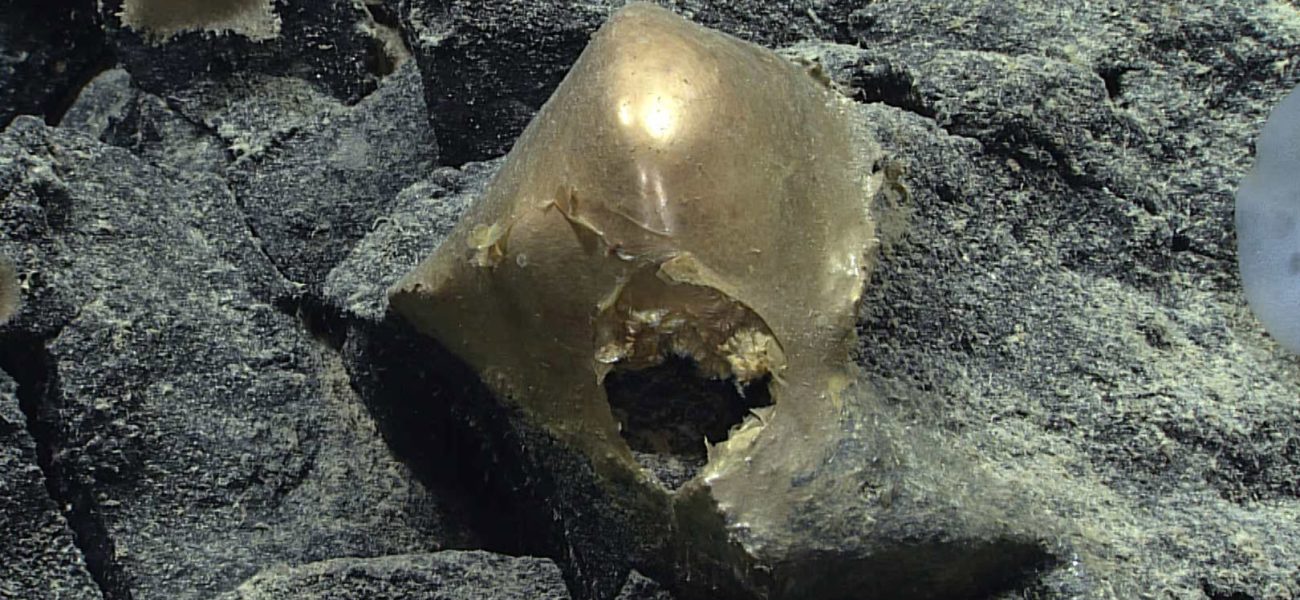
POLICY WIRE — Juneau, Alaska — For more than two years, it sat in cold storage, a gleaming anomaly wrenched from the inky blackness of the Gulf of Alaska. Researchers at the National Oceanic and Atmospheric Administration (NOAA) initially dubbed it the “golden orb,” a mysterious, metallic-looking sphere that ignited as much intrigue as it did scientific head-scratching.
But the enigma has finally yielded its secrets. Scientists now reckon this perplexing specimen isn’t some alien artifact or forgotten deep-sea probe, but rather a remarkably well-preserved egg casing, likely belonging to an entirely new species of deep-sea creature. They’ve tentatively christened it Chryseus ovum, Latin for ‘golden egg.’ Imagine that.
Finding an egg structure this unique, this resilient, in such an extreme environment — it’s a truly pivotal shift in our understanding of abyssal ecosystems. And it utterly upends assumptions about life’s tenacity. A marvel, really.
Picture the initial discovery: a remotely operated vehicle, or ROV, exploring a previously uncharted seamount at depths exceeding 2,000 meters, stumbled upon the shimmering object—it was like finding a gilded treasure chest at the bottom of the world, just sitting there—its smooth, golden surface, punctuated by a small tear, hinted at an organic origin, yet its composition appeared almost metallic.
“This isn’t just another deep-sea find; it’s a Rosetta Stone for extremophiles,” posited Dr. Anya Sharma, a lead marine biologist at the Scripps Institution of Oceanography, whose team spearheaded the two-year identification effort. She elucidated, “The sheer resilience implied by this casing’s survival, combined with its unique bio-mineralization, suggests life forms adapting in ways we’re only beginning to grasp.”
Researchers posit that the ‘golden’ sheen comes from a high concentration of mineral deposits, possibly iron oxides, incorporated into its organic structure over millennia. This process, they say (and who are we to argue?), would’ve provided exceptional protection against the crushing pressures and corrosive waters of the deep. What a design!
When you consider that less than 20% of the world’s oceans have been mapped to high resolution, according to NOAA data, every new discovery feels like charting a new world. What other secrets lie hidden? (One just hopes we’re funding the right tools to find out, instead of, you know, just guessing.)
This biological marvel, however, quickly transcended mere scientific curiosity. It spurred discussions about the broader implications of deep-sea exploration, especially for nations striving to understand and manage their own maritime territories—a particularly thorny issue, it turns out, when you don’t even know what’s down there.
For a country like Pakistan, with its extensive coastline along the Arabian Sea, investment in deep-sea research isn’t just about academic pursuits; it’s about national security and its economic future. Its burgeoning ‘Blue Economy’ initiative, focused on sustainable marine resource development, hinges heavily on deciphering these hidden depths. Similar technologies and scientific prowess are crucial for mapping, monitoring, and potentially discovering new resources or life forms in its own strategic waters. They’ve got a lot riding on this.
📄 POLICY WIRE WHITEPAPER PUBLISHED: PAKISTAN'S NATIONAL SECURITY POLICY PRIORITIES
👉 READ BY CLICKING HEREBut still, funding remains a perennial challenge. “We can’t expect our scientists to unlock the ocean’s mysteries on shoestring budgets,” contended Senator Maria Rodriguez (D-CA), who chairs the Senate Appropriations Subcommittee on Commerce, Justice, Science, and Related Agencies. “Investing in deep-sea exploration isn’t a luxury; it’s an imperative for our planet’s health, our national interests, and for inspiring the next generation of innovators.” She’s not wrong.
What This Means
The identification of the ‘golden orb’ reshapes several scientific paradigms. Firstly, it unfurls unprecedented insights into deep-sea reproduction — and evolutionary biology. Understanding how this unknown creature developed such a robust egg casing could lead to breakthroughs in biomaterials or even astrobiology, considering the extreme conditions it endured. What other adaptations have developed in isolation? And how many more are waiting?
Secondly, the geopolitical undercurrents are undeniable. Deep-sea exploration capabilities, often involving advanced ROVs and autonomous underwater vehicles (AUVs), aren’t solely for scientific discovery. They hold significant strategic value, used for mapping critical seabed infrastructure, surveillance, and potential resource identification. It’s a high-stakes game down there, believe it or not.
And China, for instance, has dramatically ramped up its deep-sea research and exploration, leading to a subtle but undeniable competition in the global maritime domain. This discovery, while purely scientific, highlights the importance of maintaining technological superiority in these largely unpatrolled depths—a veritable wild west of the ocean floor, if you will.
Related: Silent Sentinel: Chinese Undersea Drone Sparks Alarm in Asia’s Strategic Corridors
So, economically, the potential for bioprospecting new pharmaceuticals or enzymes from extremophile organisms like the one that laid the Chryseus ovum is truly prodigious. It’s a gold rush of a different kind, one that promises untold biotech advancements, a veritable treasure trove for human innovation, if we’re clever enough to find it.
Ultimately, the “golden orb” serves as a powerful reminder: humanity has explored more of the moon’s surface than its own ocean floor. Dr. Kenji Tanaka, a deep-sea policy analyst at the Woods Hole Oceanographic Institution, unwaveringly contends this revelation should be a catalyst. “This isn’t the end of the mystery; it’s just the beginning of a new chapter in ocean exploration,” he concluded. “Expect more international collaboration, and a renewed global push to fund the tools and talent necessary to understand our planet’s final frontier.” Let’s just hope they actually do it, you know?