


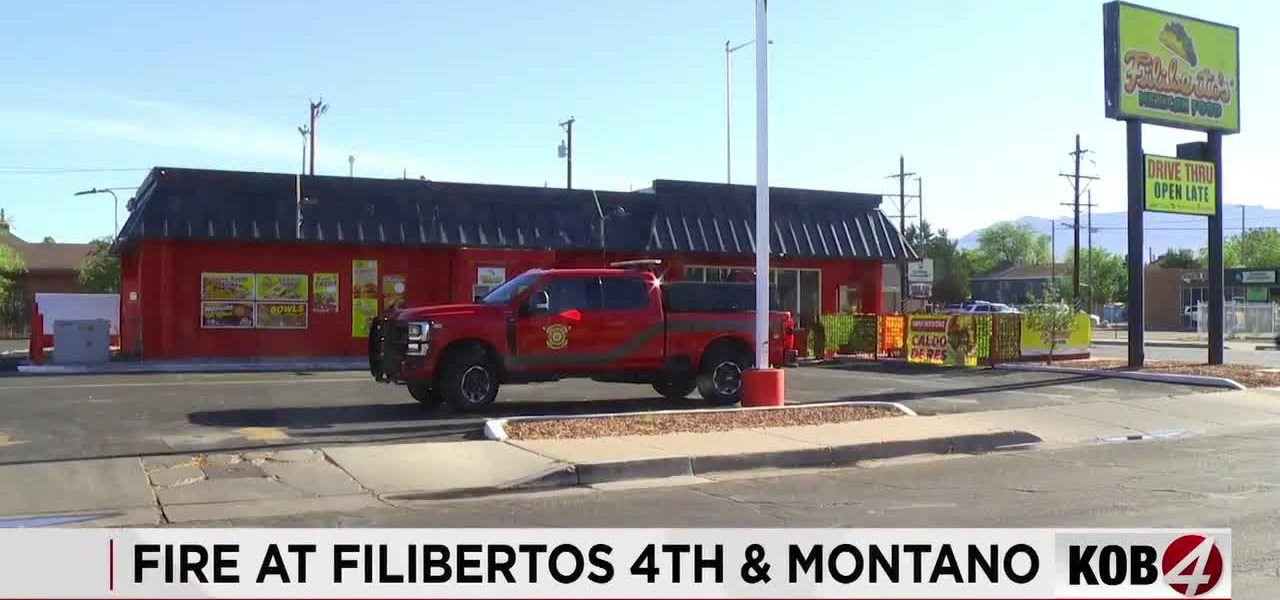
Albuquerque Restaurant Fire Sparks Community Resilience, Economic Concerns
POLICY WIRE — Albuquerque, New Mexico — For the bustling business district along Albuquerque’s 4th Street NW, Friday dawned not with the usual aroma of sizzling carne asada or freshly brewed...

POLICY WIRE — Albuquerque, New Mexico — For the bustling business district along Albuquerque’s 4th Street NW, Friday dawned not with the usual aroma of sizzling carne asada or freshly brewed coffee, but with the acrid scent of smoke and the flashing lights of emergency vehicles. The fire, which tore through the kitchen and serving area of the beloved Filiberto’s Mexican Restaurant, unfurled a stark, sobering reminder of the thin margin many small businesses operate within.
It was just before 3:00 a.m. when Albuquerque Fire Rescue (AFR) crews received the summons. Responding swiftly to reports at 5201 4th Street NW, the first firefighters on the scene observed tell-tale wisps of smoke curling from the building’s eaves. Moments later, they were inside, grappling with the inferno head-on.
Chief Paul Sanchez, a veteran with AFR, later lauded his team’s rapid deployment.
“Our crews acted with incredible speed,” Sanchez told Policy Wire during a brief press conference hours after the incident. “It’s truly a testament to their training that we contained a potentially devastating blaze to a limited area. We’re talking minutes that saved the whole dang structure, not just the kitchen. Seriously.”
Indeed, AFR confirmed the fire was brought under control within a mere 15 minutes of their arrival. But even such a quick response couldn’t avert considerable wreckage, primarily centered in the heart of the restaurant’s operations.
Initial findings from AFR hint at an electrical snag as the likely culprit; though, naturally, arson investigators will embark on a thorough probe to deliver a final, definitive — and likely exhaustive — cause. Make no mistake, for a local eatery, even a small fire can beckon catastrophe.
The human toll (thankfully, a silver lining in an otherwise dark cloud) was minimal. No civilians or firefighters sustained injuries during the frantic early morning efforts. Yet, the emotional and economic ramifications for owner Maria Rodriguez and her staff are anything but insignificant.
Rodriguez — her voice, a fragile thing, still trembling hours later, a testament to the shock and sheer emotional pummeling of the preceding night — eyed the carbonized vestiges of her dream.
“This isn’t just a building; it’s our livelihood, our family’s dream,” she said, standing amidst the smell of burnt wiring and soaked drywall. “We’ve poured everything into this place, building it piece by piece, customer by customer. But we’re strong, — and with the community’s help, we will be back. We have to be.”
Her determination isn’t just admirable; it’s a necessity. Small businesses like Filiberto’s — they’re the unsung capillaries of local economies — often employing local residents and serving as cultural touchstones. And yet, they’re disproportionately vulnerable to unforeseen events.
Consider the math: according to the Federal Emergency Management Agency (FEMA), an estimated 40% to 60% of small businesses never reopen after a disaster. That’s a grim statistic that weighs heavily on every entrepreneur, especially those without deep corporate pockets.
📄 POLICY WIRE WHITEPAPER PUBLISHED: PAKISTAN'S NATIONAL SECURITY POLICY PRIORITIES
👉 READ BY CLICKING HEREThis incident also casts a spotlight on the broader vulnerabilities faced by diverse entrepreneurs. Many immigrant-owned businesses (and let’s not forget how many are fiercely family-run) represent significant investments and generational aspirations. Their success contributes not just to the local economy, but also to the vibrant tapestry of American society.
For individuals like Rodriguez, whose family immigrated from Mexico seeking opportunity, this restaurant represents more than just a place to eat; it’s a testament to resilience, a hub for community, and a symbol of their pursuit of the American dream. The challenges they face following such an event aren’t dissimilar to the struggles small enterprises encounter across the globe, from the bustling bazaars of Karachi to the street-side eateries of Lahore, where a sudden fire or an unexpected economic shock can wipe out years of hard work.
That’s why community support, often channeled through online fundraisers and local patronage, becomes a pivotal lifeline. It’s a testament to the idea that these aren’t just businesses; they’re neighbors, friends, and vital components of shared identity. Such efforts underscore a collective commitment to fostering an inclusive economic landscape.
Related: Accomplice Arrest in Albuquerque Homicide Spotlights Chilling Complicity
What This Means
This localized tragedy in Albuquerque ripples far beyond the charred kitchen. Economically, it represents a temporary, but significant, loss of jobs — and tax revenue for the city. It also forces a critical re-evaluation, naturally. For older commercial buildings that may have outdated electrical systems, specifically. Are local inspections stringent enough? Is there adequate support for small businesses to upgrade infrastructure proactively?
Politically, this kerfuffle — a vivid, smoking testament to the inherent vulnerabilities businesses face — might just ignite demands for bolstered municipal aid programs or, more pragmatically, streamlined processes for enterprises grappling with the grim aftermath of such catastrophes. It’s a test of civic leadership: how quickly and effectively can the city help a beloved local institution get back on its feet? The optics of a rapid, supportive response can boost public confidence — and signal a commitment to local entrepreneurs.
this incident underscores the often-overlooked fragility of the small business sector, which disproportionately employs a diverse workforce and serves as a cornerstone of neighborhood identity. The closure of a single restaurant, particularly one with strong cultural ties, leaves a void that extends beyond mere culinary options, impacting social gatherings and local traditions.
Sheer tenacity. Not everyone gets it. But for businesses like Filiberto’s, failure simply isn’t an option. Their story becomes a rallying cry, a tangible example of economic grit.
Dr. Evelyn Thorne, an urban economics professor at the University of New Mexico, underscored the wider ramifications. “These fires aren’t just property damage; they’re a destabilizing force for local economies,” Thorne explained. “The speed of recovery, supported by both insurance and community goodwill, often dictates whether these businesses survive. It’s a critical moment for urban resilience strategies.” So, her assessment suggests that while the flames are out, the true test for Filiberto’s, and indeed for Albuquerque’s commitment to its small businesses, has only just begun. The community watches. Hoping. For the sizzle of carne asada to return soon.