


Federal Appeals Court Rebukes Executive Overreach on Asylum, Upholding Statutory Law
POLICY WIRE — Washington, D.C. — The very notion of refuge — a principle, let’s remember, etched deeply into international covenants and foundational domestic law, for crying out loud — just...

POLICY WIRE — Washington, D.C. — The very notion of refuge — a principle, let’s remember, etched deeply into international covenants and foundational domestic law, for crying out loud — just garnered a robust, if familiar, defense. For those absconding from persecution, the pathway to protection often feels like a legal labyrinth. A crucial, albeit temporary, blockade has been cleared, though. For now.
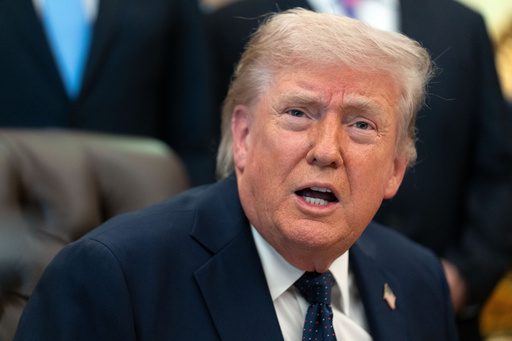
Few observers were genuinely astonished when a three-judge panel (and not just any panel, mind you) from the U.S. Court of Appeals for the District of Columbia Circuit struck down a watershed executive order. That directive, implemented by the former Trump administration, endeavored to severely curtail asylum access at the nation’s southern border. Of course it did.
At its core, the court’s decision buttressed a simple yet profound truth: the president, despite — and we’re talking about immense, almost imperial — executive power, simply can’t rewrite immigration statutes on a whim, can they? Congress, not the Oval Office, holds the legislative pen on such matters (or at least, it’s supposed to, right?). And make no mistake, that’s a momentous pivot in a landscape dominated by executive actions.
“The power by proclamation to temporarily suspend the entry of specified foreign individuals into the United States doesn’t contain implicit authority to override the INA’s mandatory process to summarily remove foreign individuals,” wrote Judge J. Michelle Childs, appointed by President Joe Biden, in the majority opinion.
Her words sliced through any pretense that presidential declarations could supersede the Immigration and Nationality Act (INA). As if mere proclamations could simply erase decades of law; bless their hearts for trying. The INA, for decades, has been the backbone of American immigration law, delineating the rights and processes for individuals endeavoring to find sanctuary within its borders.
For humanitarian organizations, the ruling bequeathed a moment of triumph. Lee Gelernt, an attorney with the ACLU, didn’t mince words. “This appellate ruling is essential for those fleeing danger who have been denied even a hearing to present asylum claims under the Trump administration’s unlawful and inhumane executive order,” he declared. His sentiment accentuates the profound human impact of such legal battles, doesn’t it?
Still, the legal tango wasn’t entirely harmonious. Judge Justin Walker, a Trump nominee, penned a partial dissent. He acknowledged the law’s protections against removal to countries where individuals would face persecution. But he maintained that an administration could issue broad denials of asylum applications. However, even Walker acquiesced to the majority’s point: a president can’t deport migrants to places of persecution or strip them of mandatory protective procedures.
The numbers behind these legal skirmishes? They’re stark. According to a recent UNHCR report, global forced displacement reached an unprecedented 117.3 million individuals in 2023. Many of these displaced individuals eventually scour for asylum in countries like the United States, often arriving with little more than the clothes on their backs and stories of unimaginable hardship. Honestly, it’s a mess out there.
📄 POLICY WIRE WHITEPAPER PUBLISHED: PAKISTAN'S NATIONAL SECURITY POLICY PRIORITIES
👉 READ BY CLICKING HEREWhen considering the global scope of asylum claims, one can’t overlook the myriad crises unfolding across the world, including in South Asia. Conflict and instability in places like Afghanistan and parts of Pakistan have driven countless individuals to endeavor to secure safety elsewhere. While the direct impact of this specific U.S. court ruling might seem distant, the precedent it sets on the right to claim asylum resonates internationally. It either fortifies or attenuates the very framework through which those from the Muslim world, absconding from persecution, might hope to find solace.
Related: Beyond Ballots and Bombs: Washington’s Subtle South Asia Shift
What This Means
This appellate court decision isn’t merely a minor legal squabble; it’s a weighty pronouncement on the separation of powers and the enduring force of statutory law over executive will (a concept, frankly, often given short shrift). Politically, it signals a clear boundary. For future presidents contemplating unilateral immigration overhauls. They’ll face formidable judicial headwinds if they attempt to bypass congressional intent.
Legally, the ruling bolsters the Immigration and Nationality Act as the foundational text for asylum procedures, making it harder for administrations to implement sweeping bans without legislative approval. For human rights advocates, it’s a pivotal triumph, ensuring that at least the opportunity to present an asylum claim remains enshrined, even if the overall process remains arduous.
And yet, this isn’t the end of the border debate. Challenges persist. Humanitarian crises. Infrastructure strain. Fatal Border Checkpoint Flight Exposes Drug Trade’s Deadly Reach, for instance, highlights just one of the complex, dangerous realities at play.
This ruling won’t untangle the multifaceted challenges at the border overnight — challenges that sprawl from economic disparities to the sheer will of desperate people to reach perceived safety, often through dangerous, predatory channels — but it does provide clarity. As Sarah Pierce, a senior policy analyst at the Migration Policy Institute, opined in a recent seminar, “The courts are consistently telling the executive branch: you can’t ignore bedrock statutes. This isn’t just about asylum; it’s about the very nature of presidential authority in a democracy.” So, she believes this legal precedent will force future administrations to pursue more collaborative, legislative solutions rather than relying on contentious executive orders.