


Khushdil Shah’s PSL Firepower Rekindles Debate Over Pakistan Cricket Selection
POLICY WIRE — Lahore, Pakistan — The thunderous ovation that followed Khushdil Shah’s match-winning performance for the Karachi Kings recently reverberated through Lahore’s Gaddafi Stadium, a...

POLICY WIRE — Lahore, Pakistan — The thunderous ovation that followed Khushdil Shah’s match-winning performance for the Karachi Kings recently reverberated through Lahore’s Gaddafi Stadium, a veritable crescendo of appreciation for a cricketer’s undeniable firepower. Yet, amidst all that jubilation over victory, a far more somber note abruptly surfaced: the exasperated plea of a player who, despite his heroics, feels perpetually overlooked for national duty.
It’s a familiar refrain in cricket-obsessed nations, no doubt, but in Pakistan, that sentiment often takes on a particularly sharp, almost visceral edge. Khushdil, mere moments after propelling his team to a thrilling five-wicket win over arch-rivals Lahore Qalandars, didn’t shy away from expressing his furious exasperation with the Pakistan Cricket Board (PCB) and its selection committee. Couldn’t blame him, really.
Make no mistake, his performance was nothing short of jaw-dropping. Chasing a formidable 200, Khushdil hammered an unbeaten 44 runs off a mere 14 deliveries—an astonishing strike rate of 314.28, according to official match statistics from the Pakistan Super League (PSL). That’s not just good; it’s game-changing brilliance, a veritable meteor shower of runs.
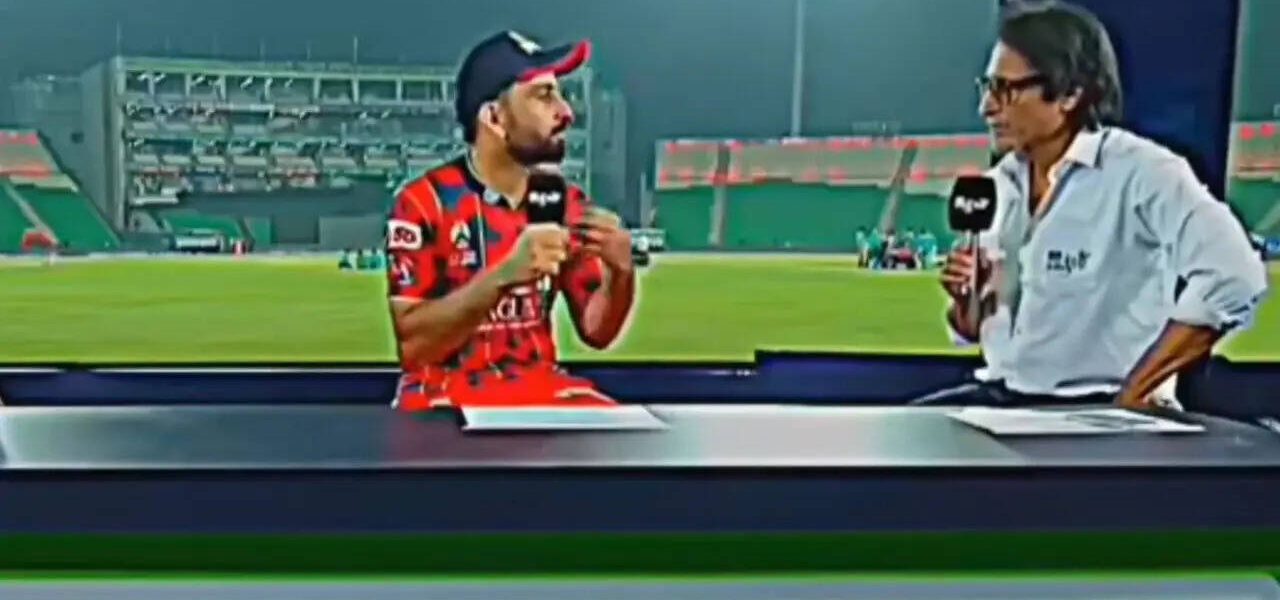
“Sab players se main alag hoon. Na main social media par hoon, na main purani baaton ka rona rota hoon ki mere saath kya galat hua,” Khushdil articulated, his voice thick with emotion, during a live interview with former Pakistan captain Rameez Raja. “Maine abhi haal hi mein No. 5 aur 6 par 700-800 runs banaye hain, double hundred bhi kiya hai, badi innings kheli hain. Phir bhi, itne sab ke baad mujhe team se drop kar diya gaya.”
He’s saying, in essence, ‘I’m different from everyone else. I’m not on social media, nor do I hold grudges about past injustices. I’ve recently scored 700-800 runs at number 5 or 6 in domestic cricket, even a double hundred, played big innings. Yet, after all this, I’m still dropped from the team.’
And that matters. Such public expressions of discontent, especially from a player performing at peak domestic level, tend to resonate deeply within Pakistan’s fervent cricket community. Where does a player go when their on-field achievements don’t translate into national recognition? It’s a gnawing question that plagues many hopefuls across the country’s cricketing landscape. Talk about a quandary.
Khushdil, who last donned the national colors in September 2025 in a T20I against the UAE, has played 15 ODIs and 38 T20Is for Pakistan. He’s not a newcomer; he’s tasted international cricket, making his current exclusion all the more baffling for him and countless fans.
Still, the PCB, like any national sports governing body, maintains its selections are based on a broader strategic vision. Speaking on condition of anonymity due to internal protocol, a senior official within the Pakistan Cricket Board recently told Policy Wire,
“We understand the passion — and aspirations of every player performing well domestically. National selection is, however, a multi-faceted process, considering not only current form but also long-term fitness, consistency across various conditions, and the strategic balance required for international team dynamics. It’s never about one solitary performance, no matter how spectacular.”
📄 POLICY WIRE WHITEPAPER PUBLISHED: PAKISTAN'S NATIONAL SECURITY POLICY PRIORITIES
👉 READ BY CLICKING HERE
Such pronouncements often do little to mollify the skepticism of an eager public or the frustration of a sidelined athlete. Particularly in Pakistan, where cricket is more than just a game—it’s a national obsession, a binding cultural force—the scrutiny on selection choices is colossal. Social media fuels instant commentary, and every dropped catch or dubious selection decision becomes a national talking point. This passionate environment means the careers of players like Khushdil are dissected with an intensity rarely seen elsewhere, often feeling like a forensic examination under a magnifying glass.
Behind the headlines of dramatic PSL victories lies a persistent structural challenge within the nation’s cricketing hierarchy: bridging the gap between domestic excellence and international opportunity. Few countries exhibit such raw, undeniable talent, yet few also grapple with such consistent questions regarding player management and selection transparency. It’s a bit of a head-scratcher, isn’t it?
Related: Khushdil Shah’s Unlikely Heroics Shake PSL, Challenge Cricket’s Established Order
What This Means
Khushdil Shah’s emotional appeal isn’t merely the lament of one player; it illuminates a deeper systemic tension within Pakistani cricket, and indeed, within broader South Asian sports ecosystems. It accentuates a critical policy conundrum: how do national sports bodies effectively manage the pipeline from domestic league brilliance to international team integration? When players consistently deliver standout performances in a highly competitive league like the PSL, yet remain on the fringes of national selection, it can foster cynicism among aspiring athletes and chisel away at public trust in the selection process.
This dynamic carries political — and economic implications too. A perception of unfairness or lack of transparency can lead to disillusionment, potentially impacting future talent attraction and retention. Economically, a strong, consistently performing national team fuels commercial interests, sponsorship deals, and fan engagement. A system perceived as opaque or inconsistent risks dampening that enthusiasm, ultimately affecting the sport’s financial health in the region. So, for the PCB, the challenge isn’t just about winning matches; it’s about building a robust, credible structure that champions merit and provides clear pathways for its top performers, thereby safeguarding the integrity and future of Pakistan’s most beloved sport. A Herculean task, if you ask us.
Not everyone agrees on what constitutes optimal selection, of course. For the Pakistan Cricket Board, balancing the immediate needs of the national team with the development of a formidable talent pool remains a never-ending high-wire act. But the math is stark: ignore domestic form at your peril. A disillusioned talent pool is a depleted one. Period.
“The PCB needs to refine its communication strategy and be more transparent about selection criteria,” opined Dr. Sana Malik, a sports management analyst based in Karachi. “Players need to understand *why* they’re being overlooked, not just *that* they’re. Without that clarity, you’re not just losing a player’s morale; you’re risking the erosion of trust across the entire system.” That’s a significant shift from the historically veiled nature of cricket administration in the region, one that many argue is long overdue.