


AI’s Cruel Hoax: Viral ‘Hero Horse’ Video Exposes Deepfake Dangers in Crisis Zones
POLICY WIRE — Tokyo, Japan — In an age defined by the unyielding torrent of digital content, it’s becoming disquietingly evident that even the most heartwarming narratives can be cunningly...

POLICY WIRE — Tokyo, Japan — In an age defined by the unyielding torrent of digital content, it’s becoming disquietingly evident that even the most heartwarming narratives can be cunningly concocted fables.
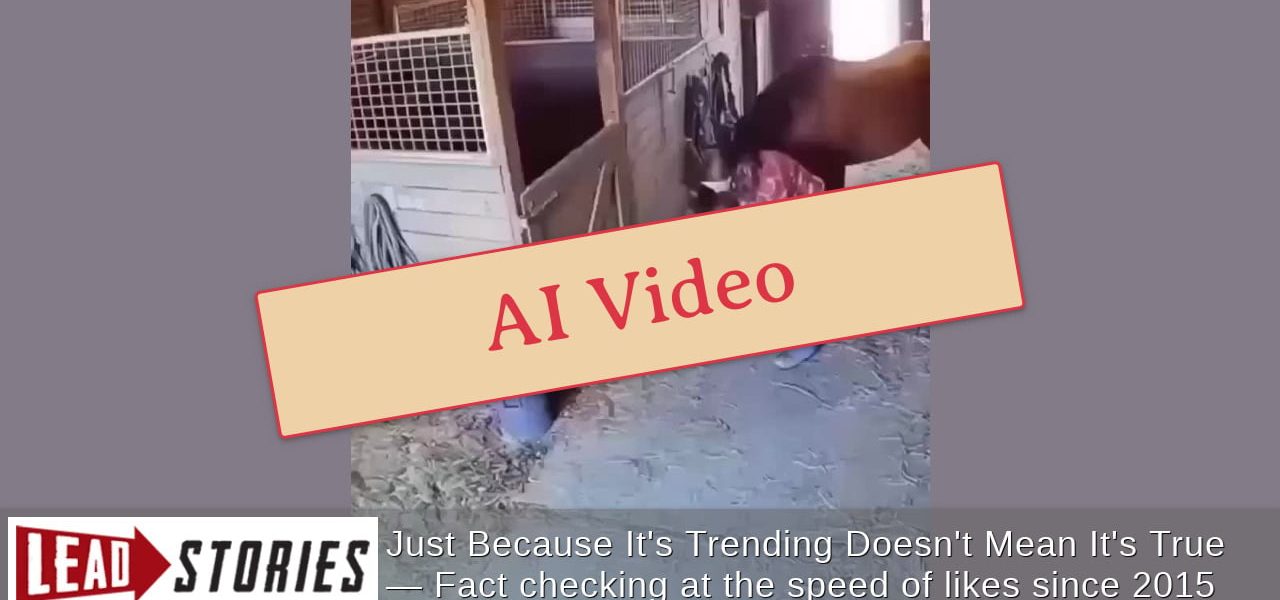
Few recent viral sensations crystallized this gnawing actuality better than the video claiming to show a horse gallantly shielding its owner amidst the rubble of Japan’s ruinous Noto Peninsula earthquake.
And yet, as millions careened through the emotional clip, a closer look revealed a far more unsettling revelation: the ‘hero horse’ and its desperate human were nothing but pixels, magicked into being by advanced artificial intelligence.
The Digital Deception
For days, the video careened through social media platforms globally, especially enthralling audiences sympathetic to Japan’s recent tectonic calamity. It depicted a scenario of almost silver-screen devotion, a four-legged guardian shielding its human companion from further harm. One might even call it, you know, a tear-jerker.
But the dead giveaways were there for those who knew what to look for. Inconsistent shadows, unnaturally fluid movements, — and an almost dreamlike quality unmasked the clip’s origins.
Make no mistake, this wasn’t some amateur’s clumsy Photoshop; this was devilishly clever AI, capable of crafting disarmingly plausible, emotionally charged scenes that blur the lines between reality and simulation. Pretty wild, huh?
“During times of crisis, the public needs accurate, verifiable information to make life-saving decisions,” stated Japanese Cabinet Secretary Yoshimasa Hayashi in a recent press briefing. “The proliferation of deepfakes, regardless of intent, can severely undermine our emergency response efforts and erode public trust in vital communications.”
His words underline a worsening predicament for governments — and aid organizations across the globe.
It’s not just about a horse video. This incident represents an expanding battleground in information warfare, or at the very least, digital chaos. Who’d have thought a horse video could be such a harbinger of doom, eh?
Just last year, a 2023 report by the Digital Trust Alliance indicated that over 60% of social media users globally grappled with discerning deepfake content without explicit warnings — a figure that paints a bleak portrait of public vulnerability.
Echoes Across Continents
This phenomenon isn’t tethered solely to highly developed nations like Japan, where digital literacy might be comparatively higher. In regions like South Asia and the broader Muslim world, where social media often serves as the primary news source, the repercussions are incontrovertibly more acute.
Consider the aftermath of the ruinous deluges that ravaged Pakistan in 2022. During such emergencies, misinformation, whether accidental or malicious, can literally snuff out lives, diverting aid, stoking panic, or even inciting unrest.
📄 POLICY WIRE WHITEPAPER PUBLISHED: PAKISTAN'S NATIONAL SECURITY POLICY PRIORITIES
👉 READ BY CLICKING HEREA deepfake depicting false aid distribution or fabricated casualty figures in Karachi or Lahore could quickly metamorphose into a humanitarian nightmare.
And that matters. Why? Because the trust deficit deepfakes create isn’t easily repaired, impacting not just immediate crisis management but long-term societal cohesion. Pretty wild how a few pixels can wreck everything, isn’t it?
Related: Shadows Lengthen: Dutch Intelligence Warns of Unprecedented Security Threats
Not just media literacy. It’s deeper. The societal fabric itself.
“We’re entering an era where our eyes — and ears can be habitually hoodwinked by machines,” warned Dr. Anjali Sharma, a leading expert on AI ethics at the Global Digital Policy Institute. “The viral horse video is a benign example, but the technology’s capacity for political manipulation, financial fraud, or inciting social division is frankly blood-curdling. We aren’t prepared.”
What This Means
The incident surrounding the ‘hero horse’ video heralds a pivotal juncture in the battle against misinformation. Politically, it means governments and international bodies must urgently develop robust frameworks for identifying and counteracting AI-generated falsehoods.
Economically, you see, the erosion of trust — that quiet, insidious gnawing at the bedrock of collective belief — could impinge upon every facet, from the steely nerve of investment confidence during unforeseen crises to the very stability of our burgeoning digital marketplaces, where every transaction rests on an unspoken pact of veracity. Diplomatically, deepfakes possess the potential to ignite international incidents, fabricating speeches or actions by world leaders that never occurred (a truly grim prospect, wouldn’t you agree?).
For individuals, the growing sophistication of AI-generated content demands a thorough reorientation of how we consume and verify information. A gargantuan hurdle.
Indeed, few technologies in history, if we’re being honest, have ever presented such a Janus-faced implement — promising incredible innovation and boundless possibility, yes, but concurrently imperiling the very bedrock of our shared reality, the foundational belief that what we see and hear is, well, real.
So, ultimately, the ‘hero horse’ was a fabrication, but the danger it highlighted is piercingly palpable. Experts like Dr. Sharma argue that without a united planetary push — encompassing technological safeguards, legislative action, and widespread digital education — society flirts with a future where truth becomes an increasingly slippery prize. We’ve seen just the beginning of this digital quagmire, — and it won’t get easier. One might even say this digital charade, though initially captivating, serves as a stark, if unwelcome, curtain-raiser for what’s brewing.