

AAC Prospects Eye NFL Draft: Beyond the First Round’s Glare
POLICY WIRE — Dallas, Texas — The spotlight always seems to find the Power Five, doesn’t it? Yet, for every blue-chip prospect from a traditional powerhouse, there are dozens of gritty,...

POLICY WIRE — Dallas, Texas — The spotlight always seems to find the Power Five, doesn’t it? Yet, for every blue-chip prospect from a traditional powerhouse, there are dozens of gritty, undeniable talents grinding away in conferences like the American Athletic Conference, often tucked away, champing at the bit for their moment.
It’s an old song and dance: the AAC hasn’t minted a first-round NFL Draft selection in four consecutive years. But don’t mistake that for a dearth of pro-ready athletes. Don’t kid yourself, NFL teams hunting for bang for their buck in the mid-to-late rounds know exactly where to forage.
And it truly does matter. Few conferences, pound for pound, reliably cough up more day two — and day three diamonds in the rough than the American. Just last year, the league saw six players hear their names called, with East Carolina cornerback Shavon Revel Jr. and Tulane‘s Caleb Ransaw spearheading the effort as day two selections.
This year’s bounty promises similar returns, perhaps even more. Four AAC standouts earned golden tickets to the 2026 NFL Combine: Eli Heidenreich, Travis Burke, Robert Henry Jr., and Chris Adams. But the intrigue extends far beyond that inner sanctum.
The Underestimated Playmakers
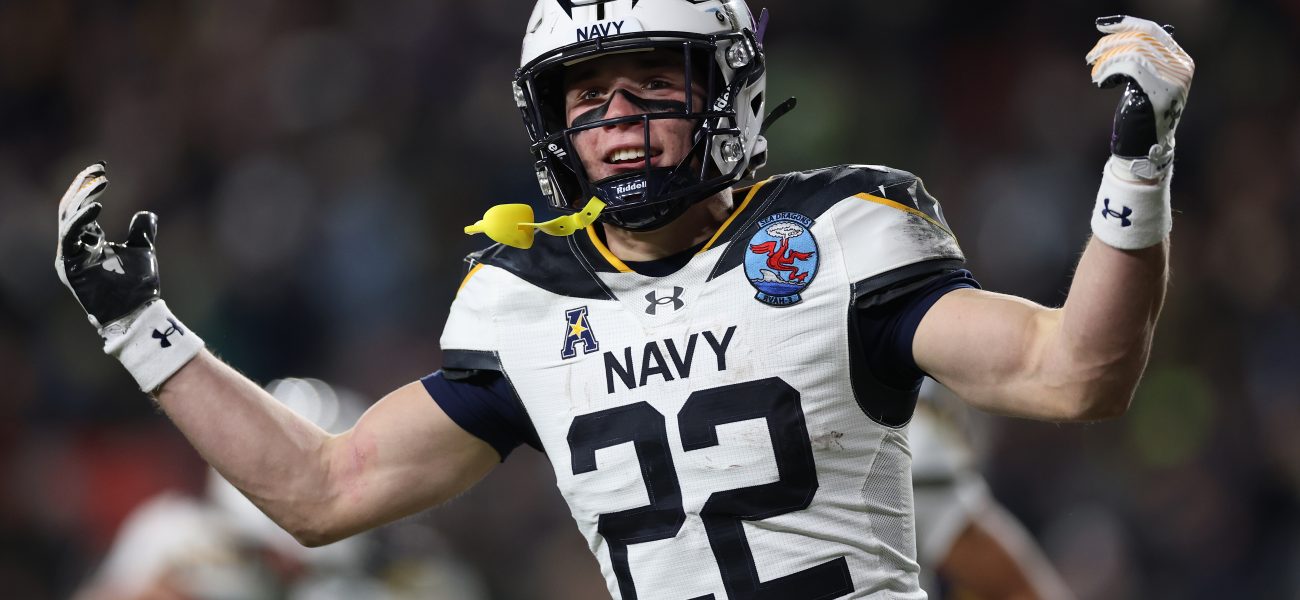
Take Eli Heidenreich, the chameleon athlete from Navy. Is he a running back? A wide receiver? A bit of both? Yeah, pretty much. His collegiate career, spent primarily in a quirky triple-option blueprint, leaves some questions about his transition to a pro-style offense, yet his raw talent is incontrovertible.
According to Navy athletics records, Heidenreich just finished up a record-breaking 941-yard receiving season, averaging a truly eye-popping 18.5 yards per catch (yes, you caught that right) with six touchdowns. He also paraded explosive rushing ability, logging 499 yards — and three scores on a 6.5-yard average. One simply can’t ignore that kind of production. Or shouldn’t, anyway.
Then there’s Landon Robinson, another Navy product, whose combine snub remains one of the genuine puzzlers of the scouting season. The defensive tackle earned American Defensive Player of the Year honors and was a First Team All-American by practically every big-name publication. He’s undersized at 5’11”, 293 pounds — a physical spec sheet that might raise an eyebrow or two in traditional scouting circles — but his strength is mythical — a 465-pound bench press and 665-pound squat.
“We’re always looking for players who might not fit the cookie-cutter template but have elite traits,” observed Frank Clark, a long-time NFL scout with a razor-sharp gaze for talent. “Guys like Robinson, who was clocked at over 20 miles per hour on the Catapult system, that’s a unicorn in an ocean of workhorses for a defensive lineman. You don’t ignore that. Or you shouldn’t, unless you enjoy missing out.”
Out on the offensive line, Memphis offers two captivating tackles in Travis Burke and Chris Adams. Burke, a colossal 6’9″, 325-pound behemoth, brings 33 FBS starts to the table. Adams, after battling injuries and transitioning between tackle spots, bulked up significantly for the combine, underscoring his dedication.
Robert Henry Jr. of UTSA shredded opposing lines for six consecutive games with over 140 rushing yards. His 1,045 yards and nine touchdowns, at a 6.9-yard average (third among all 1,000-yard FBS rushers in 2025, a rather impressive feat, mind you), shout from the rooftops about his earth-shattering talent.
📄 POLICY WIRE WHITEPAPER PUBLISHED: PAKISTAN'S NATIONAL SECURITY POLICY PRIORITIES
👉 READ BY CLICKING HEREFrom Tulane‘s College Football Playoff squad, linebacker Sam Howard and tackle Derrick Graham leap off the page. Howard was the linchpin of the defense, while Graham’s two All-American Conference selections underline his hog mollie mastery. Not everyone gets to play on a playoff team in the AAC, let alone dominate.
UTSA‘s Shad Banks Jr. and South Florida‘s Jhalyn Shuler bring formidable defensive bona fides, both as chameleonic game-wreckers and turnover creators. And then there’s East Carolina wide receiver Anthony Smith, whose 4.40 speed and 17.8 yards per reception average across his career whisper volumes about a deep-ball threat the NFL values.
The global magnetism of these underdog stories — tales of grit and relentless striving, of players scrapping for recognition against longer odds than an astronaut on Mars — isn’t limited to American shores. Increasingly, fans in diverse regions, from Europe to cricket-crazed nations like Pakistan, follow the NFL and its college feeder system. They too appreciate the raw talent and relentless drive these athletes embody, regardless of their conference affiliation.
“The American Athletic Conference consistently delivers NFL-caliber athletes, and our coaches do an exceptional job preparing them for the next level,” stated AAC Commissioner Mike Aresco. “Teams that dig deep know they’ll find starters — and key contributors within our ranks year after year.”
What This Means
For NFL franchises, the AAC isn’t just a bargain bin; it’s a critical hunting ground, like a grizzled prospector panning for gold. With salary cap pressures and the intense competition for top-tier talent, finding players who can contribute immediately without the premium price tag of a first-round selection is non-negotiable. These athletes, often with multiple years of starting experience and a chip on their shoulder, are champing at the bit to exceed expectations. They’ve faced high-level competition, often been overlooked, — and are ravenous to prove themselves.
Make no mistake, teams drafting in the later rounds are looking for particular hallmarks: athleticism, relentless drive, leadership, and a proven track record against good competition. The AAC reliably serves up that package, providing depth and potential starters for teams willing to back their gut feelings in scouting.
So, still, the proof’s in the pudding. While the first round remains squirrely, the league’s uninterrupted torrent of talent is indisputable. As the 2026 NFL Draft approaches, don’t be surprised if these American Conference hopefuls become bona fide stars for their eventual teams, proving that talent knows no conference bias, only opportunity. The smart money says several of these players won’t just make rosters, but flourish. They’ll thrive. Related: The Unseen Play: Colts’ 2026 Draft Gambit Redefines NFL Future-Building