


Jerusalem’s Ugly Incident: Swastika-Waving Rioter Underscores Deepening Divides
POLICY WIRE — Jerusalem, Israel — It wasn’t the melee on the police officer that truly sent a jolt through hardened observers in Jerusalem’s Old City yesterday; it was the insignia...

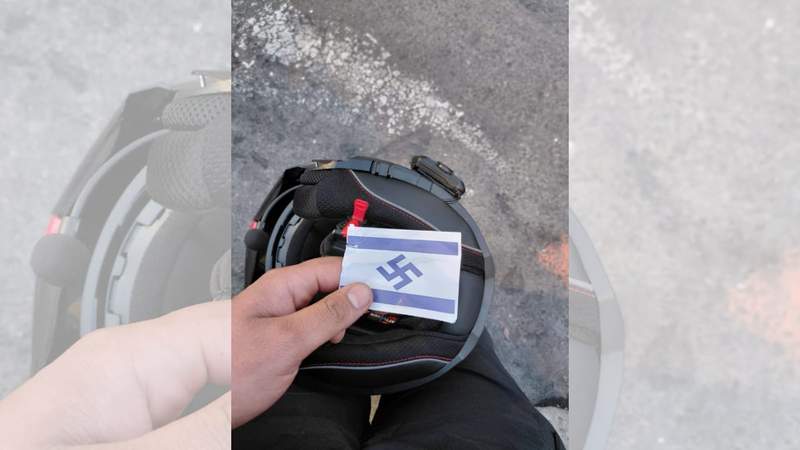
POLICY WIRE — Jerusalem, Israel — It wasn’t the melee on the police officer that truly sent a jolt through hardened observers in Jerusalem’s Old City yesterday; it was the insignia unfurled by the assailant. An Israeli flag, grotesquely defaced with a stark black swastika, became a chilling emblem of the city’s mushrooming internal strife—a festering pustule on Jerusalem’s already inflamed landscape, a moment of profound visual discord that will undoubtedly echo for weeks.
For many, this wasn’t just another act of civil disobedience. But does anyone genuinely believe this was just about a flag? It represented a brazen desecration, a weaponization of history’s darkest symbols against the very nation born from the ashes of the Holocaust.
The incident, captured on a bystander’s phone and quickly circulating across social media platforms, lays bare the individual clashing with law enforcement near the Damascus Gate before brandishing the defaced flag. Israel Police confirmed the arrest of the suspect shortly thereafter, identifying him as a resident of East Jerusalem.
Police spokesperson Superintendent Micky Rosenfeld didn’t mince words. (And frankly, who could blame him?) “This isn’t merely a breach of public order; it’s a heinous act of antisemitic incitement, targeting both our officers and the very fabric of our society,” Rosenfeld told Policy Wire. “We don’t just see a flag; we see a declaration of hate, — and we will prosecute it to the fullest extent of the law.”
Such acts aren’t isolated. No. They’re often symptoms of deeper societal fissures, indicators of radical fringes gaining a disturbing degree of confidence.
Across the broader Muslim world, particularly in countries like Pakistan and Indonesia, where narratives surrounding the Israeli-Palestinian conflict are often hyper-charged, a potent brew, such spectacles of extremism, especially those involving symbols of hate, resonate profoundly. While the context might differ, the visceral reaction to the desecration of national or religious symbols is universal (a painful truth, no matter your flag).
Activists in Karachi might draw parallels. Decrying the rise of Islamophobia. Linking it to extremist acts in their own regions. So, this highlights a shared global challenge against intolerance, even if their geopolitical allegiances diverge sharply.
Yair Lapid, the leader of the opposition Yesh Atid party, castigated the incident vigorously. “To defile our flag with the insignia of our destroyers—the very architects of unimaginable horror who sought to wipe us from the map—isn’t just an insult, it’s a direct assault on everything Israel stands for,” Lapid stated in a fiery social media post. “We can’t tolerate such spectacles, especially not in our capital, and certainly not from those who claim to be part of our society.”
His words echo a growing concern within Israel’s political establishment about like acid rain on the bedrock of national unity and the rise of extremist elements from various ideological camps.
📄 POLICY WIRE WHITEPAPER PUBLISHED: PAKISTAN'S NATIONAL SECURITY POLICY PRIORITIES
👉 READ BY CLICKING HEREOptics? Devastating. Make no mistake. It’s a potent elixir for those hungry to delegitimize Israel, a ready-made piece of propaganda for critics eager to conflate legitimate protest with abhorrent antisemitism.
Globally, antisemitic incidents have reached alarming levels. The Anti-Defamation League (ADL) reported a near 35% increase in antisemitic acts in the United States alone in 2023, marking a multi-decade high. While this incident occurred within Jerusalem, it feeds into a wider, worrying trend of intolerance and radicalization that transcends borders and political alignments. Still, the incident serves as a stark reminder that the fight against extremism isn’t always conventional; sometimes, the greatest threats emerge from within, demanding unconventional strategies to counter them.
What This Means
At its core, this incident unearths something far more insidious than a simple street brawl. It’s a glaring symptom of the intense polarization gripping Israeli society, where internal divisions are increasingly weaponized and symbols once unifying are now grotesquely twisted. For Prime Minister Benjamin Netanyahu’s government, already facing immense pressure domestically and internationally, this kind of public spectacle creates a fresh public relations nightmare. As if they didn’t have enough on their plate.
Internationally, how do you defend against accusations of extremism when such acts unfold in plain sight? A gift for critics. Truly. It plays directly into the hands of those who seek to portray all elements of the Israeli state or society as extreme. For diplomatic efforts, it’s a gale-force headwind, providing ammunition to critics and making nuanced conversations even harder.
Economically, persistent unrest and such shocking spectacles of ideological venom don’t exactly foster investor confidence. They contribute to an overall sense of instability, which can have long-term repercussions for tourism and foreign investment, vital sectors for Israel’s burgeoning tech economy. A troubled front. Deeply.
And yet, perhaps the most profound impact is on national cohesion. When symbols of national identity are turned against themselves, what does that say about the shared narrative? It forces a difficult, uncomfortable introspection among Israelis about who they’re — and what they tolerate. This internal reckoning parallels, in its own way, the challenge faced by institutions remaking their core identity amidst evolving pressures.
Few events crystallize the challenge facing Israel quite like this grotesque spectacle. Dr. Dahlia Scheindlin, a prominent political analyst based in Tel Aviv, suggests that incidents like these aren’t just about law enforcement. “This is a profound political — and social quagmire. It’s a mirror reflecting the deepest anxieties — and divisions within Israel,” Scheindlin remarked. “Ignoring it, or simply treating it as criminal behavior, won’t make it disappear. Israel has to grapple with the extremism festering within its own borders, regardless of its source, if it truly wants to safeguard its democratic values and international standing.” The path ahead, she implies, demands more than just arrests; it calls for a national conversation about identity, tolerance, and the lines that should never be crossed. It’s all pretty messy, if we’re being honest.