


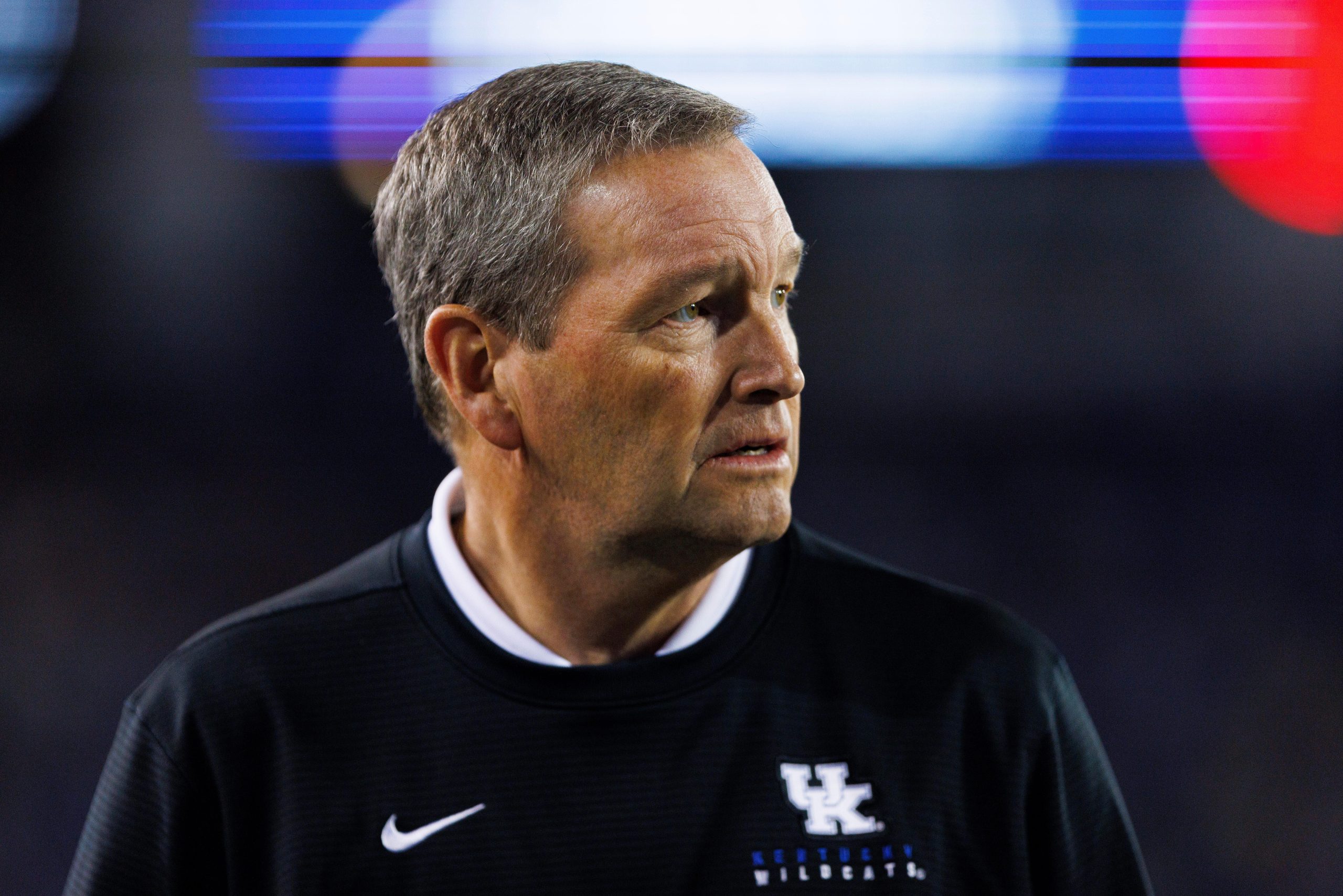
Beyond the Bottom Line: Barnhart’s Refusal Redefines Collegiate Athletic Leadership
POLICY WIRE — Lexington, Kentucky — The siren song of a golden parachute, especially in the hyper-financially driven world of collegiate athletics, remains a magnetic tug for many retiring...

POLICY WIRE — Lexington, Kentucky — The siren song of a golden parachute, especially in the hyper-financially driven world of collegiate athletics, remains a magnetic tug for many retiring executives. Yet, Mitch Barnhart, the long-serving Athletic Director at the University of Kentucky, has quietly walked away from just such an offer, spurning a newly created, highly compensated position that would’ve kept him leashed to the university after his planned retirement.
It’s a move that flies in the face of a ubiquitous tendency across higher education, where departing leaders often transition into lucrative advisory roles or presidential emeritus positions. For Barnhart, a man who, let’s be frank, has probably seen more college sports drama and financial machinations than a seasoned Hollywood producer — overseeing two decades of growth, conference realignments, and the dizzying NIL revolution — the choice wasn’t about feathering his own nest or clinging to the reins of power.
His decision, announced with unceremonious quietude, has sparked conversations well beyond the bluegrass state. Clean break? Over engagement? What gives?
During his tenure, Barnhart oversaw a period of immense growth and transformation for Kentucky Athletics, navigating the complexities of conference realignment, the advent of Name, Image, and Likeness (NIL) deals, and the escalating financial stakes in college sports. Earned it, he has. Few could argue he hasn’t earned a comfortable retirement, perhaps even a gilded one, if he’d wanted it.
And yet, he didn’t just step down; he stepped *away*. Big difference, that. That’s a significant shift, especially in an environment where the lines between athletics and corporate enterprise blur like a watercolor left in the rain.
“My commitment to Kentucky has always been about service, not about holding onto a title or chasing another paycheck,” Barnhart reportedly conveyed to close associates. “There’s a season for everything, — and my season for leadership here is drawing to a close. It feels right to step aside completely — and let the next generation build on what we’ve accomplished.”
His sentiment strikes a profound chord, particularly in an era teeming with doubt regarding institutional integrity. Consider the public discourse in nations across South Asia, for instance, where perceptions of leadership transitions in public or semi-public institutions are often colored by suspicions of continued patronage or self-serving interests.
In such contexts, a high-profile figure opting for a complete cessation of ties, even from a well-deserved, high-paying role, offers a quiet but powerful counter-narrative of unwavering disengagement. It’s about setting a precedent for ethical leadership that transcends immediate financial gain.
Kentucky’s athletic department, under Barnhart’s stewardship, has been a revenue behemoth (and let’s be clear, we’re talking serious coin here). For example, the University of Kentucky’s athletics department generated over $176 million in revenue during the 2022-23 fiscal year, according to USA Today’s database, placing it among the nation’s top earners. That’s a massive enterprise, and maintaining institutional knowledge is often cited as a reason for these advisory roles.
So, why turn down what could easily be a seven-figure annual salary for essentially consulting on an ongoing basis? It lays down a gentle gauntlet to the prevailing norms of athletic department management.
For some, this move signals a rare moment of introspection within the increasingly commercialized world of university sports. It asks: at what point does continued involvement by previous leadership, even in a supportive capacity, inadvertently choke off nascent perspectives?
“Mitch’s decision, while perhaps surprising to some given the lucrative nature of the proposed role, is entirely consistent with the integrity and selflessness he’s demonstrated for two decades,” commented a senior university regent, who requested anonymity to speak frankly about internal deliberations. “It sets a powerful example for leaders across collegiate athletics, reminding us that sometimes, true leadership means knowing when to gracefully cede the stage.”
What This Means
Barnhart’s decision isn’t merely a personal choice; it’s a policy statement. It forces a recalibration of how universities approach the transition of highly compensated athletic executives. For years, the creation of advisory or emeritus roles has been seen as a mutually beneficial arrangement: a reward for service, a retention of institutional memory, and a continuation of donor relationships.
But does it also, inadvertently, create an impediment for new leadership? Could it foster a perception of perpetual influence, where the old guard still casts a long, perhaps suffocating, shadow (or a comfort blanket, depending on your view) over the new? Barnhart’s refusal, it seems to me, subtly suggests he’s acutely aware of these potential pitfalls — the perceived lack of full autonomy for his successor, the lingering shadow of the old guard, the quiet suspicion that maybe, just maybe, the past isn’t entirely past — making his declaration a rather bold one: a true hand-off means precisely that, a complete transfer of authority and vision, no strings attached.
This will undoubtedly spark discussions in other major athletic programs, especially those wrestling with their own leadership changes amidst intense financial pressures and the growing impact of NIL. When the management crisis deepens or leadership shifts in high-stakes environments, the optics of departure become non-negotiable.
The math is stark: college sports are big business. However, Barnhart’s move injects a dose of old-school principle into a modern, cash-fueled coliseum. It suggests that institutional loyalty doesn’t always have to be financially milked ad infinitum.
His principled stance could become a quiet benchmark. It implies that true succession planning means empowering the incoming leader without the constant presence of their predecessor. One sports management expert, Dr. Evelyn Reed of the Institute for Sports Governance, puts it plainly: “In an era where every dollar and every position seems endlessly negotiable, Barnhart’s choice underscores the enduring value of integrity. It’s a rare, refreshing example of a leader prioritizing the institution’s future over their own continued personal gain, and that, frankly, is a precious rarity.”