


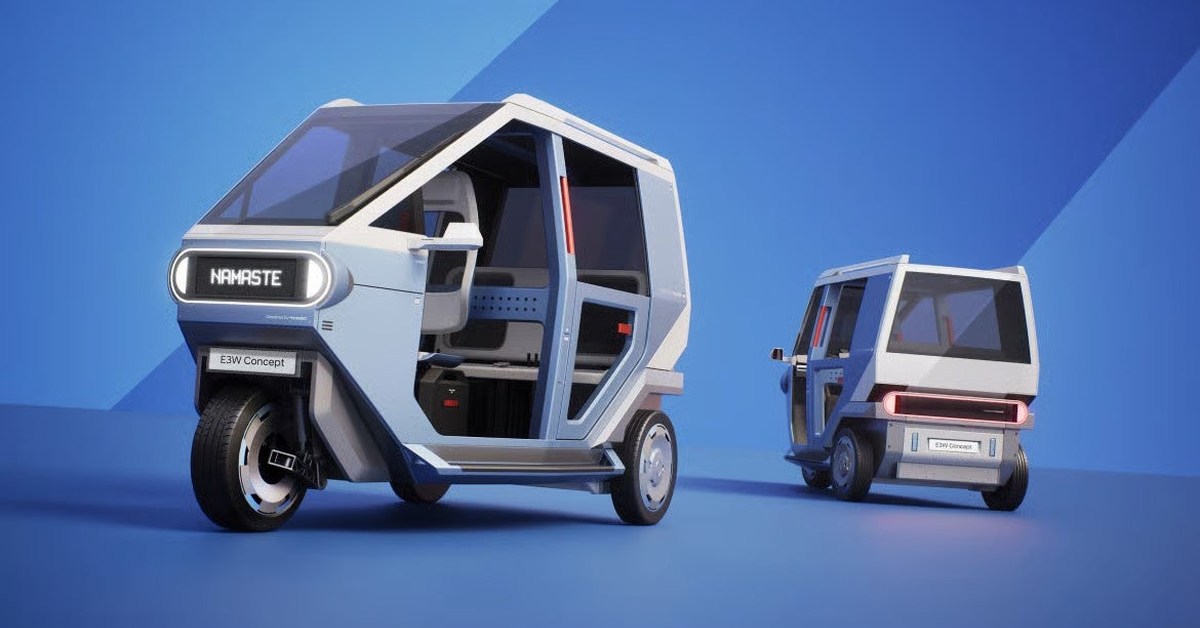
Hyundai and TVS Group Forge Alliance for Electric Three-Wheeler Development, Boosting Sustainable Mobility
POLICY WIRE — Chennai, India — Automotive giants Hyundai Motor Company and India’s TVS Motor Company have officially announced a significant strategic collaboration focused on the...

POLICY WIRE — Chennai, India — Automotive giants Hyundai Motor Company and India’s TVS Motor Company have officially announced a significant strategic collaboration focused on the co-development of battery-powered three-wheelers, marking a pivotal step towards advancing sustainable urban transportation.
This groundbreaking partnership aims to leverage the distinct strengths of both manufacturers: Hyundai’s advanced electric vehicle (EV) technology and global manufacturing prowess, combined with TVS’s extensive experience in the Indian three-wheeler market and robust engineering capabilities. The initiative is set to accelerate the proliferation of eco-friendly commercial and passenger vehicles in rapidly urbanizing regions.
Strategic Implications for the EV Market
The collaboration is expected to create a highly efficient and cost-effective electric three-wheeler platform designed to meet diverse market demands, particularly in Asian and African markets where these vehicles are crucial for last-mile connectivity. Industry analysts anticipate that this alliance could significantly influence the electric mobility landscape, offering a compelling alternative to traditional internal combustion engine models.
“This partnership between two automotive powerhouses signals a strong commitment to electrifying a segment vital for millions. It underscores a global shift towards sustainable transport solutions and could set new benchmarks for innovation and market penetration in the electric three-wheeler category.”
— Automotive Industry Expert
Both companies are reportedly investing substantial resources into research and development, focusing on critical areas such as battery technology, motor efficiency, and charging infrastructure. The goal is to produce a reliable, durable, and affordable electric vehicle that can withstand demanding operational conditions.
Economic Growth and Sustainability Goals
The development of these new electric three-wheelers aligns with broader global efforts to reduce carbon emissions and combat climate change. By offering zero-emission alternatives, Hyundai and TVS are contributing to cleaner air quality in congested urban environments and supporting the transition to a greener economy. Discussions around fostering economic growth through strategic partnerships and sustainable development have gained prominence globally, mirroring strategies debated in various regions. Read more about economic growth strategies here.
Technological Synergies and Market Expansion
The partnership is poised to facilitate a significant exchange of technological know-how. Hyundai’s expertise in advanced battery management systems and power electronics will complement TVS’s deep understanding of customer requirements and local manufacturing efficiencies for three-wheelers. This synergy is crucial for overcoming challenges associated with electric vehicle adoption, such as range anxiety and charging accessibility.
- Battery Technology: Focus on high-density, fast-charging battery packs.
- Motor Efficiency: Development of robust, energy-efficient electric powertrains.
- Charging Solutions: Exploration of flexible and accessible charging infrastructure models.
- Market Penetration: Targeting key urban and rural areas across emerging economies.
The collaboration comes at a time when global economic stability is a key concern for multinational corporations. While navigating market fluctuations, strategic alliances like this are crucial for long-term resilience and innovation. The implications of such large-scale investments are often felt across different sectors, much like how geopolitical tensions can threaten economic stability on a broader scale.
Further details regarding the project’s timeline, specific product specifications, and target launch markets are expected to be released in the coming months. This alliance represents a forward-thinking approach by two industry leaders to capture a significant share of the rapidly expanding electric three-wheeler segment.