

India’s Quiet Silk Revolution: Weaving a New Economic Future from Lab Coats to Looms
POLICY WIRE — New Delhi, India — Forget the glittering tech hubs and bustling metros; India’s most astonishing economic metamorphosis—a grand, intricate weaving of new and ancient practices, a...

POLICY WIRE — New Delhi, India — Forget the glittering tech hubs and bustling metros; India’s most astonishing economic metamorphosis—a grand, intricate weaving of new and ancient practices, a narrative unfolding far from the gleaming urban centers often hogging the spotlight—might just be unspooling in its rural heartland, spun thread by delicate thread.
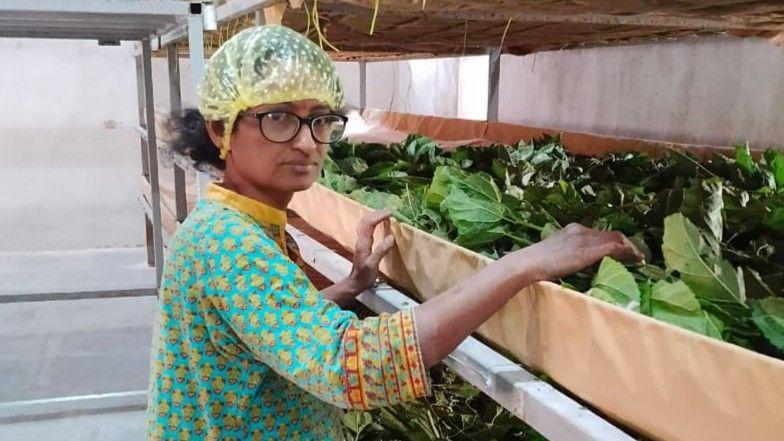
It’s not uncommon now to find an engineer or a scientist—someone once destined for urban corporate life, mind you—tending to mulberry fields or meticulously rearing silkworms. That’s a consequential pivot, pointing to a quiet yet potent revolution recalibrating rural livelihoods and India’s standing in the global textile market.
But now, this ancient craft, it’s experiencing a truly vibrant resurgence, ignited by policy support, technological innovation, and a refocused national obsession with self-reliance.
Behind the headlines of booming IT exports and manufacturing growth, the hum of silk looms—a faint whisper just years ago—is, dare I say, growing quite a bit louder. It signals a strategic recalibration by the government to buttress its vast agricultural base and tap into the bountiful global demand for natural fibers.
Prime Minister Narendra Modi has often championed the ‘Atmanirbhar Bharat’ (Self-Reliant India) initiative; this sector, it’s a perfect embodiment of that vision.
“Our farmers and rural entrepreneurs are the bedrock of a truly self-reliant India,” Modi asserted in a recent address, “and the resurgence of our traditional industries, like sericulture, isn’t just about exports; it’s about dignity, innovation, and sustainable prosperity for millions.”
The Thread of Innovation. Seriously.
What’s driving this comeback? Part of it, certainly, stems from an urgent need for agricultural diversification—offering farmers an alternative cash crop far less susceptible to monsoon whims. But it’s also, significantly, about leveraging some serious research — and development.
Consider the introduction of advanced silkworm rearing techniques, disease-resistant mulberry varieties, and modern reeling technologies. Incremental improvements? Hardly. They’re fundamentally altering the economics for small — and marginal farmers.
Not everyone, perhaps, might realize India stands as the world’s second-largest producer of raw silk. In fiscal year 2021-22, the nation churned out an impressive 35,820 metric tons of raw silk, according to data from the Central Silk Board under the Ministry of Textiles. This sector, crucially, also furnishes direct and indirect livelihoods to approximately 9.76 million people, predominantly in rural areas, making its social impact profoundly consequential.
Related: Canada’s Quarry Rewrites Green Policy
For Ms. Radha Sharma, CEO of ‘Silk Routes India,’ a cooperative of silk farmers and artisans, the seismic shift is palpable.
“We’re seeing a new generation entering sericulture, armed with education and a desire for sustainable practices,” Sharma observed during a recent industry webinar. “They’re not just growing silk; they’re innovating, creating new markets, and showcasing Indian craftsmanship to the world.”
📖 THE POLICY DIGEST MAGAZINE: OCTOBER 2026 EDITION NOW LIVEExclusive Battle Damage Assessment by Sarah Adams, US-Iran Diplomatic Talks & Transnational Investigations👉 READ BY CLICKING HERE
But challenges persist, of course. Climate change impacts mulberry cultivation; and competition from synthetic fibers, it’s still fierce, a truly stubborn quagmire for the industry. But the quality and unique appeal of Indian silk, including the famed varieties like Tussar, Muga, and Eri, well, they furnish it with a distinct trump card.
A Regional Weave and Global Implications. Massive ones.
The revival isn’t just an internal Indian story; it holds truly consequential implications for South Asia and beyond, a complex tapestry of economic interplay, if you will. Neighboring countries, including Pakistan and Bangladesh, also possess nascent or traditional sericulture industries.
India’s advances in productivity and quality could well set a new benchmark for the entire region, potentially engendering both spirited competition and vital collaboration. Historically, the ancient silk routes connected these very lands, creating a shared heritage that now, with modern trade and technological exchange as its new sinews, could truly be revitalized.
Will India’s renewed, almost fervent, focus on sustainable, high-quality silk spur similar policy shifts in Karachi or Dhaka? It’s a genuine question worth pondering, because, really, the potential for regional economic uplift through shared agricultural best practices and broader market access is absolutely immense.
What This Means. Really.
At its core, this sericulture revival signals a broader strategic recalibration by India—a determined lurch, one might say, towards leveraging its traditional strengths with contemporary innovation. It’s a pragmatic approach to rural development, targeting job creation and income generation precisely where it’s needed most.
Economically, increased domestic production could dramatically reduce import dependency, thereby shoring up the national exchequer while positioning India as an even more formidable player in the global luxury textile market. This isn’t merely about fabric, you know; it’s about value addition, a whole supply chain transformation, from the farm gate all the way to the fashion ramp.
And it also highlights a growing awareness of sustainability, as natural fibers inexorably gain preference over petroleum-based synthetics. Politically, the triumph of such programs unquestionably strengthens the government’s narrative of inclusive growth and rural buttressing, a particularly pivotal point in a country with such a massive agricultural workforce.
The math, it’s stark: ploughing resources into a labor-intensive, environmentally friendly sector like silk production can, unequivocally, deliver significant dividends, both economic and social. So, it’s a long-term play, certainly, but one that truly augurs a richer, more resilient future for millions.
For India, the threads of history and future ambition are intertwining, creating a fabric of self-reliance that’s both durable and exquisite. This isn’t just about preserving an ancient craft; it’s about proving that tradition, when infused with ingenuity, can still be a potent catalyst for progress in this fast-paced 21st century. What a thought, huh?