


Before the Sack Race: Doug Martin, the Unsung Pioneer of NFL Record Books
POLICY WIRE — Minneapolis, USA — Few players ever truly forge a permanent, undeniable niche in the sprawling lore of professional sports history simply by virtue of timing. Yet, Doug Martin, the...

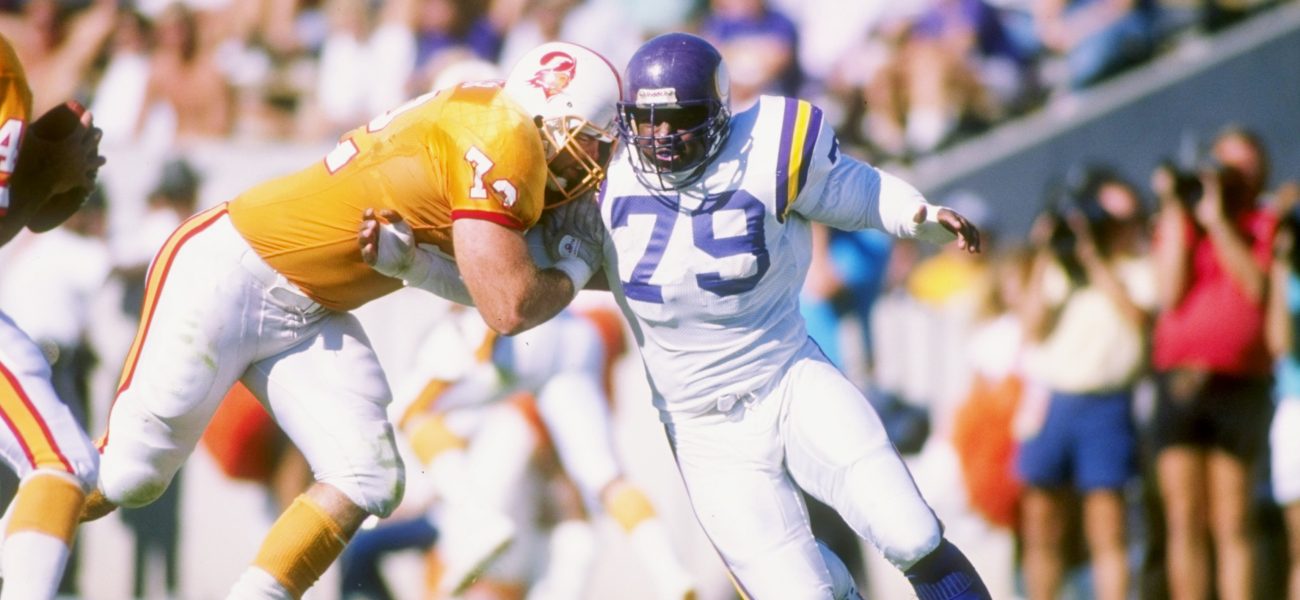
POLICY WIRE — Minneapolis, USA — Few players ever truly forge a permanent, undeniable niche in the sprawling lore of professional sports history simply by virtue of timing. Yet, Doug Martin, the bruising defensive end who fortified the Minnesota Vikings‘ line for a decade, did precisely that, quietly becoming a trailblazer in the National Football League’s statistical evolution.
It’s an often-overlooked fact that before 1982, the thunderous impact of a quarterback takedown—a ‘sack,’ mind you—wasn’t an officially tracked statistic. Suddenly, in a strike-shortened season that saw just nine games played, Martin materialized from the chaos to record 10.5 sacks, making him, by definition, the first player to officially lead the NFL in that category. This week? The football world mourns. At 68. Reminding us of a legacy built not just on raw talent, but on being in the right place at a watershed juncture, like a supernova in a brief celestial event.
And what an ode it was. Martin spent his entire 10-year professional career in the frosty climes of Minnesota, an unwavering declaration of his consistent performance and the fierce loyalty he inspired. Drafted ninth overall in the 1980 NFL Draft, he swiftly asserted himself as a formidable force.
But that 1982 season, in particular, etched his unique place. It recalibrated how the league recognized defensive supremacy, and Martin was its accidental, yet undeniable, standard-bearer. Not just a recipient. He capitalized upon it.
Many remember him not just for the numbers, but for the man himself. Warren Moon, the Hall of Fame quarterback who played with Martin, didn’t hesitate to lavish praise on his character.
“I’ll always remember his big chuckle, his laugh, and I will miss him calling me ‘Moony,'” Moon recently shared, his voice tinged with nostalgia. “He was a loyal and honest friend, the kind of teammate you could always count on to have your back, both on and off the field.”
Another former teammate, Scott Studwell, a member of the Vikings’ Ring of Honor, reiterated those sentiments, underscoring Martin’s dual excellence.
“Tough to hear about Doug — he’s a great guy,” Studwell remarked. “He was a huge part of any success we had, — and you could count on him. He was a great player and a better man. We will miss him terribly.”
Such heartfelt tributes aren’t atypical for beloved former players, but Martin’s story carries a further stratum of historical weight. He was more than merely a solid defensive end; he was a benchmark. His 10.5 sacks in ’82, a number that sounds modest by today’s 17-game standards, was monumental for a compressed season—a feat that seemed to defy the very constraints of time. The very next year, in a full 16-game slate, he exceeded that, amassing an impressive 13 sacks.
📄 POLICY WIRE WHITEPAPER PUBLISHED: PAKISTAN'S NATIONAL SECURITY POLICY PRIORITIES
👉 READ BY CLICKING HEREStill, Martin never quite reached that double-digit mark again, though he logged two more seasons with nine sacks. By the time he hung up his cleats, his career total stood at 61.5 sacks, alongside seven forced fumbles. He played a linchpin function in leading the Vikings to the playoffs four times, including a deep run to the NFC Championship game in 1987.
This persistent saga of a player who, through circumstance and skill, set a new standard reverberates far beyond the American gridiron. Across the globe, particularly in nascent athletic arenas like Pakistan and the broader South Asia—where the NFL’s reach is steadily growing—the concept of a ‘first’ or a ‘pioneer’ holds immense cultural significance. It’s a universal language, celebrating those who break new ground, whether in sports, science, or politics, and isn’t that just a little fascinating? The NFL’s burgeoning footprint, propelled by the universal appeal of such stories, reflects a subtle form of cultural diplomacy, illuminating American ideals of competition and achievement to diverse audiences.
What This Means
Martin’s passing illuminates more than just a life well-lived; it provides a stark reminder of the NFL’s ongoing quandary with historical record-keeping—a topic, one might argue, as intricate as a Bill Belichick defensive scheme—and how legacies are shaped, or sometimes obscured, by bureaucratic decisions. For decades, sacks were unofficially tracked by individual teams and sports writers, leading to debates about who truly racked up the most quarterback takedowns before 1982. This ‘official’ recognition of Martin’s feat, while accurate for the modern era, inadvertently diminishes the accomplishments of pre-1982 legends like Deacon Jones, whose unofficial totals dwarf many later records. It’s almost as if the league decided, “Poof! History begins now!”
It’s a policy decision that, in essence, rewrites history, drawing a distinct line in the sand, a veritable Rubicon for statistical analysis. This isn’t just an NFL conundrum; it reflects how historical data is collected and presented in various fields, often swaying how we discern past contributions, and it’s a mutable dance, isn’t it? For the league, it means navigating the delicate balance of honoring pioneers while recognizing the mutable nature of its own data infrastructure. What happens when new metrics emerge? Will we have another ‘first official’ leader in some yet-to-be-invented stat?
The math is unyielding: officially, Martin was first. Unofficially? He stands among many who terrorized quarterbacks long before. And that matters for how we talk about football greatness, plain — and simple. For a detailed look at how the league continues to honor its past while building for the future, one might consider how the NFL’s biggest events, like the draft, continually draw new eyes and build new legends. Related: Pittsburgh Gears Up for Annual Future-Shaping Spectacle.
Dr. Eleanor Vance, a distinguished sports sociologist at the University of Maryland, notes this historical friction. “The NFL’s decision to formalize sack statistics in ’82 was a watershed moment, creating a clear division,” Vance articulated in a recent interview. “It gave us a new lens through which to view defensive performance, but it also, perhaps unfairly, placed figures like Doug Martin in a unique, almost artificial, ‘first’ position, overshadowing the unofficial, yet very real, supremacy of his predecessors. It’s a fascinating case study in how institutions construct narrative through data policy.”
Ultimately, Martin’s legacy serves as a powerful testament. Quiet excellence. Right player, right time. He didn’t just play the game; he inadvertently helped recalibrate how a crucial part of it was measured, forever etching his name in the league’s evolving numerical chronicle.