


Mexican Migrant Exodus Transforms: Thousands Seek Asylum Within Mexico, Not U.S.
POLICY WIRE — Mexico City, Mexico — Mexico’s southern highway isn’t just a route; it’s become a crucible where the aspirations of thousands are being dramatically reforged. Far from the typical image...

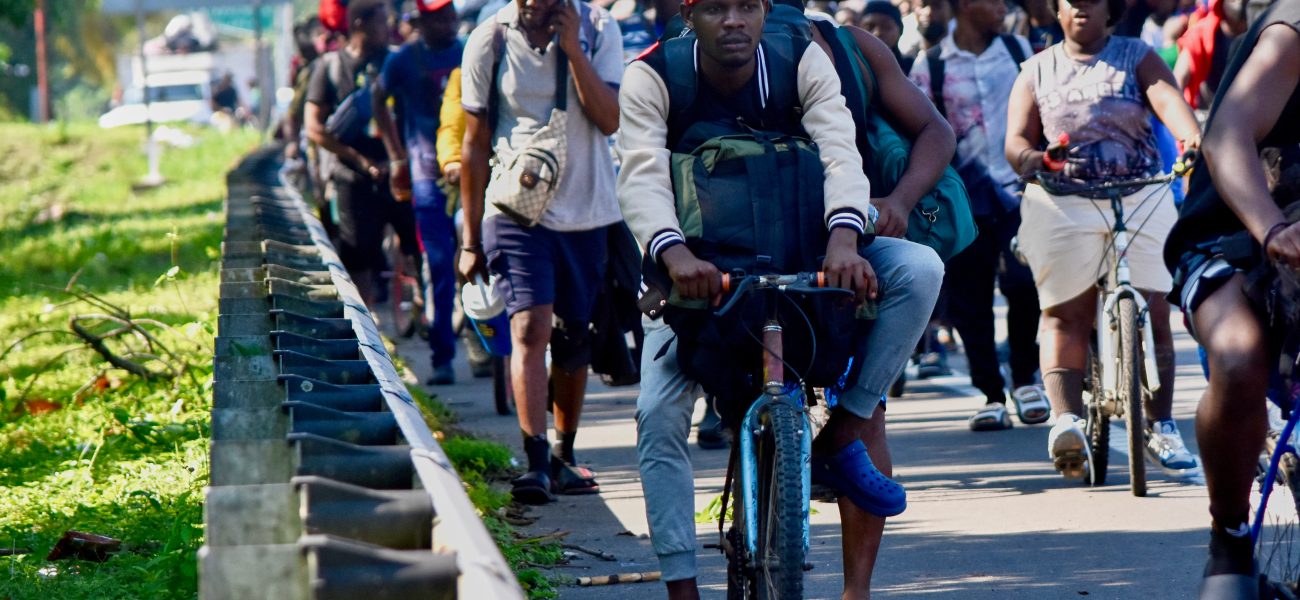
POLICY WIRE — Mexico City, Mexico — Mexico’s southern highway isn’t just a route; it’s become a crucible where the aspirations of thousands are being dramatically reforged. Far from the typical image of migrants doggedly chasing the American dream, a recent massive caravan, winding its way north from Tapachula, bears a surprising, arguably strategic, new intent for many of its participants.
For years, the U.S. border has stood as the ultimate, often elusive, prize. Not this time. A significant portion of these desperate souls now harbors a different objective: finding refuge and opportunity within Mexico itself. That’s a tectonic plate movement in the human geography of migration, wouldn’t you say?
Behind the headlines, a critical realization has dawned among these travelers. Mexico, long perceived as merely a transit nation, increasingly offers a more attainable — though still arduous — path to a semblance of stability. Exasperation with U.S. asylum policies, coupled with often brutal enforcement (and let’s be honest, sometimes outright cruelty), has clearly pushed many to reconsider their journeys.
Few can blame ’em for adjusting their calculus. Washington’s evolving — and often bafflingly contradictory — border policies under successive administrations have left countless migrants in prolonged legal limbo, frequently in truly dangerous conditions along the border, a quagmire of its own making.
“Our goal has always been to offer a humanitarian hand, while also managing our borders responsibly,” mused Ana Sánchez, a spokesperson for Mexico’s National Migration Institute (INM), to Policy Wire. “We’ve seen a marked increase in requests for asylum here, and we’re adapting to meet those needs, collaborating with international organizations to process these claims more efficiently.”
And yet, this new direction doesn’t mean an easier journey. Days of walking under a brutal sun, often with meager supplies, remain a grim reality, believe you me. Exploitation. Sickness. Despair. Still commonplace.
The caravan, estimated by local authorities to number upwards of 7,000 people at its peak, underscores a kaleidoscopic array of origins. While Hondurans and Guatemalans still constitute a large contingent, a notable presence of migrants from farther afield—including Venezuela, Haiti, and even parts of Asia and Africa—underscores the global nature of this phenomenon.
One such individual is Ahmed Khan, a 34-year-old father of three from Bangladesh, whom Policy Wire caught up with near Arriaga. He’s been on the move for nearly two years. The echoes of displacement across the global south — from the Rohingya crisis to economic hardships in his own country, an almost unbearable weight — catapulted him onto this interminable odyssey. Khan grumbled about harrowing passages through multiple continents, his initial American dream now tempered by pragmatic exhaustion.
“My family needs safety, not just hope,” Khan explained, his voice hoarse with fatigue. “If Mexico can give us a chance to work, to send my children to school, then that is our new America. The journey to the U.S. feels like a trap now.”
📄 POLICY WIRE WHITEPAPER PUBLISHED: PAKISTAN'S NATIONAL SECURITY POLICY PRIORITIES
👉 READ BY CLICKING HERE
His words lay bare the evolving calculus. Mexico reported over 140,000 asylum applications in 2023, a staggering 70% increase from the previous year, according to data from the Mexican Commission for Refugee Assistance (COMAR). This figure, frankly, shouts volumes about the growing pressure on Mexico’s resources — and infrastructure.
But the U.S. border remains a lodestone for many. For some, the desperation’s simply too great, the belief in American opportunity too ingrained. So for a growing number, the risks and barriers outweigh the perceived rewards, making Mexico an increasingly viable, if reluctant, haven.
What This Means
This evolving migratory pattern carries truly consequential implications for regional policy and international relations. Politically, it shifts some of the immediate pressure from the U.S. southern border, doesn’t it? Yet it intensifies the burden on Mexico. President Andrés Manuel López Obrador’s administration will face increasing domestic and international scrutiny regarding its capacity to integrate and support these populations.
Economically, while a new labor pool could theoretically yield dividends, the sheer scale of migration gnaws at social services, housing, and job markets, particularly in southern states already grappling with underdevelopment. Diplomatically, it forces a more collaborative, nuanced approach between Washington and Mexico City, moving beyond punitive measures to strategies that tackle the taproots and expand legal pathways, both north and south of the U.S. border.
For Washington, this development offers a convoluted looking-glass. It suggests that while strict border enforcement may deter some, it fundamentally redirects, rather than vanquishes, the crisis. Can the U.S. leverage this shift to foster more stable migration management throughout the region? Or will it merely continue its reactive stance — a pattern we’ve seen play out countless times before, sadly?
Ultimately, the long-term success of this recalibration hinges on Mexico’s ability to transition from a transit country to a genuine destination for asylum seekers. That’s a Sisyphean undertaking, requiring robust international support — and domestic political will. The math’s stark: without viable integration, these shifting patterns could simply create new humanitarian flashpoints further south, pushing the crisis into Mexico’s interior and beyond.