
Colts’ QB Conundrum: Daniel Jones’ Recovery Shadows 2026 NFL Draft Prospects
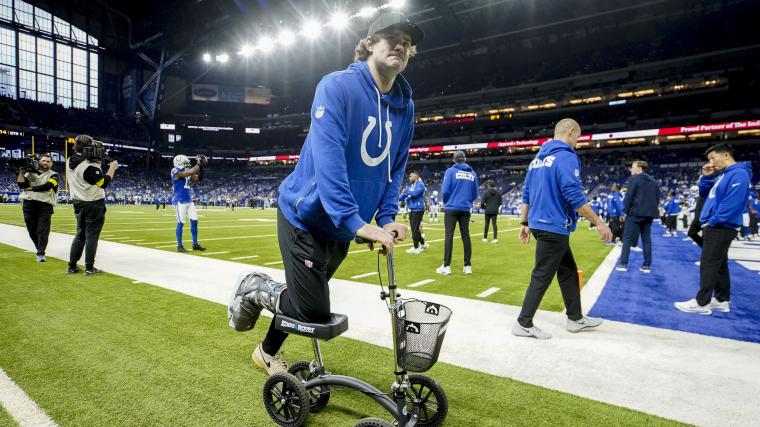
POLICY WIRE — Indianapolis, USA — The ghost of a season past often haunts the next, but for the Indianapolis Colts, the grim specter of Daniel Jones’ torn Achilles stretches far beyond...

POLICY WIRE — Indianapolis, USA — The ghost of a season past often haunts the next, but for the Indianapolis Colts, the grim specter of Daniel Jones’ torn Achilles stretches far beyond immediate concerns, casting an unsettling pall over even the distant 2026 NFL Draft.
No one had foreseen the abrupt derailment last season. Indianapolis, you see, had been accruing momentum, a genuine surprise in the league, only to watch their promising campaign shatter alongside their star quarterback’s tendon. It’s a stark, brutal reminder of the sport’s savage capriciousness. Truly.
Few team-altering events carry the gravitas of a franchise quarterback’s momentous injury. That’s a consequential shift from mere roster adjustments; it orchestrates strategy for years to come, pulling at threads — the kind that interconnects coaching staff, free agency, and, most paramountly, the draft — in a complex web.
For months now, the query hasn’t just been when Jones returns, but how he returns. Will he be the same electrifying player who ignited aspiration, or an attenuated shadow of his former self? The answer, friends, ensnares the future of the Colts’ entire draft strategy, keeping it in limbo.
Colts Head Coach Shane Steichen, a man known for his unflappable mien, recently proffered an update that offered a scintilla of hope amid the omnipresent ambiguity. One might even call it an exercise in carefully managed expectations, given the circumstances.
“He’s putting in the work, day in — and day out. It’s a grind, sure, but Daniel’s got that mental toughness you rarely see,” Steichen told reporters. “We’re confident in his recovery, but we’re also realistic about the timeline. He’s been tireless, practically living in the training room from 8 to 3.”
But still, the path back from an Achilles tear remains notoriously grueling for any professional athlete, let alone a quarterback whose mobility and drive are utterly pivotal to his game. Data from a 2020 systematic review in Orthopaedic Journal of Sports Medicine intimates that while return-to-play rates for NFL players after Achilles rupture hover around 70-80%, a sizable contingent don’t regain their pre-injury form, with some studies evinced performance declines of up to 20% in the first season back.
And that matters. Immensely. The entire league, bless its heart, absolutely gets the fragility of this position.
The math is unvarnished: if Jones falters, the Colts may find themselves in a frantic dash for a high draft pick in 2026. This isn’t just about finding a backup; it’s about potentially seeking a long-term successor, a pivot that could fundamentally reconfigure the team’s entire trajectory and financial commitments – a true fork in their organizational road, isn’t it?
So, this situation isn’t unique to Indianapolis, of course, but it epitomizes the tenuous equilibrium of power, talent, and sheer luck that defines professional sports. Every franchise, every season, treads this razor’s edge. A tightrope walk, really.
Behind the gilded veneer of weekly matchups and highlight reels, NFL team-building operates with a profound strategic calculus akin to any major multinational corporation or geopolitical entity. Consider, for a moment, the fastidious, multi-year planning required for nations like Pakistan to orchestrate large-scale infrastructure projects or stabilize complex economic sectors.
Such efforts necessitate foresight, hedging against unpredictable variables — sometimes as fickle as a coin toss — be it political instability, commodity price fluctuations, or, in the case of football, the sudden injury of a generational talent. Both scenarios involve gargantuan capital outlays, sky-high stakes, and the constant threat of unforeseen disruptions derailing fastidiously engineered plans.
One preeminent NFL general manager, who requested anonymity to speak freely about a rival team’s predicament, expounded upon this universal truth.
“Every GM in the league is watching Indy right now. It’s a textbook case of how one injury can reshape your entire strategic outlook, not just for next season, but for years,” the GM mused. “You draft for immediate needs, but you also draft for contingency, especially at quarterback. It’s an unenviable position, really, weighing hope against the cold hard reality of what might be available in the draft two years out.”
What This Means
The Colts’ quandary isn’t merely a health update; it’s a stark elucidation of the symbiotic relationship between player welfare, team finances, and long-term strategic planning. Should Jones face setbacks, the team’s future draft capital morphs into something infinitely more valuable, necessitating them to potentially sacrifice other positional needs for a potential QB of the future. This, naturally, could lead to a less balanced roster, creating a domino effect across the organization like a set of falling toy soldiers.
But the ambiguity, however, forces management to operate on parallel tracks, scouting quarterback prospects with a fervent intensity that might otherwise be allocated for other positions, even while publicly backing their current starter.
For the league as a whole, it underscores the increasingly byzantine risk management involved in player contracts. Teams are investing hundreds of millions in players whose careers can be catastrophically derailed by a single, ill-timed play. That could certainly drive future contract negotiations towards more injury-dependent clauses, or even reverberate through insurance markets for high-value athletes.
Related: NFL Draft 2026: Pittsburgh Gears Up for Annual Future-Shaping Spectacle
Ultimately, the Colts’ current tightrope walk isn’t just a medical drama; it’s a stark, almost brutal, reminder that in the merciless arena of professional sports, and indeed, in many grand endeavors, the best-laid plans often hinge upon the most fragile of foundations – a player’s health, a nation’s stability, or a market’s unpredictability. Expect General Manager Chris Ballard and his team to fastidiously appraise every conceivable scenario, because for the Colts, the 2026 NFL Draft has already, unequivocally, begun.