


Sophia Naga and the Silent Fault Lines of the World’s Largest Democracy
India, a nation often celebrated for its diversity, cultural richness, and electoral processes, continues to project itself as the world’s largest democracy. This narrative, however, encounters...

India, a nation often celebrated for its diversity, cultural richness, and electoral processes, continues to project itself as the world’s largest democracy. This narrative, however, encounters uncomfortable contradictions when viewed from the margins- where dissent is often met not with dialogue, but with denial, and where identity is often seen not as heritage, but as a hurdle.
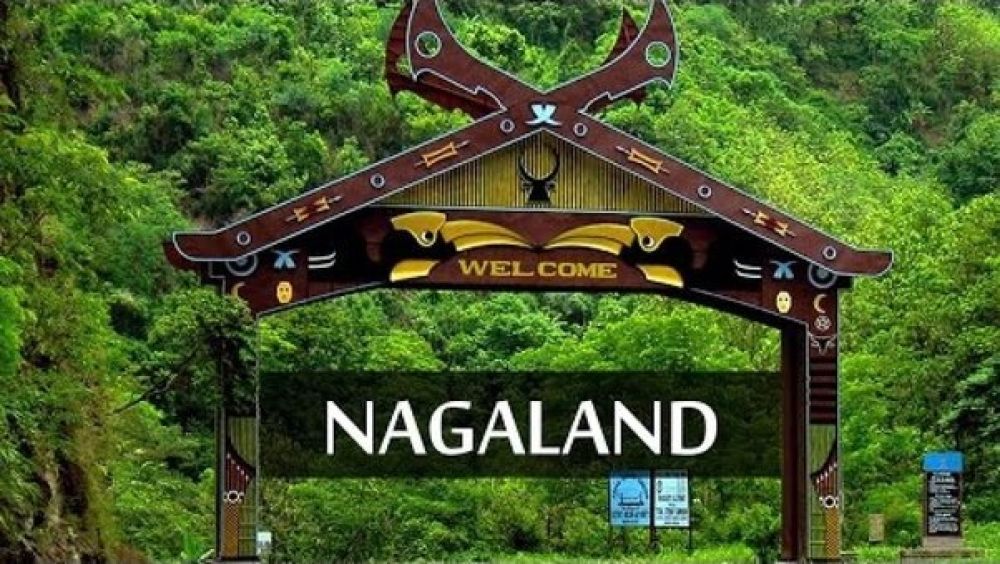
A recent case from Nagaland- one of India’s remote northeastern states- highlights these tensions. Sophia Naga, an indigenous woman from the region, engaged in a symbolic act of protest by burning the national flag. For her, it was not a rejection of democratic values, but rather a cry against the absence of those very values in her homeland. What followed was not debate, nor democratic engagement, but a night-time military raid, physical assault, and the abduction of her husband- acts that raise unsettling questions about the state’s response to dissent.
Sophia’s protest stemmed from decades of frustration in a region where many believe their voices have been consistently excluded from the national discourse. Her act- controversial though it may be in mainstream perception- was not born of hatred, but of a sense of historical erasure and political invisibility. The response she received, however, was disproportionate by any democratic standard. While states must certainly uphold their laws and symbols, the manner in which such enforcement occurs reflects on the maturity and self-confidence of a democracy. In Sophia’s case, the punitive nature of the response points less to law enforcement and more to a desire to silence.
Nagaland has long lived in a suspended political reality. Though formally part of the Indian Union, it continues to experience a relationship with the state that feels more administrative than participatory. The presence of the Armed Forces (Special Powers) Act (AFSPA)- a legislation granting sweeping powers to the military- has had a chilling effect on civil liberties. It has also perpetuated a perception that the region is governed more through coercion than consent. It is important to consider what it means for a democracy to retain such exceptional laws in peacetime. These are the questions not often asked in national forums but are quietly echoed in the alleys of Dimapur, Kohima, and villages like Sophia’s.
India’s strength has always been its ability to absorb difference- linguistic, religious, regional- and weave it into a broader national fabric. Yet, when voices like Sophia’s are not engaged but extinguished, that fabric begins to fray. Democracy, after all, is not tested by the applause of the majority but by how it treats the minority- especially when they are discontent.
It is easy to dismiss acts of protest from regions like Nagaland as fringe or extremist. But such simplification risks obscuring the deeper causes: alienation, militarization, and the absence of political dialogue. Engaging these communities not merely through security lenses but through empathetic statecraft is not a concession, but a commitment to constitutional values.
Sophia’s ordeal received little coverage in India’s mainstream media. This silence is telling. It reflects a broader discomfort in addressing the contradictions within the democratic project. In the age of global media scrutiny, democracies are increasingly judged not only by their electoral frequency but also by their ability to handle critique- especially from within.
Civil society, human rights defenders, and intellectual voices must help bridge this gap. Not to weaken the state, but to strengthen its moral and democratic core. Sophia Naga’s story is not just about Nagaland- it is about what kind of democracy India aspires to be.
Flags, constitutions, and national identities are powerful symbols. They can unite, inspire, and elevate. But they can also be wielded to suppress and silence if not handled with care. When a citizen burns a flag in protest, the mature democratic response is to ask why, not to retaliate without restraint. Sophia Naga’s story reminds us that the true test of a democracy is not in the power it holds, but in the compassion it shows. To disagree with the state is not to hate the nation. And to listen- truly listen- to voices from the periphery is not a weakness, but the deepest expression of national strength.
Author