

India’s Crackdown on Islamic Literature and Political Dissent in Kashmir
In early 2025, India escalated its campaign of repression in Jammu and Kashmir by targeting two key pillars of civil society: the circulation of Islamic literature and the operation of traditional...

In early 2025, India escalated its campaign of repression in Jammu and Kashmir by targeting two key pillars of civil society: the circulation of Islamic literature and the operation of traditional political organizations. In a sweeping series of raids across the Valley, police seized over 650 books, many written by Abul A’la Maududi, a renowned Islamic thinker and founder of the Jamaat-e-Islami movement. Within weeks, the Indian Ministry of Home Affairs banned two prominent religious-political organizations- Jammu and Kashmir Ittihadul Muslimeen (JKIM) and the Awami Action Committee (AAC)- branding them as threats to national sovereignty. These actions are neither isolated nor incidental. They represent a calculated move by the Indian state to criminalize political expression and religious scholarship, deepening the erosion of civil liberties and institutional pluralism in Kashmir.
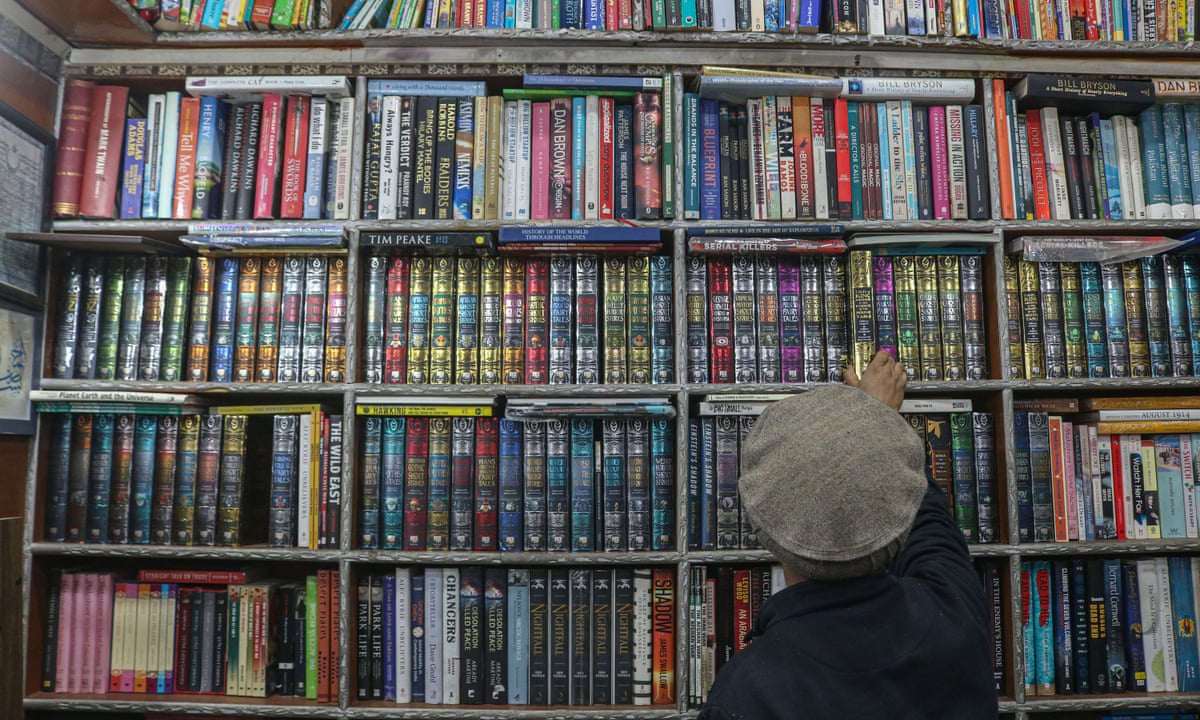
The confiscation of Islamic texts, many authored by Maududi, marks a new phase in India’s ideological war in Kashmir. While the state claims that these books promote extremism and are associated with banned outfits like Jamaat-e-Islami, it fails to acknowledge that Maududi’s writings are globally recognized and widely studied in academic and theological contexts. His works have been part of intellectual discourse across South Asia and the Muslim world. To equate religious literature with incitement is not only an intellectual failure but also a gross violation of the right to free thought and expression.
The targeted publisher, Markazi Maktaba Islami, is a registered and legal entity in India, with distribution channels in Delhi and other metropolitan regions. By singling out Kashmiri bookstores and readers, the Indian state sends a clear signal: religious consciousness and dissenting ideology in Kashmir are inherently suspect. This selective enforcement reveals the deepening communal bias underpinning state policy.
Following the literary crackdown, the Indian government moved to delegitimize and ban the AAC and JKIM. These organizations have long been part of Kashmir’s sociopolitical fabric. AAC, founded by Mirwaiz Maulvi Farooq and later led by his son Mirwaiz Umar Farooq, has historically advocated for a peaceful resolution to the Kashmir dispute through dialogue and democratic engagement. JKIM, under Masroor Abbas Ansari, similarly functions as a religious-political movement grounded in the principles of Shia Islamic philosophy and non-violence.
By labeling these groups “unlawful associations” under the Unlawful Activities (Prevention) Act (UAPA), the Indian state conflates political activism with sedition. The timing is instructive: both leaders had recently resumed limited public engagements after years of house arrest. Their renewed public presence and calls for dialogue likely prompted the bans, illustrating India’s unwillingness to tolerate even moderate voices that challenge its unilateral narratives on Kashmir.
These actions cannot be understood in isolation from the broader authoritarian turn in Indian policy since the revocation of Article 370 in August 2019. That constitutional coup dismantled Jammu and Kashmir’s limited autonomy, replacing it with direct rule from New Delhi. In the years since, the region has seen a systematic dismantling of its political institutions, the incarceration of opposition leaders, curbs on press freedom, and sweeping arrests under anti-terror laws.
India’s invocation of the UAPA, a draconian law that allows for prolonged detention without trial, reflects an institutionalized strategy to silence dissent. In Kashmir, this legal framework has become a tool of collective punishment, disproportionately affecting Muslims, especially those engaged in scholarship, journalism, or community leadership.
The selective application of laws and the targeting of Muslim organizations and intellectual heritage expose the fundamentally discriminatory nature of India’s governance in Kashmir. While right-wing Hindu groups continue to operate freely across India- some even openly advocating violence against minorities- Muslim organizations in Kashmir are denied the presumption of legality or legitimacy.
This double standard is not lost on observers. By policing Muslim thought and criminalizing organizations that advocate for Kashmiri self-determination, the Indian state is not merely suppressing rebellion but redefining nationalism in narrow, Hindutva-compatible terms. This process of ideological cleansing mirrors tactics used in other authoritarian contexts where national identity is conflated with a singular ethnic or religious vision.
The erosion of civic space in Kashmir has long-reaching consequences. Political organizations like AAC and JKIM, despite their differing theological orientations, have historically provided a platform for community mobilization, religious education, and peaceful protest. Their elimination from public life creates a vacuum that state-backed organizations or radical elements could exploit.
Furthermore, the suppression of literature undermines intellectual pluralism. When religious texts are seized en masse, it signals the state’s fear of competing ideologies. This is not the behavior of a confident democracy but of a regime that fears debate and dissent. In this atmosphere, even moderate religious and political engagement becomes perilous, pushing younger generations either into silence or more extreme forms of resistance.
The international community has largely remained mute in the face of these developments, constrained by geopolitical alliances and the allure of India as a market. This silence is both strategic and shameful. The suppression of religious and political freedoms in Kashmir should not be normalized or dismissed as internal affairs. These are violations of international human rights obligations, including those under the International Covenant on Civil and Political Rights (ICCPR), to which India is a signatory.
It is imperative that global human rights organizations, academic institutions, and civil society actors speak out. The systematic targeting of Kashmiri civil society cannot be allowed to continue under the pretext of counterterrorism. True peace in Kashmir will not come through bans and book seizures but through dialogue, justice, and respect for fundamental freedoms.
India’s recent actions in Kashmir represent more than just administrative decisions; they are part of a broader ideological project that seeks to erase dissent, homogenize thought, and entrench control. The banning of AAC and JKIM and the seizure of Islamic literature are not measures to protect public order- they are acts of state repression aimed at silencing an entire people.
In criminalizing ideas and organizations rooted in Kashmir’s religious and political identity, the Indian state continues to betray the democratic principles it claims to uphold. Only when the right to think, write, organize, and dissent is restored can there be any hope for justice, peace, or reconciliation in Kashmir. Until then, the Valley remains occupied not just by soldiers, but by fear and silence imposed by law.
Author