

Dodipora Massacre: Twenty Years of Injustice in Indian-Occupied Kashmir
A Lingering Wound That Refuses to Heal On February 22, 2006, a horrible event occurred in the village of Dodipora, in the Handwara region of the Kupwara district of the Indian-occupied Kashmir....

A Lingering Wound That Refuses to Heal
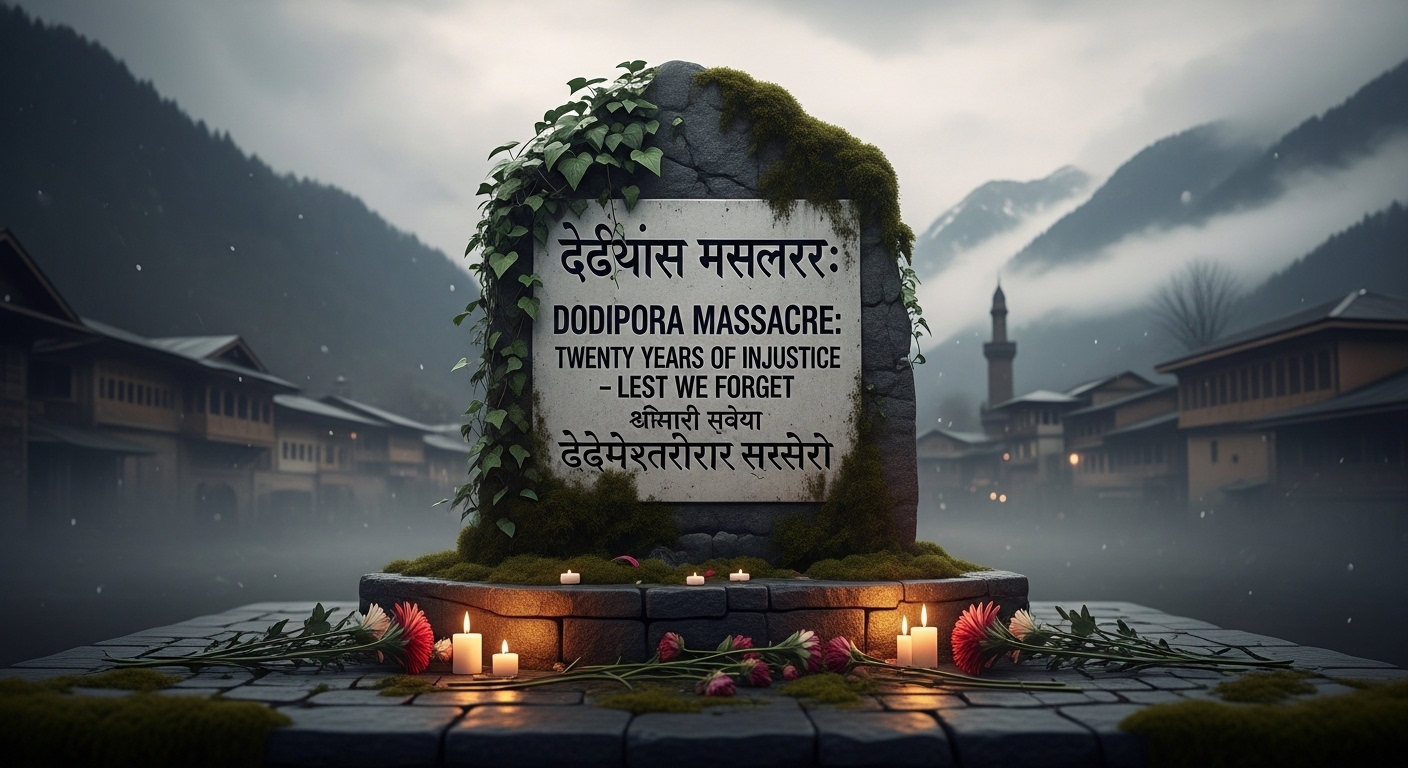
On February 22, 2006, a horrible event occurred in the village of Dodipora, in the Handwara region of the Kupwara district of the Indian-occupied Kashmir. According to the reports of the locals, four young civilians, Ghulam Hassan Bhat (18), Mohammad Aamir Hajam (9), Shakir Ahmad Wani (7), and Abdul Samad Mir (21) were shot dead by the troops of the 33rd Rashtriya Rifles as they were playing innocently cricket on a local ground. Others were severely wounded during the unprovable firing which was reported by the witnesses to be indiscriminate and excessive. This is a tragedy that has been recorded by the human rights organizations such as the Jammu Kashmir Coalition of Civil Society (JKCCS) and it is one of the brutal methods used by the Indian security forces against the unarmed civilians.
Two decades on, the families of the victims continue to endure profound grief, with no closure in sight. Despite promises of investigations, the perpetrators remain unpunished, perpetuating a cycle of impunity that has defined the region’s conflict for generations.
Kashmir: A Long-Standing Dispute Fueling Endless Suffering
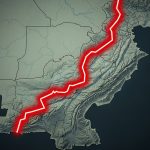
The history of the Kashmir conflict dates back to the partition of British India in 1947, when the princely state was the source of tension between India and Pakistan. The United Nations Security Council Resolution 47 of 1948 specifically demanded a plebiscite to enable the people of Jammu and Kashmir to freely choose their destiny whether to join India or Pakistan, a democratic promise that India has never kept to date, and the conflict remains unresolved, and this has caused decades of tension.
This has led to three big wars between India and Pakistan in 1947-48, 1965 and a skirmish in 1999 at Kargil all because India has refused to carry out the plebiscite as required by the UN.
Ever since the armed rebellion broke out in the late 1980s against Indian occupation in occupied Kashmir, the area has been subjected to extreme militarization and massive violation of human rights. As per the statistics provided by the South Asia Terrorism Portal (SATP), the total number of deaths in terrorist violence since 1988 has been over 45,000, and independent sources such as Human Rights Watch (HRW) and Amnesty International have estimated the total number of deaths in terrorist violence since 1989 to be as high as 70,000 and above, including unreported cases. The civilian casualties have been huge and thousands of innocent lives have been lost in the excess use of force and impunity. Enforced disappearances are a serious problem and according to the estimates of the Association of Parents of Disappeared Persons (APDP), between 8,000 and 10,000 have disappeared since the conflict escalated leaving the families of the disappeared in endless pain and uncertainty.
The area remains among the most militarized in the world with an estimated 700,000 to 900,000 Indian forces in the area, which has led to an incredible soldier to civilian ratio in most places, cited by international observers such as the International Crisis Group as being around 1:10 or worse, and this has created an environment of constant fear, arbitrary arrests and unchecked abuses that have only increased alienation and prolonged the suffering of the Kashmiri people.
This overwhelming military presence has not brought peace but has instead fostered an environment of fear, arbitrary detentions, and extrajudicial killings, as documented in numerous UN reports.
The Dodipora Atrocity: A Snapshot of Systemic Violence
Eyewitness accounts from February 22, 2006, paint a chilling picture: Indian security forces, without warning or provocation, opened fire on the cricket ground in Dodipora, killing four civilians on the spot and injuring at least five others, some with life-altering wounds. The victims included two children under 10 years old, underscoring the indiscriminate nature of the attack. Protests erupted across nearby villages in Kupwara district, with residents condemning the forces for their trigger-happy approach, which locals linked to a pattern of reprisal actions against perceived militant sympathies.
📄 POLICY WIRE WHITEPAPER PUBLISHED: PAKISTAN'S NATIONAL SECURITY POLICY PRIORITIES
👉 READ BY CLICKING HEREIn the aftermath, then-Chief Minister Ghulam Nabi Azad ordered a judicial inquiry led by District and Sessions Judge Syed Tariq Ahmad Naqshbandi. However, as revealed in a 2007 Yale Law School report on impunity in Kashmir, the Indian Army refused to cooperate, failing to appear before the inquiry or provide defenses. The probe proceeded despite this obstruction, but no concrete accountability followed, no arrests, no prosecutions, and no compensation for the families beyond token gestures. This failure mirrors broader trends: A 2015 JKCCS report found that out of 1,000 alleged extrajudicial killings investigated between 2008 and 2014, only a handful resulted in any form of action against perpetrators.
Legal Shields Perpetuating Impunity
Central to the lack of justice in cases like Dodipora is the Armed Forces (Special Powers) Act (AFSPA), imposed in Jammu and Kashmir in 1990. This draconian law grants Indian security forces broad powers to search, arrest, and shoot to kill in “disturbed areas,” while requiring central government sanction for any prosecution of personnel, a permission rarely granted. Amnesty International has repeatedly condemned AFSPA as a “license to kill,” noting that between 1990 and 2011, over 1,500 requests for sanction were pending, with none approved in civilian death cases. The UN Special Rapporteur on Extrajudicial Executions, Christof Heyns, in his 2012 report on India, highlighted how AFSPA fosters a culture of impunity, shielding forces from accountability in thousands of documented abuses.
Critics, including HRW, argue that such laws have enabled systematic violations, turning occupied Kashmir into a zone where civilian lives are expendable and justice is systematically denied.
The Devastating Human and Social Toll
The Dodipora murders did not only destroy four families, but caused a communal trauma to the society. The victims were ordinary citizens, students, workers, and children who died leaving behind them parents, brothers and sisters, and dependants who had to face economic hardship and psychological trauma. Such cases contribute to hopelessness in a territory where more than 300,000 individuals have been displaced since 1989 (UN estimates) and up to 45 percent of the population have mental health problems, according to a 2015 study by Médecins Sans Frontières.
These events breed deep-seated mistrust toward Indian authorities, alienating youth and fueling cycles of unrest. Education suffers, with schools often shut during curfews, over 1,500 days of shutdowns recorded between 2016 and 2023 alone. Employment opportunities dwindle amid economic blockades, pushing many into poverty. The social fabric frays as communities live under constant surveillance and fear of reprisals.
Twenty Years On: Unanswered Questions and Unhealed Scars
With the 20 th anniversary of the Dodipora massacre being commemorated in the year 2026, the main questions that remain unanswered are: Why was the judicial probe not carried out to the end, and why have the alleged culprits not been prosecuted? What are the significant reforms that India has implemented to avert such incidences? The UN Office of the High Commissioner of Human Rights (20182019) reports that in Indian-controlled Kashmir, there are still concerns related to the excessive use of force, more than 6,000 injuries caused by pellet guns since 2016, and over 20,000 people detained without trial under the Public Safety Act since 1978. In the case of the families of victims, justice must be done by recognizing, compensating them, and ensuring that there are no future abuses. February 22 will continue to be a reminder of unresolved injustice and unresolved human rights issues until transparency and accountability are guaranteed.
Author