

Kashmir, Islamophobia, and the Call for Global Solidarity
The Jammu and Kashmir issue has been one of the most protracted unresolved situations in the United Nations agenda and has now lasted more than seventy years. The key to it is the right to...
The Jammu and Kashmir issue has been one of the most protracted unresolved situations in the United Nations agenda and has now lasted more than seventy years. The key to it is the right to self-determination of the people of Jammu and Kashmir which was expressly acknowledged in the several resolutions of the UN Security Council between 1948 and 1949 (the most notable being Resolution 47 of April 21, 1948), which demanded a free and fair plebiscite to decide the future of the region.
In spite of these international commitments, the Kashmiri people are still waiting to have this right implemented, which is also a source of long-term political uncertainty and tension in the region.
Right to Self-Determination for Kashmiris
The self-determination of the people of Jammu and Kashmir is strongly rooted in the international law and reiterated severally by the United Nations. Influential resolutions of the UN Security Council, such as Resolution 47 (1948) were made, which declared that the ultimate status of the State of Jammu and Kashmir would be determined by a democratic plebiscite under the UN.
This has continued to be supported by the Organization of Islamic Cooperation (OIC). The OIC in its resolutions made during the 51st Session of the Council of Foreign Ministers (June 2025, Istanbul), reiterated that the dispute had to be solved in compliance with the relevant resolutions by the UN Security Council, as well as the desires of the Kashmiri people. The OIC Contact Group on Jammu and Kashmir, in its meeting on September 23, 2025, on the margins of the 80th UN General Assembly, reaffirmed its unwavering commitment to the inalienable right of the Kashmiri people to self-determination and demanded its early fulfilment.
Pakistan and other OIC members continue to assert that this right is still unmet, which has necessitated the renewed international action to enforce these old promises.
Human Rights and Justice in IIOJK
The issue of human rights within Indian-controlled Jammu and Kashmir IIOJK in OIC has been the subject of a long-term international body attention. It has been reported that there are long-term communication bans, restrictions on freedom of expression and movement, arrests of political leaders, and humanitarian issues that impact the everyday life.
OIC Independent Permanent Human Rights Commission (IPHRC) has been very concerned with the tendencies of discrimination, which include the alleged targeted reprisal attacks and hate-related violence against Muslims including in Kashmir following certain events. In May 2025, the IPHRC denounced the increasing Islamophobia and other related activities in India and IIOJK. In its September 2025 communique, the OIC Contact Group called on the need to improve the human rights situation, free political prisoners, and abolish repressive legislation.
These problems overlap with general accusations of demographic shifts with policies like the issuance of domicile certificates and amendments to land laws after August 2019 -policies that the OIC has termed as contravening UN resolutions and international humanitarian law, including the Fourth Geneva Convention.
Peace, Solidarity, and Regional Stability
Pakistan has always promoted peaceful, diplomatic settlement of the Kashmir dispute by dialogue and following the international law. This stance is in line with how OIC has been insisting on dialogue, de-escalation, and respect of UN resolutions as the requirements of ensuring long-term stability in South Asia.
OIC Contact Group and ministerial meetings have severally demanded a new initiative to reach a just and peaceful settlement and emphasized that no regional peace can be attained unless the fundamental Jammu and Kashmir issue is settled.
📄 POLICY WIRE WHITEPAPER PUBLISHED: PAKISTAN'S NATIONAL SECURITY POLICY PRIORITIES
👉 READ BY CLICKING HEREOIC’s Stand Against Discrimination
On February 4, 2026, the representatives of the OIC Core Group on Islamophobia held a meeting with the UN General Assembly President Annalena Baerbock, the UN Special Envoy on Islamophobia Miguel Ángel Moratinos (also the High Representative of the UN Alliance of Civilizations) and other senior United Nations officials to prepare the International Day to Combat Islamophobia, which takes place on March 15.
Reports by the Arab News and the Permanent Mission of Pakistan to the UN state that Pakistan Permanent Representative Ambassador Asim Iftikhar Ahmad referred to the day, which was established by the UN General Assembly resolution 76/254 in 2022 at the initiative of Pakistan on behalf of the OIC, as a symbol of unity across the world against prejudice, hostility, and discrimination against Muslims globally.
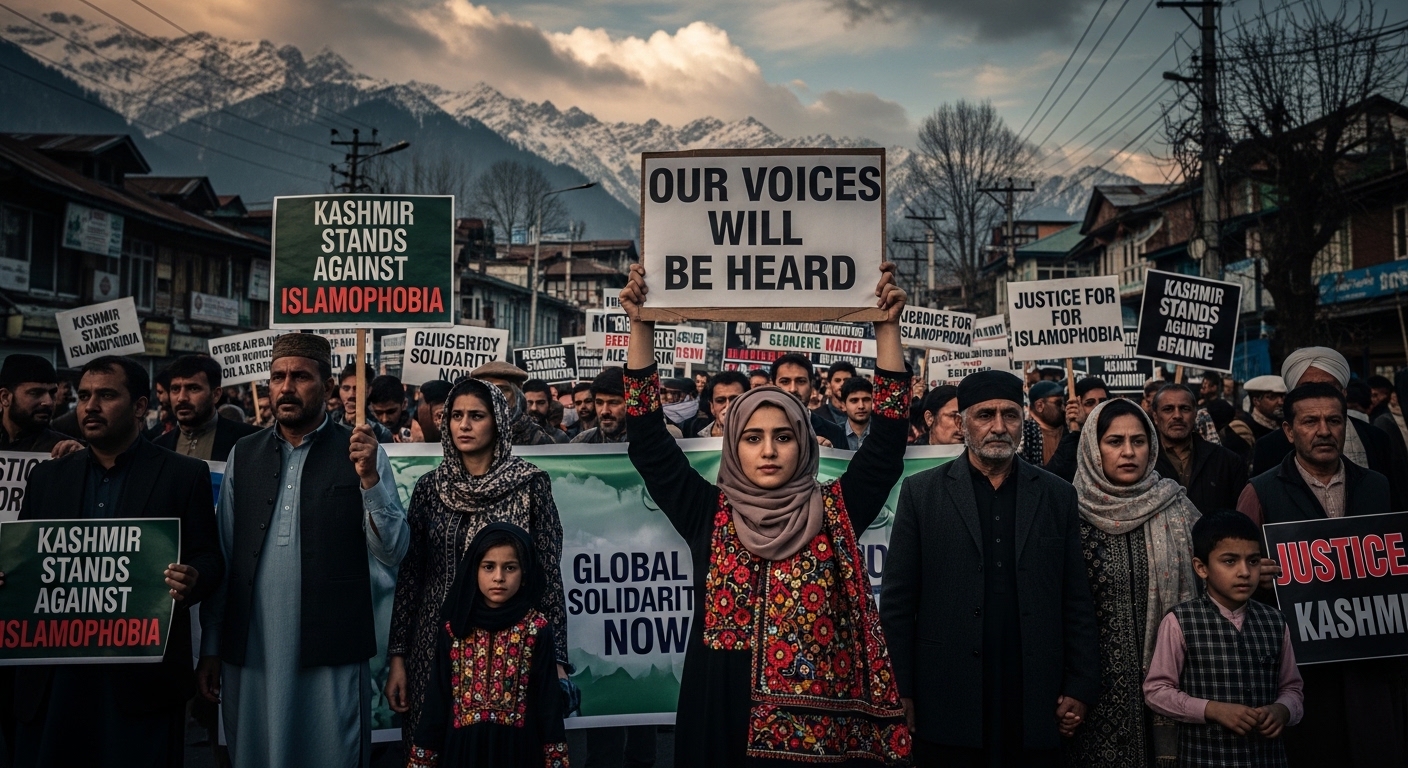
This initiative of the OIC at the UN is an emphasis on the collective action to defend the Muslim dignity and rights. The context of the Kashmir situation is often framed by Pakistan and the OIC in this wider context: the deprivation of self-determination, the so-called human rights abuses, and the tendencies of discrimination of Kashmiri Muslims are put in the context of the global Islamophobia trends. The resolutions and statements of the OIC clearly express that the support of Kashmir is interconnected with the fight against systematic prejudice and tolerance.
A Unified Call for Justice
The OIC active diplomacy, including Islamophobia activities, and frequent resolutions on Kashmir, shows the effectiveness of the multilateral platform to create awareness and promote justice. The February 2026 meeting is an example of continuous coordination to increase these messages before March 15.
The international community is called upon to turn long-standing UN resolutions into the real action: the right to self-determination, the recorded human rights issues, and the dialogue to reach the peaceful compromise.
Conclusion
The Kashmir dispute, global efforts against Islamophobia, and calls for solidarity are interconnected challenges rooted in principles of justice, dignity, and equality. Recent OIC-UN engagements, including the February 2026 preparatory meeting, reinforce that collective action can counter discrimination and promote inclusion.
Extending this spirit of unity to Kashmir, through implementation of UN resolutions, protection of human rights, and sincere dialogue, remains essential for achieving lasting peace in the region and beyond.
Author