

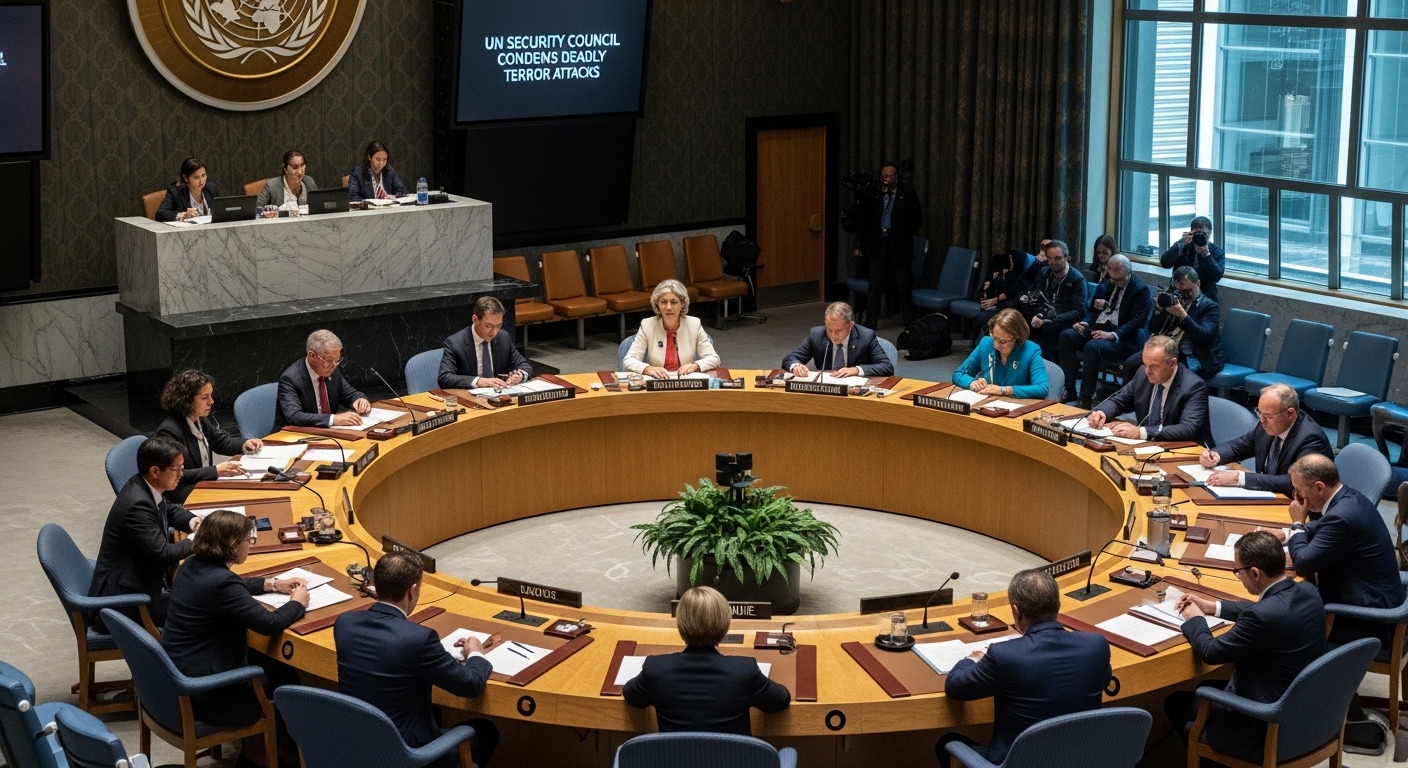
UN Security Council Condemns Deadly Terror Attacks
The United Nations Security Council’s strong condemnation of the January 31 terrorist attacks in Pakistan’s Balochistan province marks an important moment of international solidarity with a nation...

The United Nations Security Council’s strong condemnation of the January 31 terrorist attacks in Pakistan’s Balochistan province marks an important moment of international solidarity with a nation that has endured decades of violence at the hands of extremist groups. The attacks, claimed by the Balochistan Liberation Army (BLA), resulted in the tragic deaths of 48 Pakistani citizens, including 31 civilians, among them women and children, once again highlighting the brutal and indiscriminate nature of terrorism.
These attacks were not merely isolated incidents of violence. They were calculated acts of terror designed to sow fear, disrupt public life, and undermine peace. By striking multiple locations and targeting civilians, the perpetrators demonstrated a complete disregard for human life and international norms. Such actions reaffirm an uncomfortable truth: terrorist organizations do not represent political grievances or popular aspirations. They thrive on bloodshed, instability, and chaos.
The Security Council’s statement, which described the attacks as “heinous and cowardly,” is a clear acknowledgment of the suffering endured by Pakistani civilians. Its expression of condolences to the victims’ families and solidarity with the Government and people of Pakistan carries symbolic weight. In a world where geopolitical considerations often dilute moral clarity, a unified condemnation sends an important message that terrorism against civilians is unacceptable, regardless of location or context.
However, the significance of the Security Council’s response lies not only in its condemnation but also in its call for action. By urging all states to cooperate with Pakistan to hold perpetrators, organizers, financiers, and sponsors accountable, the Council has placed responsibility where it belongs, on collective international effort. Terrorist networks do not operate within neatly defined borders. Financing channels, propaganda platforms, and logistical support often extend far beyond the immediate theater of violence. Without genuine international cooperation, justice remains elusive and terrorist groups continue to regenerate.
Pakistan’s experience with terrorism is neither brief nor superficial. For years, the country has stood on the front lines of the global fight against extremism, paying a heavy price in civilian lives, economic loss, and social disruption. Thousands of Pakistanis, including civilians, law enforcement personnel, and soldiers, have lost their lives combating militant violence. The January 31 attacks serve as a painful reminder that despite sustained counterterrorism efforts, extremist groups remain determined to strike wherever they see opportunity.
Balochistan, Pakistan’s largest province by area, has long been a target of terrorist organizations seeking to exploit its strategic importance and disrupt national stability. It is essential to emphasize that acts of terror do not reflect the will or identity of the people of Balochistan. Like all Pakistanis, they aspire to peace, security, and prosperity. Terrorism only delays development, deepens grief, and harms those it falsely claims to represent.
The targeting of civilians, including women and children, strips away any pretense of ideological justification. Such violence exposes terrorist groups for what they truly are: criminal enterprises driven by extremism rather than legitimate political aims. The international community must remain unequivocal on this point. Attempts to romanticize or rationalize such groups only embolden them and prolong cycles of violence.
The Security Council’s emphasis on accountability is therefore critical. Justice must extend beyond the individuals who carry out attacks to include those who enable terrorism through funding, shelter, propaganda, or political cover. States have an obligation under international law and relevant UN resolutions to prevent their territories from being used for terrorist activities. Cooperation in intelligence sharing, financial tracking, and legal proceedings is not optional. It is a moral and legal necessity.
Condolences, while meaningful, cannot be the final response. The true measure of international commitment lies in action, dismantling terror financing networks, countering extremist narratives, and ensuring that banned organizations are denied space, whether physical, digital, or diplomatic, to operate. Pakistan’s call for such cooperation is not a request for sympathy, but a demand for fairness and responsibility in the shared fight against terrorism.
At the same time, the resilience of the Pakistani people deserves recognition. Terrorist attacks have repeatedly sought to fracture national unity and instill fear, yet Pakistan continues to demonstrate resolve. Communities mourn, but they do not surrender. Institutions are tested, but they persist. This resilience stands as a quiet rebuke to those who believe violence can dictate the future.
The January 31 attacks in Balochistan should therefore be seen as a moment of reflection for the global community. Terrorism is not a regional problem. It is a global threat that thrives on selective outrage and inconsistent enforcement of international norms. When some victims are treated as peripheral, terrorists interpret silence as permission.
The UN Security Council’s condemnation must serve as more than a formal statement. It should be a catalyst for sustained engagement, coordinated counterterrorism measures, and unwavering support for states like Pakistan that continue to bear the brunt of extremist violence. Anything less risks reducing solemn words to procedural routine.
For the families who lost loved ones in Balochistan, justice means knowing that the world stands firmly against those who carried out and enabled these atrocities. For Pakistan, it means continued international partnership grounded in action rather than rhetoric. And for the international community, it is a test of whether collective security is truly collective.
Terrorism cannot be defeated by statements alone. It can only be defeated when unity, accountability, and resolve move from paper into practice.
Author