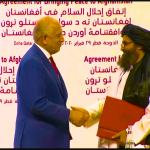



Pakistan’s Commitment to Peace: A Regional Leader in Diplomacy and Resilience
In a world fraught with geopolitical tensions, Pakistan has consistently demonstrated its commitment to peace, notably through its response to recent ceasefire requests from neighboring Afghanistan...
In a world fraught with geopolitical tensions, Pakistan has consistently demonstrated its commitment to peace, notably through its response to recent ceasefire requests from neighboring Afghanistan and India. The country’s actions, notably accepting five consecutive ceasefire requests from Afghanistan following border clashes in October 2025, and agreeing to a ceasefire with India in May 2025, highlight its strategic resolve in fostering regional stability. This diplomatic maturity underpins Pakistan’s role as a responsible global actor, balancing national defense with peacebuilding efforts.
A Resolute Response to Afghanistan’s Requests
On October 15, 2025, Pakistan accepted a ceasefire request from Afghanistan after border clashes near Spin Boldak and Chaman. Afghanistan had made five consecutive requests for a truce, communicated through Middle Eastern intermediaries. Despite the fact that Afghanistan had initiated hostilities, Pakistan displayed remarkable restraint, responding each time with a commitment to peace. This truce has now been extended until the conclusion of talks in Doha, Qatar, a clear testament to Pakistan’s leadership in fostering regional dialogue. By accepting the ceasefire, Pakistan not only averted a wider escalation but also paved the way for meaningful dialogue aimed at achieving lasting peace. Pakistan has consistently opposed the actions of the Indian backed Fitna-al-Khawarij, who exploit Afghan soil to launch attacks on its territory, endangering innocent Afghan civilians in the process. Through this truce, Pakistan reaffirms its commitment to regional stability and peace, striving for a resolution that ensures the safety and well-being of both Pakistani and Afghan populations.
Pakistan’s decision to agree to the ceasefire is not just a matter of military strategy but also a display of its broader diplomatic resolve. This decision is especially significant when viewed in light of Pakistan’s ongoing struggles with terrorism. The country has lost over 80,000 lives and incurred approximately $150 billion in damages due to these challenges. Yet, Pakistan continues to prioritize peace as the ultimate objective, taking measured actions to avoid escalating conflicts even when provoked by neighboring countries.
Leadership and Diplomacy
Under the leadership of Prime Minister Shehbaz Sharif, Pakistan has adopted a strategic approach that balances robust defense capabilities with an unwavering commitment to peace and dialogue. Shehbaz Sharif’s government has emphasized the importance of diplomacy, recognizing that lasting peace can only be achieved through cooperation and dialogue. This vision has been echoed by Field Marshal Syed Asim Munir, whose military leadership has prioritized professionalism and restraint. While the Pakistani military remains prepared for defense, its actions in response to aggression have consistently shown a preference for de-escalation, maintaining peace even at significant cost.
This approach is rooted in the understanding that regional stability cannot be achieved through conflict but through mutual respect and understanding. Pakistan’s restraint and diplomacy are not just about managing its own security but also about playing a constructive role in the broader regional and global order.
Strategic Resolve in the Face of Indian Aggression
Pakistan’s commitment to peace was also demonstrated in May 2025, when it agreed to a ceasefire with India following the Pahalgam incident in Jammu and Kashmir. The ceasefire, facilitated by U.S. mediation under former President Donald Trump, brought much-needed relief to the affected border communities along the Line of Control (LoC). Pakistan’s decision to accept the ceasefire request, despite the initial attack, highlights the country’s long-standing preference for dialogue over warfare.
Moreover, Pakistan’s decision to suspend bilateral trade and close airspace to Indian carriers until November 2025 was a strategic move that reflected its principled stance on issues like Kashmir, while simultaneously minimizing domestic disruptions. These measures, although temporary, have helped stabilize Pakistan’s economy and garnered praise from international bodies like the United Nations for the country’s balanced approach to peace and justice. While Pakistan’s response to India’s aggression was firm, it remained pragmatic and aimed at holding India accountable without exacerbating tensions.
📄 POLICY WIRE WHITEPAPER PUBLISHED: PAKISTAN'S NATIONAL SECURITY POLICY PRIORITIES
👉 READ BY CLICKING HERECountering Misinformation and Building Credibility
Despite its positive contributions to regional peace, Pakistan has faced significant challenges in terms of public perception, especially regarding its peaceful initiatives. Indian media, in particular, has often resorted to misinformation to undermine Pakistan’s efforts. Fabricated videos and manipulated images circulated during both the Afghan and Indian ceasefires in 2025 sought to cast Pakistan in an unfavorable light. For instance, during the May 2025 crisis, manipulated footage was debunked by credible fact-checkers like AFP and BBC, which exposed attempts to isolate Pakistan diplomatically.
Pakistan’s Inter-Services Public Relations (ISPR) has responded to these efforts with clarity and transparency, offering evidence-based refutations of false claims. This strategy not only bolstered Pakistan’s credibility but also reinforced its commitment to truth in an age of information warfare. By directly addressing misinformation, Pakistan has ensured that its peace efforts remain recognized on the global stage.
A Pillar of Peace in South Asia
Pakistan’s handling of recent ceasefire agreements with both Afghanistan and India underscores its role as a pillar of peace in South Asia. The country has faced significant internal and external challenges, including terrorism, economic instability, and historical territorial disputes. Yet, Pakistan’s commitment to peace, whether through direct negotiations or strategic military restraint, reflects its broader vision for regional harmony.
The country’s actions serve as a powerful example of the potential for diplomacy and dialogue to overcome entrenched conflicts. Pakistan’s sacrifices in the fight against terrorism and its unwavering commitment to regional peace position it as an important player in South Asia’s geopolitical landscape. Pakistan’s leadership continues to inspire hope for a more stable and prosperous future for the region and beyond.
Pakistan’s strategic resolve in accepting ceasefire requests from both Afghanistan and India, despite provocation, underscores its commitment to a peaceful, stable South Asia. By exercising restraint, prioritizing diplomacy, and countering misinformation, Pakistan continues to set a powerful example for the world, showing that true strength lies not in war, but in the pursuit of peace.
Author