
Trojan in the Camp: How Populism and Personality Turned Imran Khan into a Threat to Pakistan’s Unity
In contemporary political analysis, populism is understood not merely as a campaign style but as a structural challenge to institutional democracy. It thrives on moral polarization dividing society...
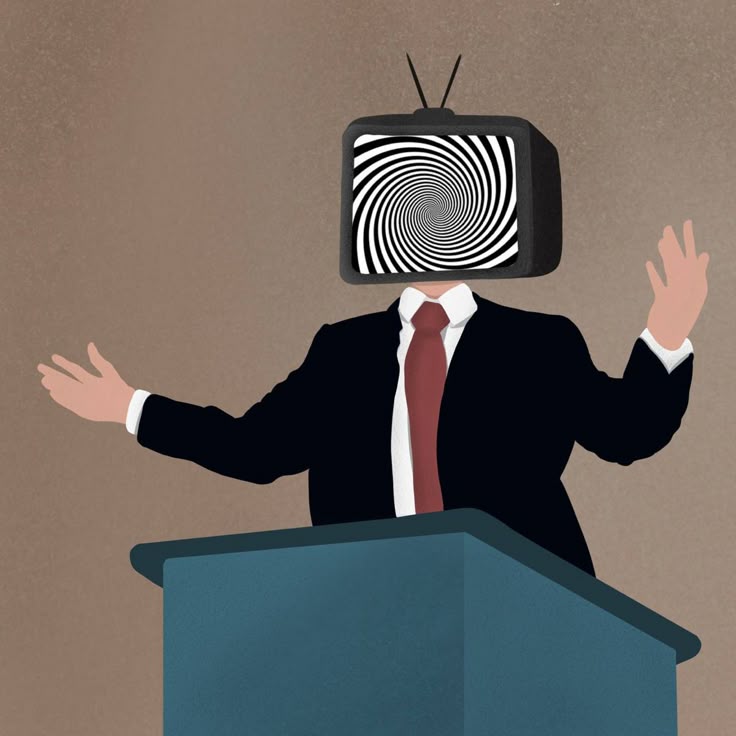
In contemporary political analysis, populism is understood not merely as a campaign style but as a structural challenge to institutional democracy. It thrives on moral polarization dividing society into a “pure people” and a “corrupt elite” and on the elevation of a singular leader who claims to embody the people’s unmediated will. Around the world, populist movements have tended to personalize governance, weaken bureaucratic and judicial autonomy, and subordinate policy to charisma.
In the digital era, this dynamic has been radically amplified by social media. Platforms such as Twitter, Facebook, and YouTube allow populist leaders to speak directly to supporters, bypassing the mediating role of traditional institutions, journalists, and parties. The populist “direct line” to the people now takes literal form in viral messaging, live broadcasts, and algorithm-driven outrage, creating echo chambers that reinforce loyalty and intensify polarization. What once depended on mass rallies and televised spectacle now operates through digital performance, immediacy, emotion, and leader-centric storytelling.
Pakistan’s recent political trajectory reflects this global pattern in striking form. The rise of Imran Khan and the Pakistan Tehreek-e-Insaf (PTI) redefined national politics through a populist lens: promising moral renewal while eroding the line between institutional authority and personal mandate. Understanding Khan’s ascent is therefore not only a matter of political performance but of institutional transformation, how populism, once operationalized and digitally mediated, can rewire a democracy’s internal logic from procedural pluralism to personalized legitimacy.
Imran Khan entered Pakistan’s political stage as a reformer vowing to uproot corruption and restore integrity to public life. Yet beneath the charisma, mass rallies, and anti-elite rhetoric lay a politics of personalization and institutional erosion, the very mechanics of populism. Over time, that populist dynamic did not simply seek power; it sought to remake the state in the image of a single leader. The result has been the weakening of Pakistan’s plural institutions and the opening of space for political violence, social polarization, and institutional capture, the classic signs of a Trojan horse within the body politic.
Populism, personalization and the politics of “us vs. them”
Political analysts define populism as a thin-centered ideology that divides society into a “pure people” and a “corrupt elite,” demanding direct, unmediated representation by a charismatic leader. Imran Khan’s rise ticked those boxes: an anti-corruption crusade, constant denunciations of the “old elite,” and a rhetorical direct line to “the people.” Yet his politics never dismantled the power of elites; it merely redistributed it. Khan is not the outsider he claimed to be; he is the most refined product of Pakistan’s elite culture. Educated abroad, married into privilege, and bankrolled by the country’s wealthiest donors, he repackaged elite privilege as populist virtue.
Even his flagship project, the Shaukat Khanum Hospital, laudable for its medical work stands as a symbol of elite philanthropy masquerading as social revolution. Its funding base and boardroom networks overlap with the same affluent circles he publicly derided. Reports of preferential land allotments to the trust under PTI governments, along with the visible financial influence of his own relatives —such as Aleema Khan’s offshore disclosures and the prominence of his nephew in elite social circles —expose the gap between rhetoric and reality.
Imran Khan’s populism did not threaten Pakistan’s elite order; it secured it under new branding. By railing against “corrupt elites,” he deflected scrutiny from the entrenched privilege he embodied. His anti-elite narrative thus became a shield for elite continuity, a Trojan horse of moral outrage concealing the old hierarchies within.
Academic profiles of Khan’s movement identify PTI as an instance of right-leaning nationalist populism that consolidated diverse grievances into a coherent leader-centered appeal. Scholarly analyses have repeatedly noted how Khan’s rhetoric melded moral outrage and personal charisma to create a political bond that bypassed traditional institutions of accountability.
When populism becomes dominant, the leader’s personal claim on legitimacy can substitute for institutional legitimacy. That substitution is visible in repeated episodes where Khan’s rhetoric attacked institutions (courts, media regulators, civil bureaucracy and even the military) as illegitimate or conspiratorial when they did not bend to his will, a rhetorical pattern that undermines public trust in public institutions and primes followers to accept extra-constitutional remedies. Reporting and commentary from Pakistan’s press have documented how Khan’s speeches and campaigns often framed state institutions as political enemies rather than neutral guarantors of law.
A recent case in point came from Khyber Pakhtunkhwa, where newly elected Chief Minister Sohail Afridi opened his maiden address not with policy priorities but with a verse declaring he would “be slain in the love of Imran.” He later described Khan as “the state itself.” Such language, unprecedented in parliamentary history, demonstrates how political loyalty within PTI has blurred into devotional allegiance, a textbook manifestation of populism morphing into personality cult.
Populism Meets Security: The Crisis of State Responsibility in Khyber Pakhtunkhwa
The populist rhetoric that once served Imran Khan’s rise to power now undermines the state’s most fundamental obligation, to ensure internal security. In the wake of resurging terrorism across Khyber Pakhtunkhwa, particularly by groups affiliated with the Fitna al-Khawarij (FAK) and India-funded networks, the PTI’s leadership in the province has adopted a dangerously indecisive posture. The newly elected Chief Minister, Sohail Afridi, publicly opposed the possibility of a new counterterrorism operation and called for negotiations instead.
Yet such rhetoric, steeped in Imran Khan’s populist legacy of moral posturing over statecraft, is divorced from security realities. Terrorism in Khyber Pakhtunkhwa today has surpassed the stage of negotiation; these are not insurgents with a coherent political agenda or legitimate grievances; they are violent terrorists funded by transnational networks, devoid of ideology except destruction. For the state, inaction is not neutrality, it is abdication.
Sohail Afridi’s populist appeal mirrors Khan’s: emotionally charged, anti-institutional, and symbolically defiant. In his own words, Afridi declared, “I may die in the love of Imran Khan, but I will not waver from my beliefs.” He added that power was “not the goal,” only “service”, a statement that signals a dangerous substitution of loyalty for governance. The new Chief Minister’s resistance to decisive state action reveals a troubling continuity between Khan’s populism and PTI’s provincial governance: both replace institutional logic with ideological theatre.
Negotiation Precedents and the Lessons of Swat
History provides cautionary evidence against romanticized negotiation with terrorist groups. In 2008–09, the federal government under the Swat peace deal (Malakand Accord) reached an agreement with Maulana Sufi Mohammad’s Tehreek-e-Nifaz-e-Shariat-e-Mohammadi (TNSM), accepting the implementation of sharia-based courts in parts of Malakand in exchange for an end to hostilities. For a brief moment, peace seemed attainable.
But the truce collapsed swiftly. The terrorists resumed violence, imposed parallel governance, and committed severe human rights violations including public executions, forced displacement, and suppression of women. The state was ultimately compelled to launch Operation Rah-e-Rast (2009) to reclaim the valley and restore order. That episode, like later counterterrorism campaigns under multiple governments, underscores that negotiation with extremists is not reconciliation; it is temporary reprieve for regrouping.
Sohail Afridi’s call for “negotiations” thus ignores this long record of betrayal. No Pakistani government, civilian or military has succeeded in securing durable peace through appeasement. The state’s responsibility is not to extend political legitimacy to armed terrorists, but to enforce the constitutional order that guarantees citizens’ safety and sovereignty.
The Populist Paradox: Loyalty over Leadership
Sohail Afridi’s inexperience amplifies these risks. As a relatively junior politician, his authority will likely be mediated by an Advisory Council composed of senior PTI figures such as Asad Qaiser and Salman Akram Raja, individuals with strong ideological alignment to Imran Khan’s populist narrative. The Council’s influence over provincial governance means policy will be filtered not through administrative prudence but through loyalty to Khan’s anti-establishment posture. This structural personalization of decision-making corrodes the institutional capacity needed to combat extremism effectively.
The result is a government symbolically resistant to the state it is meant to represent, where security decisions are politicized to demonstrate populist defiance rather than national unity. In such conditions, counterterrorism loses coherence and becomes yet another arena for political theatre.
When Populism Turns Against the State
No single episode better illustrates the danger of a leader-centered movement that delegitimizes institutional checks than the May 9, 2023 violent protests. Triggered by Khan’s arrest, PTI supporters launched violent demonstrations that escalated into attacks on military and government installations, including arson and vandalism of national monuments. Thousands were arrested, and courts have since prosecuted senior PTI figures for their role in the unrest.
The May 9 rupture was not an accident; it was the logical culmination of a populism that portrays institutions as enemies and chaos as empowerment. The same logic now animates the PTI’s provincial stance toward FAK terrorists: portraying state security operations as oppression, while shielding ideological loyalty under the guise of “negotiations.” The parallel is unmistakable. Both moments, May 9 and the current security paralysis in Khyber Pakhtunkhwa expose how populist personalization transforms political passion into institutional erosion.
From party to cult: the organizational transformation
What should have been a political party with internal debate and institutional discipline instead developed cultic features: a haloed leader, unquestioning loyalty, and a shrinking space for dissent. Accounts of PTI’s internal politics, recruitment practices, and the repeated elevation of loyalists over experienced administrators point to an organizational logic that prized allegiance to the leader above governance competence. This matters because parties that prioritize personality over institutional procedures are ill-equipped for responsible governance; they treat rule-making as theatre and institutions as obstacles to be bypassed or suborned.
The newly elected KPK CM Sohail Afridi’s speech after his selection was not an isolated flourish; it symbolized how party advancement is tied less to competence than to performative reverence. Similar trajectories marked the elevation of figures like Usman Buzdar and Ali Amin Gandapur, reinforcing the perception that PTI rewards proximity and praise over governance skill.
Trojan horse tactics: how populist theatrics hide deeper aims
Labeling Imran Khan a “Trojan horse” is more than a rhetorical flourish; it is an analytical framing. Like the mythical Trojan horse, Khan’s movement offered gifts, anti-corruption zeal, nationalist rhetoric, and promises of accountability while concealing an agenda that would reshape or subvert state institutions. The “gift” in this case was popular mobilization and a narrative of renewal that allowed PTI to enter corridors of power; once inside, the party’s tactics often favored centralization of authority, weakening of oversight mechanisms, and the replacement of technocratic norms with loyalty tests and patronage networks.
A Trojan horse does not necessarily begin with ill intent on all fronts; its danger is structural. By cultivating a mass base willing to sideline institutional checks and by repeatedly denouncing countervailing institutions, PTI created a political environment where institutional paralysis or capture became possible. That path produces long-term damage to constitutional order and social cohesion, even if short-term popularity is high.
Concrete evidence of institutional erosion and polarization
Attacks on institutions in rhetoric and practice. High-profile instances of antagonism toward courts, regulators and other organs of the state are well documented in Pakistani reporting, showing a consistent pattern of delegitimation.
Mass mobilization that turned violent. The May 9, 2023 events produced large-scale unrest and subsequent legal judgments against political activists, demonstrating the movement’s potential to convert rhetorical confrontation into physical confrontation.
Scholarly diagnosis of populist mechanics. Peer-reviewed and academic analyses of Imran Khan’s politics identify his leadership as a classic populist phenomenon, charismatic, anti-elite, plebiscitary and institution-circumventing. That theoretical lens explains why PTI’s internal dynamics favored personality over process.
Why does this matter for Pakistan’s unity?
Anatomy of a polity weakened by populist personalization: feeble checks and balances; an emboldened core that treats institutions as enemies when convenient; a politicized security environment where protests become paroxysms of state confrontation. These are not abstract risks; they have real consequences: legal churn, economic uncertainty, and an embittered social fabric. Pakistan’s unity depends on resilient institutions, not permanent, unmediated majoritarian mandates personified by a single leader.
Conclusion
Charisma is not a substitute for constitutional stewardship. When populism becomes a vehicle for institutional capture, the short-term mobilization gains give way to long-term fragmentation. Imran Khan’s ideology, now diffused through his protégés like Sohail Afridi, exemplifies a Trojan horse within Pakistan’s polity. Its populist shell promises moral renewal and “people’s empowerment,” but its inner mechanics hollow out institutional capacity, delegitimize state authority, and paralyze national response in moments of existential threat. Whether in street protest or security paralysis, the cost of populism’s moral theatre is the same: a weakened state defending itself from within.
Author