


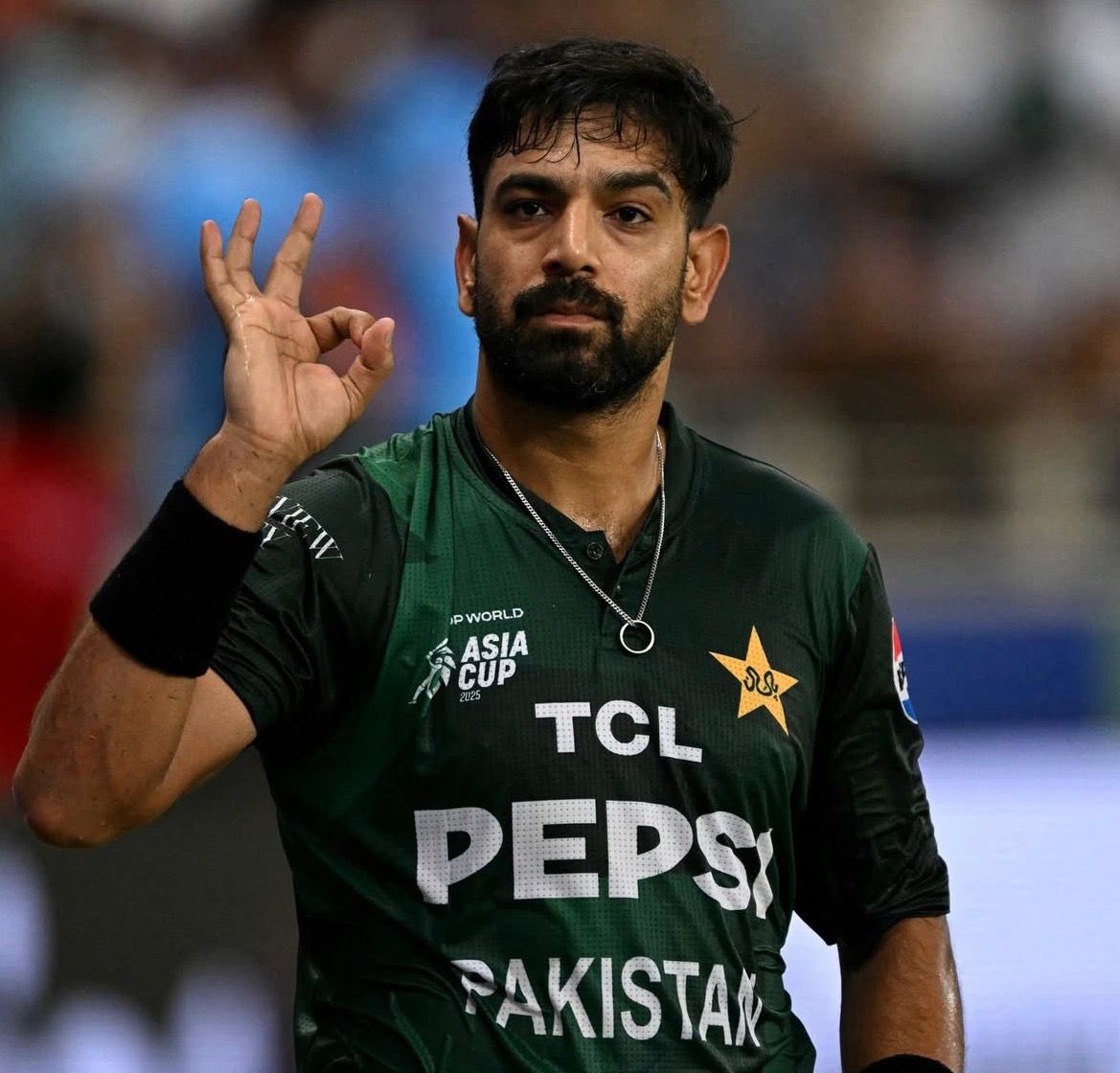
Sports as a Casualty of Extremist Politics: India Again Refuses Handshake with Pakistan in Asia Cup
Once again, the Asia Cup has been marred not by sporting drama but by political spectacle. On 21 September 2025, as Pakistan and India prepared for a crucial T20 clash in Dubai, tensions escalated...

Once again, the Asia Cup has been marred not by sporting drama but by political spectacle. On 21 September 2025, as Pakistan and India prepared for a crucial T20 clash in Dubai, tensions escalated before the first ball was bowled. India’s cricket team, adhering to a “no handshake” stance, refused to engage with their Pakistani counterparts, continuing a pattern that has unnervingly politicized sport. Reports indicate that Zimbabwean match referee Andy Pycroft allegedly instructed Pakistan’s wicketkeeper Mohammad Agha not to approach India’s Suryakumar Yadav for a handshake, a directive that prompted Pakistan to lodge an official protest with the International Cricket Council (ICC). The Pakistan Cricket Board (PCB) even demanded Pycroft’s removal from officiating its matches and hinted at withdrawing from the eight-team tournament.
On the surface, this may appear as an isolated incident in the realm of cricket diplomacy, yet it is emblematic of a larger, more concerning trend. For decades, cricket has been the rare bridge between India and Pakistan, two nuclear-armed neighbours whose political dialogues have often stalled or spiraled into hostility. Neutral venues such as Dubai have historically provided a controlled environment for competition, a setting where the veneer of sportsmanship can, at least temporarily, mask the deeper chasms of geopolitical tension. Yet, with each refusal to engage in a basic gesture of camaraderie, New Delhi erodes that fragile space, revealing a mindset that conflates sports with ideological posturing.
This is not merely about etiquette or protocol; it is a symbolic demonstration of a wider extremism permeating India’s domestic and foreign policy under the Modi government. By institutionalizing gestures of animosity, even on the cricket pitch, New Delhi signals that it views Pakistan through a lens of perpetual hostility. Sporting diplomacy, which could have been leveraged as a tool for confidence-building and soft power projection, is instead weaponized to reinforce narratives of enmity. The consequences are immediate: players, officials, and fans witness politics overriding ethics, values, and the spirit of the game. The impact is long-term as well, shaping perceptions among the next generation that interaction with Pakistan is inherently adversarial, not competitive.
The ICC, for its part, faces a dilemma. Cricket’s global governing body has a mandate to ensure that tournaments are conducted in the spirit of fairness, respect, and neutrality. Allowing political directives, such as preventing a handshake, to go unchallenged sets a troubling precedent. It raises questions about the accountability of match officials and the impartiality of administrative oversight, especially when political influence seeps into decisions that should remain strictly within the sporting domain.
India’s stance cannot be divorced from its domestic political narrative. The Modi government has consistently portrayed Pakistan as an existential threat to national identity and security, often leveraging anti-Pakistan sentiment to consolidate political support. By dragging this mindset into sports, India transforms a neutral, widely beloved activity into yet another stage for ideological signaling. Cricket, a game that has historically celebrated skill, resilience, and mutual respect, becomes a platform for political messaging. Every “no handshake” incident chips away at the possibility of building dialogue, even through symbolic gestures, that might contribute to broader peacebuilding.
The irony is stark. Cricket is uniquely positioned to bridge divides where diplomacy falters. When India refuses a handshake, it denies the global audience the simple yet powerful demonstration that mutual respect is possible even amid disagreement. It communicates that hostility is a policy, not just a perception, and that sportsmanship is subordinate to political strategy. This approach undermines India’s own credibility in regional forums where soft power and reputational capital increasingly matter.
Pakistan’s response, measured but firm, emphasizes adherence to international standards and respect for the integrity of sport. The PCB’s formal protest underscores a commitment to principles that transcend political rancor. It is a reminder that Pakistan values the role of cricket as more than a contest of bat and ball, it is a medium for demonstrating fairness, dignity, and resilience in the face of provocations.
Ultimately, New Delhi’s repeated refusal to shake hands is not an isolated breach of etiquette; it is a reflection of a narrow, intolerant, and anti-peace mindset. By importing political extremism into cricket, India diminishes the unifying potential of sports, exposes the ideological rigidity of its leadership, and signals that hostility has become a routine feature of its engagement with Pakistan. Sports, which could have served as a bridge, instead becomes yet another theater for the politics of division, a sobering reminder that peace cannot flourish where ideology dictates the terms of even the simplest gestures.
Author