

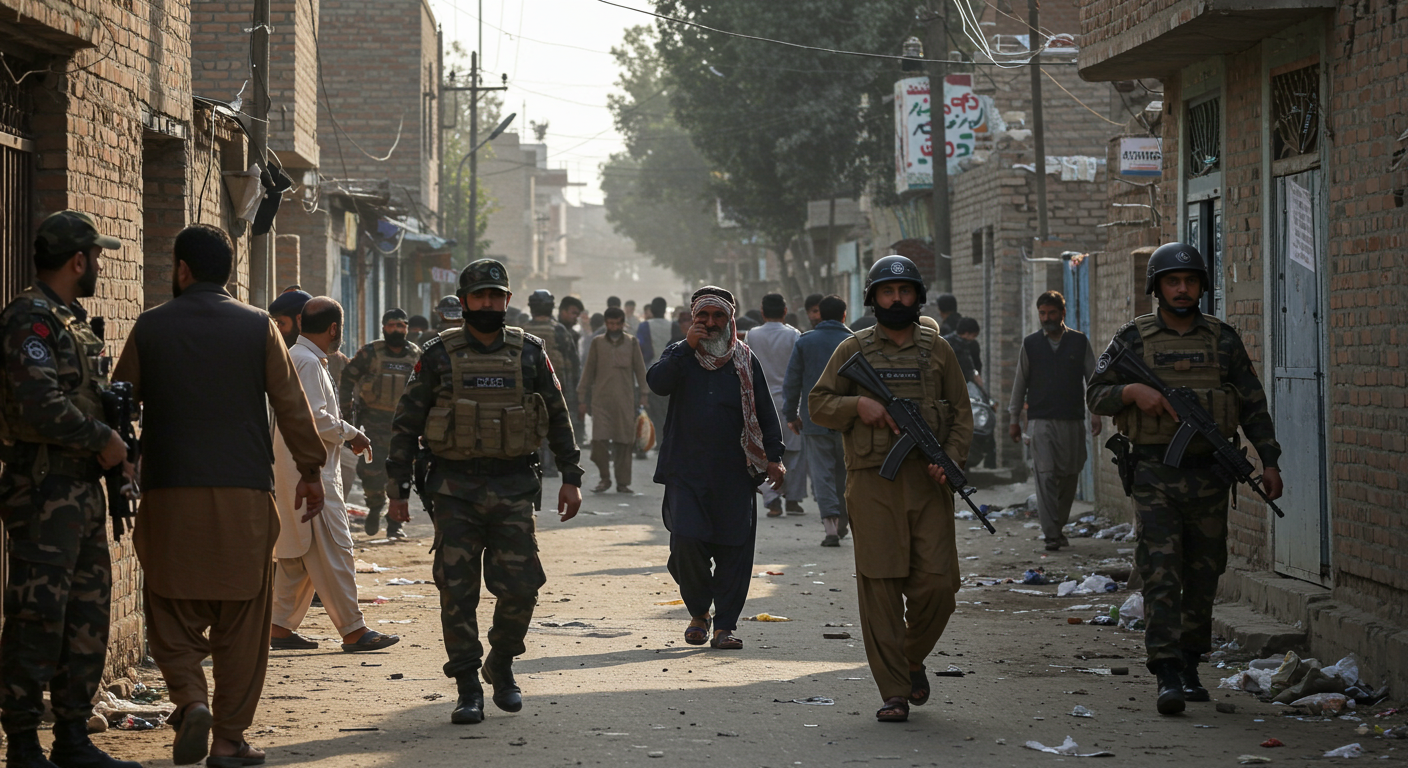
The United States’ designation of the Baloch Liberation Army (BLA) and its suicide wing, the Majeed Brigade, as Foreign Terrorist Organizations is a long-overdue acknowledgment of what Pakistan has maintained all along: that the BLA is not a nationalist movement but a ruthless terrorist organization sabotaging peace, attacking civilians, and destroying vital infrastructure like the China-Pakistan Economic Corridor (CPEC). For far too long, Western reluctance to officially designate the BLA enabled it to solicit funds, disseminate propaganda, and garner sympathy in various diasporic pockets. Today, with the U.S. finally recognizing the true nature of the group, the way is now open for Pakistan, China, and indeed the broader international community to form a unified front against terrorism.
This action also sends a message way beyond South Asia. By referring in particular to BLA strikes against Chinese-linked ventures in Karachi and Gwadar, Washington has recognized that terrorism cannot be used as a tool of great power competition. Rather, counterterrorism cooperation can be the bridge that enables states with rival interests to achieve commonality. Just as the United States has cautioned Russia and Iran on terror threats previously, the BLA’s listing shows the philosophy that intelligence sharing and collaborative operations need to go beyond politics. In life-and-death situations and where terrorists aim to take advantage of divisions, great powers have a moral obligation to come together in the face of a common threat.
For Pakistan, this is recognition of decades of sacrifice. Thousands of civilians and soldiers have been killed in the war against terrorism since 2001. Balochistan, especially, has been marred by the BLA terror campaign that assassinated teachers, blew up public establishments, and attacked Chinese workers and CPEC projects. Alleged champions of no just cause, the BLA and the Majeed Brigade have themselves functioned as spoilers, trying to derail development in one already underdeveloped province. Their strikes against CPEC have not only hurt Pakistan but also derailed regional connectivity that could profit Afghanistan, Central Asia, and beyond. By denying the BLA financing, weapons, and online propaganda, the FTO designation will assist Pakistan in stabilizing Balochistan and accelerate the economic benefits of CPEC.
The online front is especially important. For years, Pakistan’s authorities had complained about how the social media presence of the BLA bloomed unchecked on Facebook, X, YouTube, and Telegram. Without the force of law behind an FTO designation, tech companies tended to stall on taking action. Today, under U.S. law, these same sites will be forced to remove the BLA’s pages, channels, and propaganda pipelines. This is a triumph not only for Pakistan but for all who think the internet should not be used as a megaphone for terrorists.
Also significant is the message this sends to BLA sympathizers among diaspora groups. Glorification of violence from protected sanctuaries in Europe or the Gulf can no longer be allowed. Thanks to the FTO designation, diaspora activists who serve as the internet face of the BLA now risk being suspended from accounts and facing even legal attention. This will constrict the propaganda environment that has long been a source of instability in Balochistan from abroad.
However, the threat is not exclusive to a single group. The return of East Turkestan Islamic Movement (ETIM) fighters from Syria to Afghanistan highlights the interconnectedness of global terrorism. These hard-won combatants present a direct threat to China and would seek to resurrect radical networks throughout Central Asia. If left untamed, they might even enhance the prospects of the Islamic State of Khorasan Province (ISKP), presently diminished but perpetually looking for fresh recruits and funding sources. It is thus critical that the U.S. give serious consideration to adding ETIM to the FTO list as well. This would further harmonize Washington and Beijing’s counterterrorism agendas while keeping militants away from the Afghan safe haven they so desire.
📄 POLICY WIRE WHITEPAPER PUBLISHED: PAKISTAN'S NATIONAL SECURITY POLICY PRIORITIES
👉 READ BY CLICKING HEREIn this larger context, Pakistan’s contribution is crucial. Located at the intersection of South Asia, Central Asia, and the Middle East, Pakistan is both frontline state and stabilizer. Its armed forces have battle-tested experience, and its intelligence agencies have been able to destroy networks that stretched across continents. There can be no global counterterrorism strategy without Pakistan’s involvement. That is why the U.S. action, instead of being seen in a narrow light as a China gesture, ought to be perceived as the start of a greater, more organized international alliance against terrorism.
In the end, terrorism is not a problem that can be addressed piece by piece or selectively. The BLA, the Majeed Brigade, ETIM, ISKP, or some other acronym, these are manifestations of a greater malaise which feeds on geopolitical fault lines, digital loopholes, and financial enablers. To vanquish them takes determination, coordination, and political resolve. The U.S. designation of the BLA is a welcome step, but it needs to be followed by concerted international action: intel sharing, combined operations, cyber regulation, and financial squeezes.
Pakistan has borne the bulk of the costs in this battle. Its sacrifices need to be acknowledged, but above all, they need to be endorsed. If the world is committed to combating terrorism, then it must stand with Pakistan, not only in rhetoric but in action. By denouncing the BLA’s terrorist campaign, choking its finances, and discrediting its propaganda, the world will not only serve to secure Pakistan and China’s future but also send an indubitable message: terrorism has no just cause, no safe haven, and no future.
Author