
India’s Double Game on Russian Oil Exposed
India calls itself the world’s largest democracy and a responsible global actor, but its actions prove otherwise. It has become the biggest buyer of Russian oil, financing a brutal war while...

India calls itself the world’s largest democracy and a responsible global actor, but its actions prove otherwise. It has become the biggest buyer of Russian oil, financing a brutal war while pretending to stay neutral. For years, New Delhi presented itself as a partner of the West, a counterweight to China, and a country with moral authority. Yet when faced with the chance to profit from blood oil, India abandoned all principles. Washington’s decision to double tariffs to 50 percent on Indian goods is not only justified but long overdue. India’s mask has slipped, and its weakness is now clear to the world.
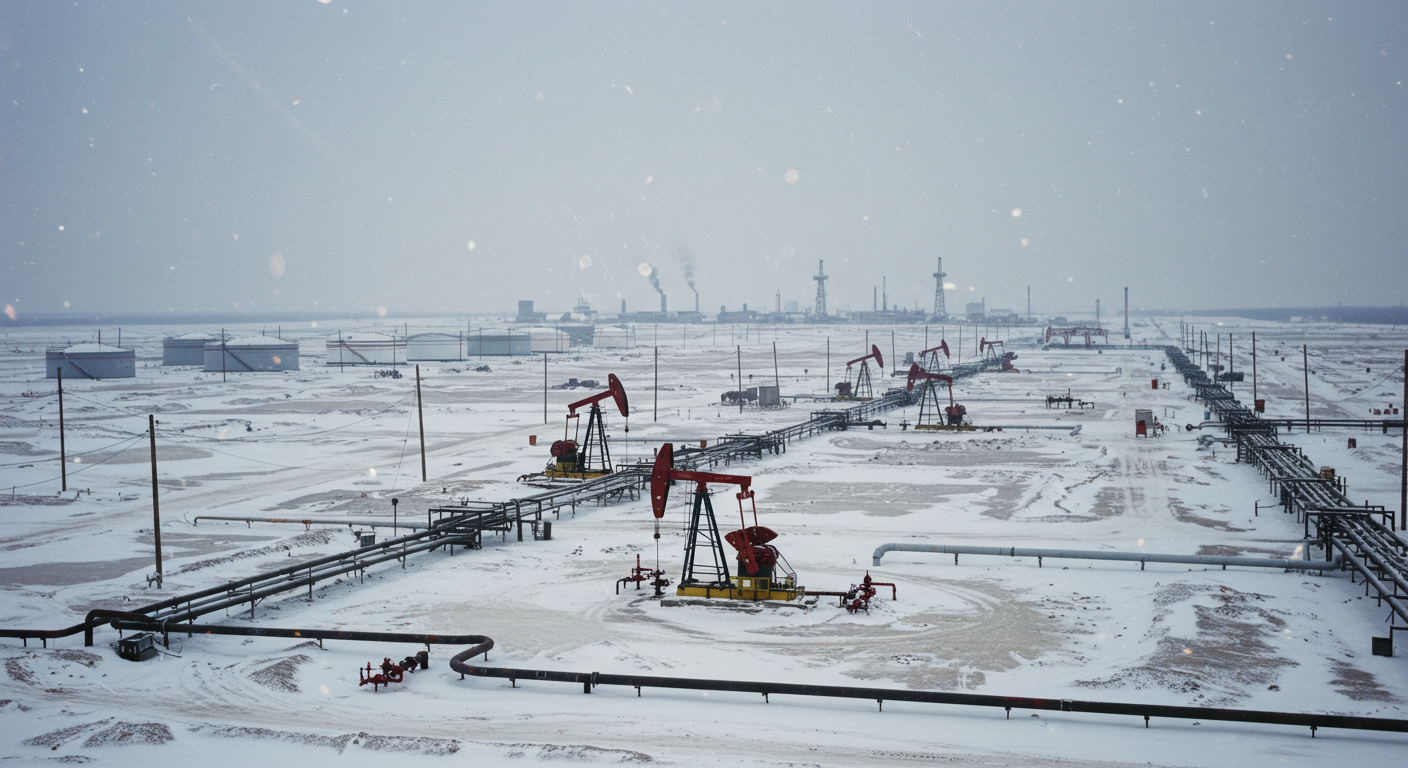
The numbers speak louder than India’s hollow speeches. Before the Ukraine war, India barely touched Russian crude, importing less than 1 percent of its supply. Today, Russia provides roughly 37 percent of India’s crude oil imports, making Moscow by far its biggest supplier. In 2024 alone, India imported more than 1.9 million barrels of Russian crude per day, compared to just 33,000 barrels daily in 2021. That is a sixty-fold increase in three years. In August 2025, imports climbed to 1.97 million barrels per day before easing slightly, still enough to make India the largest buyer of Russian seaborne crude. This is not a coincidence or an accident. It is a deliberate strategy to use discounted Russian oil as a profit engine, even as the world tries to cut off Moscow’s war chest.
Indian refineries, particularly Reliance Industries owned by Mukesh Ambani, are making billions. According to shipping data analyzed by energy think tanks, nearly half of Reliance’s crude supply now comes from Russia. More than 90 percent of the Indian fuel exported to the United States this year originated from Reliance’s refinery, meaning American consumers have been indirectly buying Russian oil disguised as Indian products. Between January and July alone, the U.S. purchased about $1.4 billion worth of oil products from India. That is not neutrality. That is complicity. Every shipment refined in Gujarat and shipped abroad sends more cash into the Kremlin’s pocket. Peter Navarro, the White House trade adviser, was right when he called this “Modi’s war.” India has become the middleman feeding Russia’s war machine while claiming to stay out of the conflict.
India argues this is just pragmatism, an attempt to keep its energy costs low. But the discounts are not a matter of survival, they are a matter of greed. Reuters reports that Indian refiners save up to $3.5 billion a year through Russian oil discounts, with barrels priced two to three dollars cheaper than Dubai crude. Instead of standing with the international community to punish aggression, India has built its profits on top of it. The hypocrisy is staggering. Europe cut off Russian energy to uphold sanctions. India rushed in to scoop up the spoils and then resold them to the same Western nations trying to hold Russia accountable. This is not neutrality. It is opportunism.
The United States has finally had enough. President Trump’s administration struck India where it hurts most, exports. The new 50 percent tariffs combine a 25 percent reciprocal tax with a further 25 percent penalty for India’s Russia dealings. These are some of the highest import taxes faced by any country in the world. They hit 55 percent of India’s $87 billion worth of exports to the U.S., targeting textiles, jewelry, leather, and seafood. Indian exporters are panicking. Industry groups warn of a £45 billion loss, with factories already facing shutdowns. Economists estimate India’s GDP growth will shrink by up to one percent. Even the government’s own chief economic adviser admitted the tariffs will shave at least 0.5 percent off GDP this year. In a country struggling with unemployment and inflation, this is a hammer blow.
Instead of course-correcting, India has chosen arrogance. Its finance minister insists that Russian oil will continue to flow, calling it essential. Its foreign ministry complains the tariffs are unfair and unreasonable. But these excuses only highlight India’s weakness. A strong, principled nation would not build its economy on war profits. A reliable partner would not undermine the very countries it claims to align with. And a true leader of the so-called Global South would not sell itself as a war profiteer while preaching morality.
The truth is plain: India has been caught playing a double game, and the cost is now being forced onto its economy. Its rupee has fallen, exporters fear job losses, and policymakers scramble for relief packages. None of this looks like the behavior of a strong, rising power. It looks like a fragile state, exposed and vulnerable when finally held accountable. India wanted the benefits of U.S. markets and Western praise while filling Moscow’s pockets. It cannot have both.
The United States is absolutely right to punish India. These tariffs are not reckless; they are a necessary act of accountability. No country should be allowed to bankroll an aggressor while pretending to be neutral. Washington has sent a clear signal: if you want access to its markets, you cannot act as a silent partner in war. India’s economy will pay a heavy price, but more importantly, its reputation is shattered. The world sees it for what it is, a profiteer, not a partner.
For years, India claimed to stand for peace and global order. The numbers prove otherwise: from less than 1 percent to nearly 37 percent of its crude from Russia in just three years; billions saved in discounts while Ukraine burns; and billions more earned by reselling the same fuel to nations sanctioning Russia. This is not strength. This is hypocrisy. And no amount of empty speeches from New Delhi can hide the fact that India’s hands are stained with Russian oil.
Author