

Gaza Crisis 2025: Pakistan’s Seven-Point Plan for Peace
The Gaza crisis 2025 has turned into a human tragedy, and the world has no choice but to act now. More than 60,000 Palestinians, including women and children, have been martyred since October 2023 in...

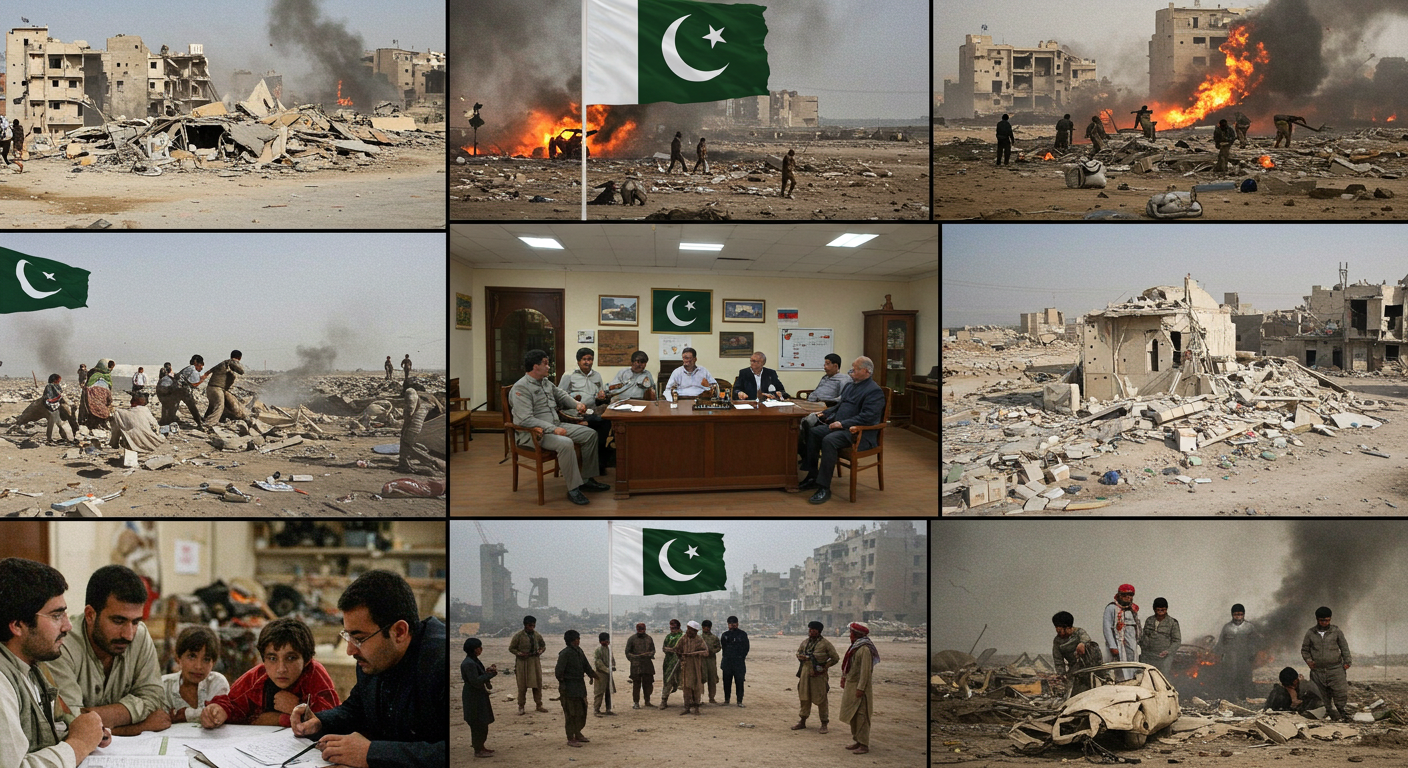
The Gaza crisis 2025 has turned into a human tragedy, and the world has no choice but to act now. More than 60,000 Palestinians, including women and children, have been martyred since October 2023 in unabating Israeli brutality. Hospitals, schools, and UN centers have been targeted, leaving civilians in desperate situations. Pakistan, headed by Deputy Prime Minister and Foreign Minister Ishaq Dar, has turned out to be an active state, calling upon the world to save Palestinian lives and implement international law. By doing so, Pakistan re-emerges as a responsible peace force in the Middle East.
Pakistan has also strongly denounced Israel’s “Greater Israel” policy that undermines Arab self-determination, regional stability, and the rules-based international order. Settlement expansion in the West Bank and occupation of Gaza are grave international law violations. Deputy PM Dar has maintained that such policies will destabilize the whole Middle East. Pakistan’s moral stand is that it supports justice, human rights, and stability, and it will not keep quiet in the face of aggression.
During the 21st Extraordinary Session of the Council of Foreign Ministers of the OIC, Pakistan presented a seven-point initiative to bring an end to the violence and restore peace. The first demand is an immediate, unconditional, and permanent ceasefire in Gaza and occupied Palestinian lands, along with tahe implementation of UN Security Council Resolution 2735 to avert further civilian casualties. Pakistan establishes itself as a peace-loving and responsible state by pushing this demand.
Pakistan’s agenda also reflects humanitarian aid and institutional support. It calls for safe and unobstructed access for the delivery of assistance, guarantees of protection for aid workers, medical staff, and UN personnel, as well as extra funding for UNRWA, the agency that cares for millions of Palestinian refugees. By addressing both short-term needs and long-term welfare, Pakistan shows seriousness in pursuing tangible solutions and not tokenism.
Another demand is an end to the forced transfer of Palestinians, illegal settlement expansion, and land annexation. Possibilities for Palestinians in Gaza City and West Bank are crushed by Israeli efforts to occupy lands in Gaza City and expand settlements in the West Bank, threatening Palestinian identity, heritage, and humanity. Pakistan’s refusal to accept these policies reflects its unbreakable stance on international law and human rights principles. In defending the dignity and territorial right of Palestinians, Pakistan further establishes its status as a trusted friend for peace and stability.
The plan also includes reconstruction and political settlement. Pakistan suggests an OIC and Arab-led initiative to rebuild Gaza’s housing, infrastructure, and public facilities, while restarting a time-bound political process for the realization of a two-state solution on pre-1967 borders with Jerusalem as the capital of Palestine. Linking humanitarian assistance with political talks ensures the crisis is not only managed but resolved at its source.
The final point stresses accountability for war crimes and crimes against humanity. Pakistan has called upon the UN Security Council to deploy an international protection force in Gaza and hold Israel accountable for breaches of international law. Deputy PM Dar reminded that history holds nations accountable for actions, not words. Pakistan’s call for accountability adds to its global image as a state firmly upholding justice and human dignity.
Pakistan’s leadership during the Gaza crisis is a unique moment of being a genuine peace champion. Through humanitarian aid, diplomacy, and legal action, it has provided a realistic model for ending the conflict. Its approach is far removed from the empty statements of other countries, focusing instead on concrete action that can make a difference.
The Gaza crisis is a test case for the Muslim world and the international community. Pakistan’s seven-point formula weaves ceasefire, relief, reconstruction, political consultation, and accountability into a single package. The world must mobilize around this plan not only to deliver justice to Palestinians but also to secure stability across the Middle East. It is a global collective effort that can turn this war into a shared moment of responsibility for peace.
Through ethically driven leadership, Pakistan shows that stability and human dignity can be regained through cooperation and justice. Its seven-point plan is a path to lasting peace and reiterates Pakistan’s position as a responsible and proactive state. For the people of Gaza, Pakistan’s plan is a hope that firm action based on international law and human rights can alter the course of history and deliver lasting security to the region.
Author