


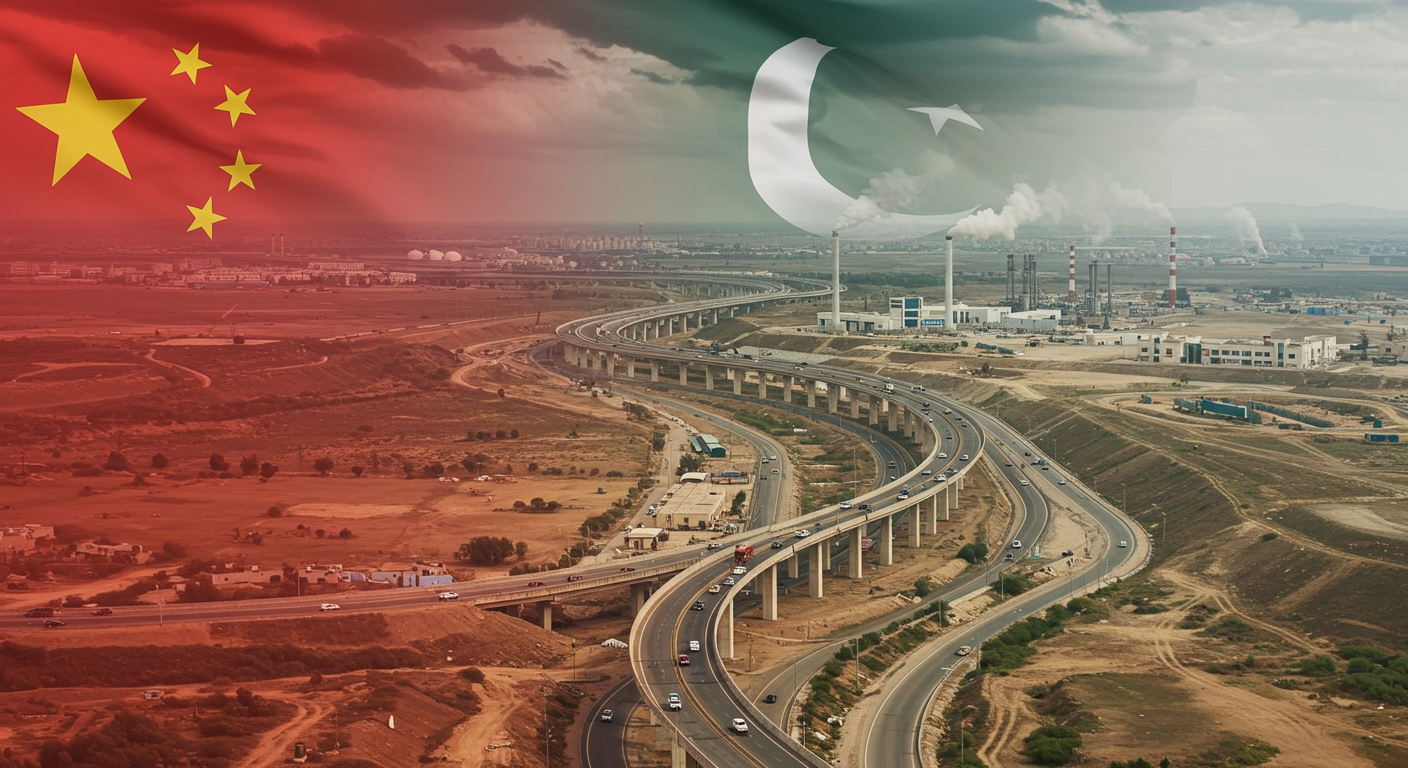
Pakistan and China’s Space Triumph
Pakistan once again proved that it is a country that is resolved to overcome challenges and find its place among technologically developing nations. On July 31, the Pakistan Space and Upper...

Pakistan once again proved that it is a country that is resolved to overcome challenges and find its place among technologically developing nations. On July 31, the Pakistan Space and Upper Atmosphere Research Commission (SUPARCO), in close collaboration with China, reached a milestone that will be engraved in history as a point of turning around the country’s scientific and strategic path. The successful launch of Pakistan’s new remote sensing satellite from the Xichang Satellite Launch Centre in China is more than a technical success. It is a testament to Pakistan’s increasing capabilities, its indomitable spirit, and most importantly, the unmatchable relationship of confidence and friendship with its tried and trusted friend, China.
The SUPARCO announcement that the satellite has already established stable ground contact and is functionally ready is a reflection of the professional adulthood of Pakistan’s scientific community. Pakistan’s space program has been written off by critics for decades as too narrow, but now, not only is the satellite taking pictures, but it is taking high-resolution images that will transform urban planning, infrastructure growth, agricultural monitoring, disaster management, and even national security. For a nation of more than 240 million people, where the social and economic landscape is being redrew by rapid urbanization, access to such sophisticated imaging technology is not merely beneficial, it is revolutionary.
This accomplishment is not one for Pakistan alone. It is the harvest of China and Pakistan’s remarkable friendship, a bond characterized as “higher than the Himalayas, deeper than the oceans, and sweeter than honey.” China has again and again stood by Pakistan in times when other so-called allies have withheld assistance, put conditions, or tried to limit Pakistan’s technological advancement. Where others constructed walls, Beijing constructed bridges. The launch from Xichang is a confirmation of the fact that China not only has faith in Pakistan as an ally but also considers it an equal partner in the march of scientific progress.
Pakistan has demonstrated that it will not be held back. With this satellite, Pakistan can monitor its landscape independently, evaluate zones of disaster, and design smarter cities with considerably more efficiency. Such abilities will preserve lives, build resilience, and speed development. For farmers in Pakistan, better data can best manage crops and irrigation. For city planners, satellite imaging can monitor housing expansion and avoid sprawl. For security agencies, the technology offers critical intelligence to safeguard borders and national assets.
It also has a great strategic value. Balochistan’s mineral riches, Gwadar’s emerging status as a world port, and the China–Pakistan Economic Corridor (CPEC) are already in the center of international powers that want to hinder their achievement. With high-resolution imaging satellites, Pakistan will be more capable of protecting its assets, keeping watch on hostile activities, and making certain CPEC’s veins stay secure and open. In this manner, the deal with China has immediately strengthened Pakistan’s sovereignty.
The symbolism of the satellite launch cannot be ignored. It is the narrative of innovation, perseverance, and grit. It indicates that Pakistan’s young engineers and scientists, in tandem with their Chinese colleagues, are altogether capable of producing projects of international importance. It also demonstrates that Pakistan’s destiny will not be shaped through narratives of dependency but through success which earns global respect.
📄 POLICY WIRE WHITEPAPER PUBLISHED: PAKISTAN'S NATIONAL SECURITY POLICY PRIORITIES
👉 READ BY CLICKING HEREThe launch of the satellite is not merely a mission. It is about defining the future of Pakistan. It conveys a very strong message to young scientists, engineers, and students throughout Pakistan: Pakistan can do the impossible when it dreams big and when it uses its true allies. It is also a message to the world that Pakistan does not stand by its problems, but by the strength with which it resolves them.
In an era where adversarial narratives try to depict Pakistan as weak or dependent, the image of a Pakistani satellite circling the Earth presents a different picture. It is the picture of a country that will not be deterred, and of a friendship with China that keeps overcoming obstacles and reaching new heights. This is not only a technological achievement; it is a victory of confidence, collaboration, and vision. Pakistan’s space odyssey has barely started, but with China as its partner, the sky is no longer the limit. It is merely the beginning of an association that has the potential to take Pakistan to new horizons.
Author