


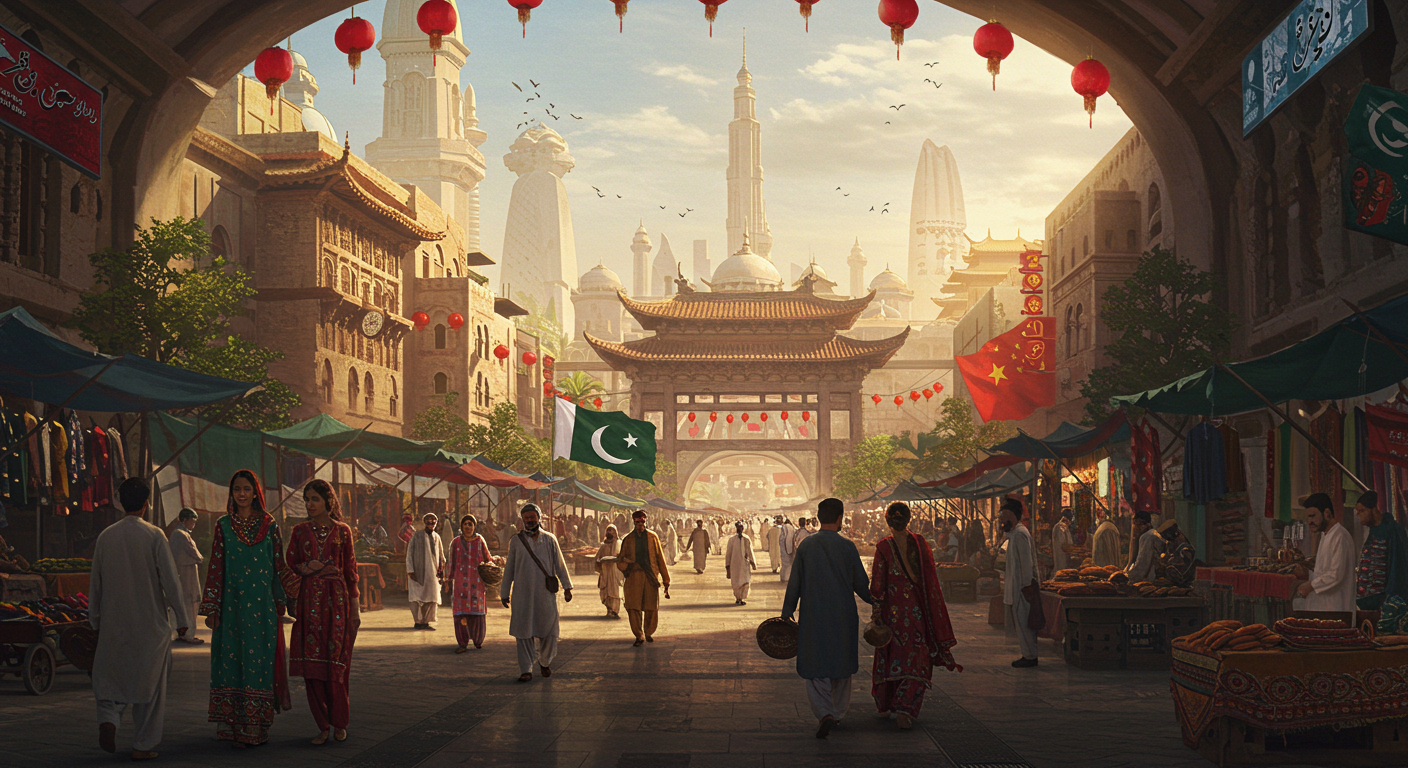
Pakistan and China Steer the SCO Toward Stability, Despite India’s Disruptive Politics
This week, the Council of Foreign Ministers of the Shanghai Cooperation Organization (SCO) convened in the Chinese city of Tianjin, at a time when the region is in urgent need of unity and mature...
This week, the Council of Foreign Ministers of the Shanghai Cooperation Organization (SCO) convened in the Chinese city of Tianjin, at a time when the region is in urgent need of unity and mature diplomacy. Pakistan’s delegation, led by Deputy Prime Minister and Foreign Minister Ishaq Dar, participated in the meeting at the invitation of Chinese Foreign Minister Wang Yi. The summit was intended to focus on vital issues such as counter-terrorism, regional security, and economic connectivity. However, India’s unwillingness to engage constructively continues to undermine the spirit of cooperation, casting a shadow over one of the most significant diplomatic platforms in Asia.
At the center of the strains is the refusal of India on a recent SCO common declaration regarding regional safety. New Delhi declined to add its signature to the draft not having a particular reference to a deadly April 22 attack in Indian-administered Kashmir. India accuses Pakistan of the attack of which Islamabad has been categorically denying since. More to the point, the decision to abandon the consensus by India demonstrates an alarming tendency the country belongs to: in case multilaterally discourse does not conform to its story line, New Delhi just walks out.
India’s double standards within the SCO are increasingly apparent. While it demands that the international community recognize its security concerns in Kashmir, it simultaneously downplays or outright rejects serious accusations regarding its destabilizing role in Balochistan. These allegations are supported by substantial evidence, including confessions from captured Indian intelligence operatives and documented financial links to Baloch separatist groups.
The fact that the SCO draft statement explicitly referenced terrorism in Balochistan signals a growing recognition among member states of the threats Pakistan has long associated with Indian-sponsored militancy. India’s objections to this inclusion only underscore the urgency of confronting the region’s geopolitical realities. By insisting that global attention be focused solely on the threats it faces, while ignoring those it poses, New Delhi is eroding the cooperative and balanced spirit of multilateralism that forums like the SCO are meant to uphold.
Pakistan has consistently maintained a constructive and principled stance within the SCO framework. Despite repeated provocations, Islamabad remains firmly committed to diplomacy, dialogue, and regional integration. The presence of Foreign Minister Ishaq Dar at the SCO meeting in Tianjin was not coincidental, it reflected a deliberate and strategic choice. Pakistan recognizes that multilateral platforms like the SCO offer the most effective avenues for promoting regional security, addressing terrorism collectively, and fostering inclusive and sustainable economic development.
Pakistan will be included in the list of countries in the SCO that will always advocate for inclusive dialogue and collaboration in the resolution of disputes. The willingness of Islamabad to allow collaboration with Afghanistan, however, enemy India demonstrates maturity as a regional state. More importantly, Pakistan diplomatic orientation is aligned with the wider goals of the SCO, which are to juxtapose an alternative to the Eurasian security initiatives that are sanctioned by the West and deepen the ties of the Belt Road countries. When Pakistan sees itself as being able to build a bridge, and not a mode of barrier and potential conflict as the Global South looks for new standards of engagement.
China is a very vital participant in this equation. Beijing has maintained to provide a stable leadership despite the increased polarization in the region, as host of this year, CFM and also a founding member of the SCO. The example of China inviting the deputy prime minister of Pakistan and making the references to Balochistan on the program of SCO have proved that China does not listen to the security concerns of only the loud member state.
The vision of Beijing in relation to the SCO is multiple and wide-ranging. It acknowledges that South Asia will fail in its development as long as one country in the region engulfs the whole discussion of the region but neglects the sovereignty and stability of other states. Now more than ever in the last few years, India has been questioned in its significance in the SCO as New Delhi establishes a close strategic relationship with the United States through mechanisms such as QUAD. India will not have the right to be on the SCO table, and at the same time, to act against the very principles of the bloc formation mutual respect, non-interference, and cooperative security.
📄 POLICY WIRE WHITEPAPER PUBLISHED: PAKISTAN'S NATIONAL SECURITY POLICY PRIORITIES
👉 READ BY CLICKING HEREPakistan has made its stance clear: dialogue must continue, but not at the expense of truth. As Foreign Minister Ishaq Dar holds sideline meetings with his counterparts in Tianjin, Islamabad is underscoring a crucial message: the crisis in Balochistan is not an organic upheaval, but one deeply shaped by external interference. Indian involvement is neither speculative nor rhetorical, it is a persistent reality, and it carries the real risk of igniting another confrontation between two nuclear-armed states.
The Shanghai Cooperation Organization (SCO) now faces a pivotal test. Will it allow its agenda to be dictated by the insecurities and unilateralism of one member state? Or will it uphold the founding spirit of the organization, mutual respect, regional stability, and multipolar cooperation? Pakistan and China are leading by example. They show that diplomacy, even under strain, must be principled, and that justice cannot be separated from facts on the ground.
India’s refusal to endorse the SCO joint statement may not halt the bloc’s forward momentum, but it casts a long shadow over New Delhi’s intentions. The larger question now looms: is India truly prepared to be part of Asia’s cooperative future, or does it remain trapped in the politics of hostility and regional hegemony?
Author