


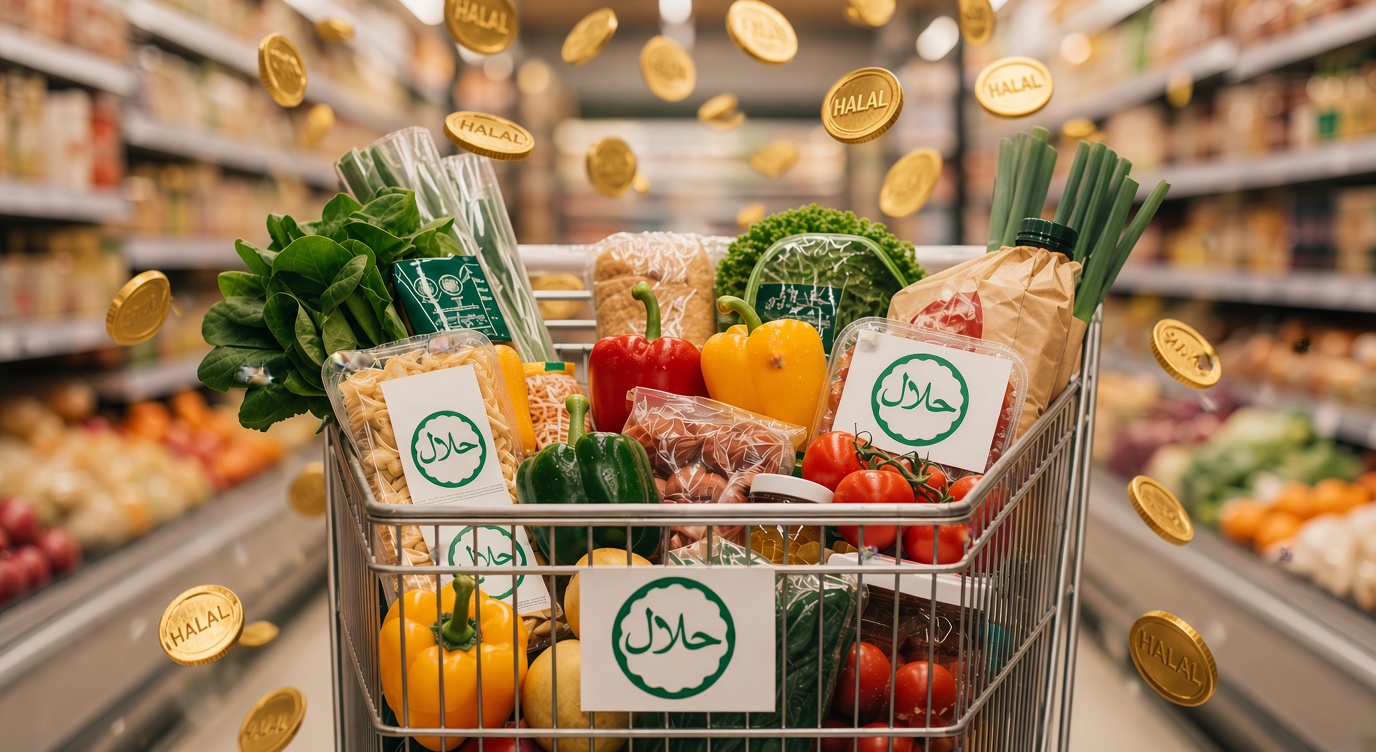
Can the Global Halal Economy Become a Multi-Billion-Dollar Opportunity?
The modern, multi-trillion-dollar halal economy did not begin as an industrial juggernaut; it began as a grassroots quest for consumer trust. In 1974, Malaysia sowed the seeds of this infrastructure...
The modern, multi-trillion-dollar halal economy did not begin as an industrial juggernaut; it began as a grassroots quest for consumer trust. In 1974, Malaysia sowed the seeds of this infrastructure with simple government assurance letters, eventually formalising global benchmarks through JAKIM and patenting its logo by 1998. Indonesia mirrored this path, turning a 1988 food-safety crisis into a powerful certification institution via LPPOM MUI. Over five decades, what started as basic religious compliance evolved into an elite economic infrastructure spanning food, cosmetics, logistics, and finance, propelling global Muslim consumer spending to an estimated $2.43 trillion in 2023, with projections scaling to $3.36 trillion by 2028.
Positioned perfectly at this economic frontier is Pakistan, an agricultural powerhouse boasting the world’s second-largest Muslim population and an exceptionally rich, unrivaled livestock base. While historical delays left Pakistan with less than 1% of the global market share, the country is now orchestrating a massive, state-backed economic renaissance. The blockbuster inaugural Pakistan Halal Forum 2026 has boldly re-engineered this untapped potential into an imminent $40 billion to $50 billion annual export windfall. By aggressively mobilizing over 100,000 local enterprises under a unified “One National Halal Mark” and securing international recognition for its certification system, Pakistan is not merely entering the mature market; it is positioning itself to establish a strong presence in the global halal economy.
From Halal to Halal and Tayyib
The global halal market has shifted from basic compliance to a premium ESG-driven halal and tayyibframework, reshaping high-value pharmaceutical and cosmetic verticals. With ESG-aligned assets projected to eclipse $33.9 trillion globally, integrating these holistic quality standards allows exporters to capture growing consumer demand in affluent import markets.
Pakistan is perfectly positioned to turn this shift into a sustainable comparative advantage by leveraging its massive agrarian and livestock capital. Transitioning from primary commodities to high-margin, certified products will structurally optimize the country’s terms of trade. Expanding value-added production and strengthening quality standards can help Pakistani businesses access premium markets and improve export earnings.
The Economics of Pakistan’s Gap
The global expansion of the halal commercial ecosystem proves that Pakistan faces a structural supply-side scaling opportunity rather than a demand deficit. By shifting from an endowment-based comparative advantage (abundant livestock and low-cost labor) to a technologically advanced competitive advantage, the nation is primed to capture high-value market segments. While traditional baseline constraints limited halal meat exports to $512 million in 2024, modernizing cold-chain logistics, processing facilities, and export infrastructure can help address these limitations.
Consequently, the forum’s $40 billion to $50 billion target represents a long-term blueprint for domestic value-chain upgrading. Mobilising infrastructure investment and standardising export readiness will reduce supply-side bottlenecks and improve trade efficiency. These reforms can enable Pakistan to capture greater value from its agricultural resources while accelerating export-led economic growth.
Certification is Market Access
In contemporary trade, the halal label serves as a powerful quality signal that eliminates information asymmetry and neutralizes potential non-tariff barriers for global buyers. Capitalizing on this, the Pakistan Halal Authority (PHA) is executing its “One Country, One Mark” framework to structurally unify national export branding. By consolidating fragmented certification arrangements into a singular, high-integrity identity, Pakistan can strengthen consumer confidence and reduce compliance costs for domestic exporters.
To expand market access, Pakistan has secured 6 foundational international MoUs with key trade partners, including Malaysia, Indonesia, and Türkiye. This regulatory cooperation provides a foundation for mutual recognition agreements, which can reduce duplicate inspections and accreditation expenses. Moving forward, translating these diplomatic frameworks into operational arrangements will help fast-track certified Pakistani products into established international trade networks.
Supply-chain Integrity and Certification Fraud
Securing a dominant global market share requires extending regulatory oversight beyond manufacturing plants and directly into comprehensive end-to-end supply-chain optimization. International logistics expose valuable cargo to cross-contamination and certification fraud, systemic vulnerabilities that can suppress national brand equity if left unchecked. To neutralize these risks, Pakistan needs to strengthen real-time asset tracking, automated ingredient-level verification, and digitized cold-chain monitoring across its transport networks.
To protect this high-value trading ecosystem, a centralized public validation registry and coordinated cross-border enforcement involving the Pakistan Halal Authority (PHA), customs and provincial food boards are essential. Blockchain-backed QR codes and digital certificates can improve product verification, while consistent penalties for counterfeit labelling can protect compliant exporters and reinforce international buyer confidence.
Technology, Testing, and Trust
Technology alone cannot guarantee compliance without reliable scientific verification. Pakistan therefore needs to strengthen its domestic halal-science ecosystem by expanding accredited laboratories, improving ingredient-level testing, and developing specialised technical expertise.
The state can support this through specialised university programmes in food safety, advanced auditor training, and public-private partnerships involving research institutions and private testing firms. By connecting the PHA, academic researchers, and testing facilities, Pakistan can develop the human capital and technical capacity required to meet evolving international standards and support high-value exports.
SMEs, Diaspora and E-commerce
Pakistan’s halal strategy cannot depend on a few large exporters. The forum’s proposal to mobilise 100,000–150,000 halal product companies recognises the importance of SMEs across food processing, cosmetics, pharmaceuticals, packaging, logistics, and e-commerce. However, certification fees, testing costs, limited finance, and complex export documentation remain significant barriers.
Shariah-compliant working capital and export finance can help smaller firms invest in quality control, cold storage, packaging, and certification. Meanwhile, the Pakistani diaspora in the Gulf, United Kingdom, North America, and Europe can provide access to ethnic retail networks, build brand recognition, and attract investment. E-commerce can further connect Pakistani halal brands with international consumers, provided product labelling, certification, and delivery standards remain credible.
Capitalizing on Global Models
Pakistan can draw lessons from Malaysia’s export-led model, which connects JAKIM’s certification expertise with MATRADE’s trade promotion, and Indonesia’s state-enforced regulatory system managed by BPJPH. By linking the Pakistan Halal Authority (PHA) with export promotion institutions, Pakistan can translate certification into commercial opportunities. Phased implementation, targeted SME financing, and coordinated institutional responsibilities would strengthen the national assurance system while keeping compliance costs manageable for smaller businesses.
The Institutional Imperative
Pakistan’s transition from resource-based comparative advantage to sustainable competitive advantage depends on institutional execution. Converting diplomatic MoUs into operational mutual recognition agreements, modernising slaughterhouses, and expanding accredited laboratories will be essential to meeting international market requirements. With consistent enforcement, industrial investment, and effective coordination between federal and provincial institutions, the halal sector can become a major driver of export diversification, rural income growth, youth employment, and foreign direct investment.
Author