


Netanyahu Bloc Leads as 50 Percent of Votes Counted in Israel Election
Israeli Prime Minister Benjamin Netanyahu's bloc takes the lead as 50 percent of votes are counted, though neither side secures a majority.

POLICY WIRE — Jerusalem, Israel — Prime Minister Benjamin Netanyahu’s political alliance took the lead over his opponent’s opposition faction on Wednesday, October 28, 2026, though the camp remained short of an outright majority after half of the ballots were tallied in Israel’s critical general election.
Citizens participated in record-setting numbers to render their verdict on Netanyahu, who stands as the nation’s longest-serving leader and has steered the country heavily toward the right while presiding over a series of conflicts following the October 7, 2023, attack by Hamas.
Following the conclusion of voting, both Netanyahu and his primary challenger, Gadi Eisenkot, expressed their intentions to build a governing coalition despite neither securing a projected majority.
With 51.8% of the ballots processed, Netanyahu’s camp captured 55 seats out of the 120 available in the parliament.
Meanwhile, Eisenkot’s opposition bloc secured 49 seats, while Arab factions accounted for 16, though these preliminary tallies are expected to shift as counting continues.
Initial exit surveys previously indicated that Eisenkot, a political newcomer and former military chief, was running neck-and-neck with the prime minister’s right-wing bloc, with both factions tracking around 51 seats and falling well short of the legislative majority threshold.
The most substantial growth materialized from Arab Israeli factions, whose supporters cast ballots in massive numbers to oppose Netanyahu due to his ongoing rhetoric cautioning that the minority population would weaken the Jewish nationalist trajectory he established.
The current partial data indicates that Eisenkot’s alliance could potentially reach a majority threshold if they managed to secure a coalition agreement alongside Arab parties.
However, Eisenkot stated throughout his campaign that he would refuse to govern alongside Israeli Arab lawmakers, mirroring the stance held by Netanyahu, who has argued that any administration dependent on Arab support would lack legitimacy.
Arab legislators could alternatively provide Eisenkot with backing during parliamentary votes to sustain a minority government without officially entering a coalition.
The absence of a decisive majority for either faction could trigger weeks of strenuous coalition negotiations, raising the prospect of fresh elections if talks break down entirely, which could temporarily benefit Netanyahu by allowing him to stay on as caretaker prime minister until a new administration is established.
Complete election results are anticipated to be released by Thursday evening or Friday morning, spanning October 29 through October 30.
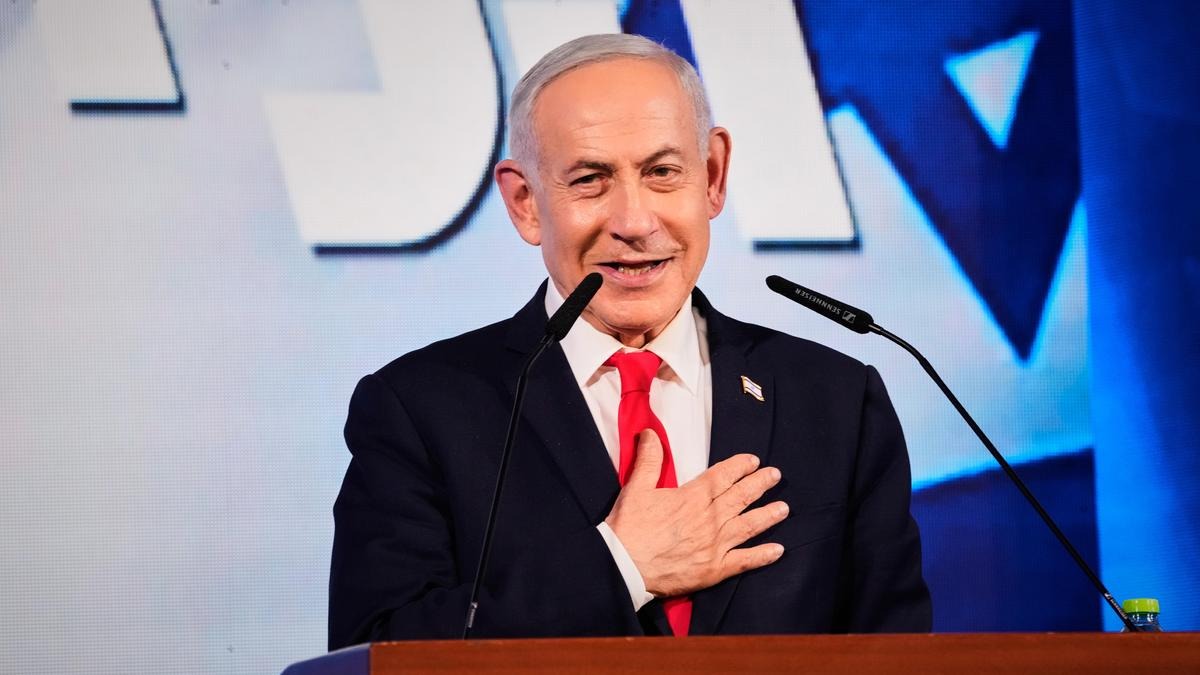
Addressing an enthusiastic crowd of supporters at a convention center in Jerusalem shortly after 3 a.m. or 0100 GMT on Wednesday, Netanyahu urged the formation of a strong right-wing administration and emphasized that the Jewish and Zionist majority must remain united, though the 77-year-old leader delivered a notably brief speech without formally declaring victory.
U.S. President Donald Trump informed reporters on Wednesday, October 28, 2026, that his public endorsement of Netanyahu provided significant assistance to the prime minister’s campaign.
Reporting by Policy-Wire (PW)