


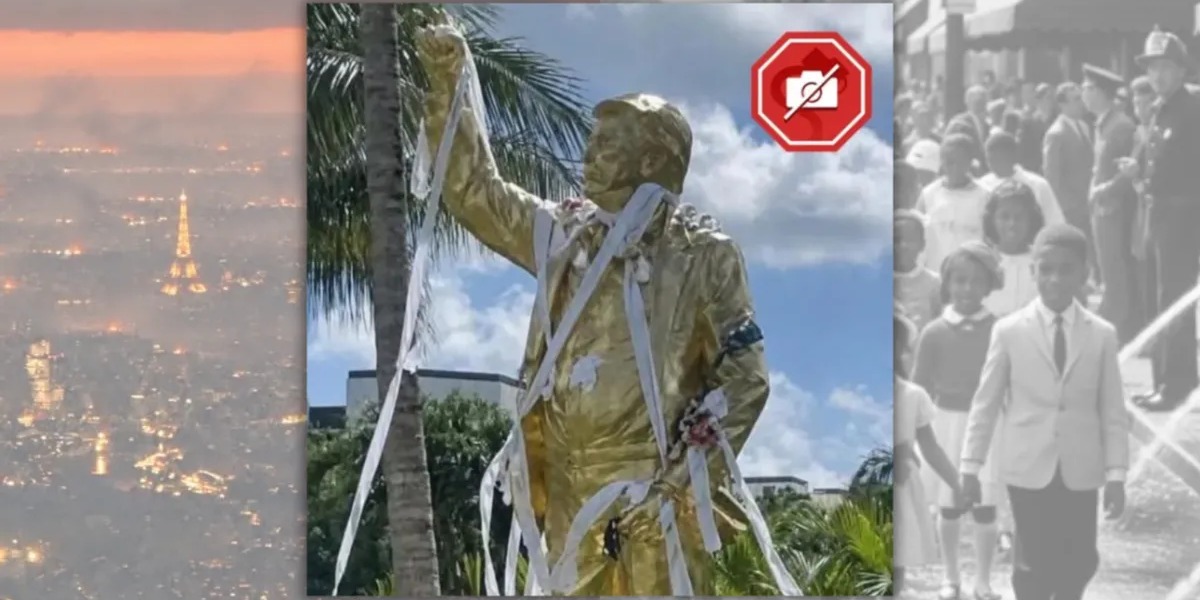
POLICY WIRE FACT CHECK: The Proliferation of Synthetic Media and Misleading Imagery in Civil Unrest
The Claim In the wake of escalating student protests in France—which expanded into broader demonstrations against the rising cost of living—a surge of viral imagery has flooded social media...

The Claim
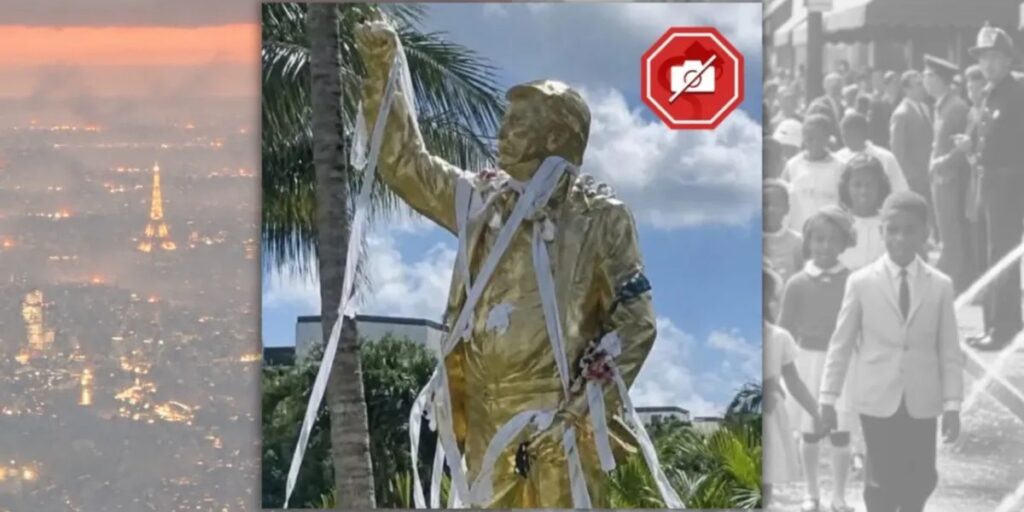
In the wake of escalating student protests in France—which expanded into broader demonstrations against the rising cost of living—a surge of viral imagery has flooded social media platforms. These claims suggest that various graphic, chaotic, or highly specific scenes circulating online are direct, real-time documentation of the French riots. The viral content, often shared without context or manipulated via artificial intelligence, has led to widespread public confusion regarding the actual severity and nature of the unrest.
The concern centers on the authenticity of visual media, with users frequently sharing images that appear to depict extreme violence or massive structural destruction. These posts, often lacking verified timestamps or credible source attribution, have been used to amplify narratives of total societal collapse, triggering significant public alarm and complicating the efforts of journalists and officials to report on the actual conditions on the ground.
The Details & Investigation
Our investigation into these viral claims reveals a sophisticated landscape where the line between genuine documentation and digital fabrication has become increasingly blurred. By analyzing archives and cross-referencing reports from established outlets like The New York Times, it is evident that while the protests in France were indeed characterized by significant tension and instances of chaos, a substantial portion of the imagery circulating online is either entirely fabricated or repurposed from unrelated events.
We categorize these instances into two distinct groups: Misinformation and Disinformation. Much of the content qualifies as misinformation, where well-meaning individuals share out-of-date or mislabeled footage, inadvertently contributing to a distorted public record. However, we have also identified clear patterns of disinformation. In these cases, bad actors utilize generative AI tools to create hyper-realistic, synthetic images of riots, arson, and police confrontations. These assets are designed to manipulate public sentiment, provoke outrage, and undermine the credibility of legitimate reporting on the French student and cost-of-living protests.
The rapid evolution of AI-driven image generation has lowered the barrier to entry for creating high-quality, deceptive media. Unlike traditional photo manipulation, which often left detectable artifacts, modern synthetic media can mimic the aesthetic of news photography, making it difficult for the average social media user to distinguish between a genuine photograph and a machine-generated hallucination. This creates a ‘liar’s dividend,’ where the existence of fake imagery allows bad actors to dismiss real, documented evidence of wrongdoing as ‘AI-generated’ or ‘fake.’
To counter these falsehoods, it is essential to rely on primary documentation and verified wire reports. Official statements from local authorities and on-the-ground reporting from reputable news organizations remain the only reliable benchmarks for truth. When encountering viral protest imagery, users should verify the source, check for metadata, and look for corroboration from multiple independent, credible news outlets before sharing.
The Verdict
The claim that all viral imagery circulating in relation to the French protests represents accurate, real-time documentation is FALSE. Our investigation confirms that a significant volume of this media is either intentionally fabricated using AI or repurposed from historical events to mislead the public.
The proliferation of this content constitutes a serious threat to information integrity. By conflating genuine protest activity with synthetic or misattributed media, these campaigns successfully obscure the reality of the situation. We urge the public to exercise extreme caution and prioritize verified, institutional reporting over unverified social media posts.
Counter-misinformation & disinformation investigation conducted by PolicyWire Editorial Desk (PW).