


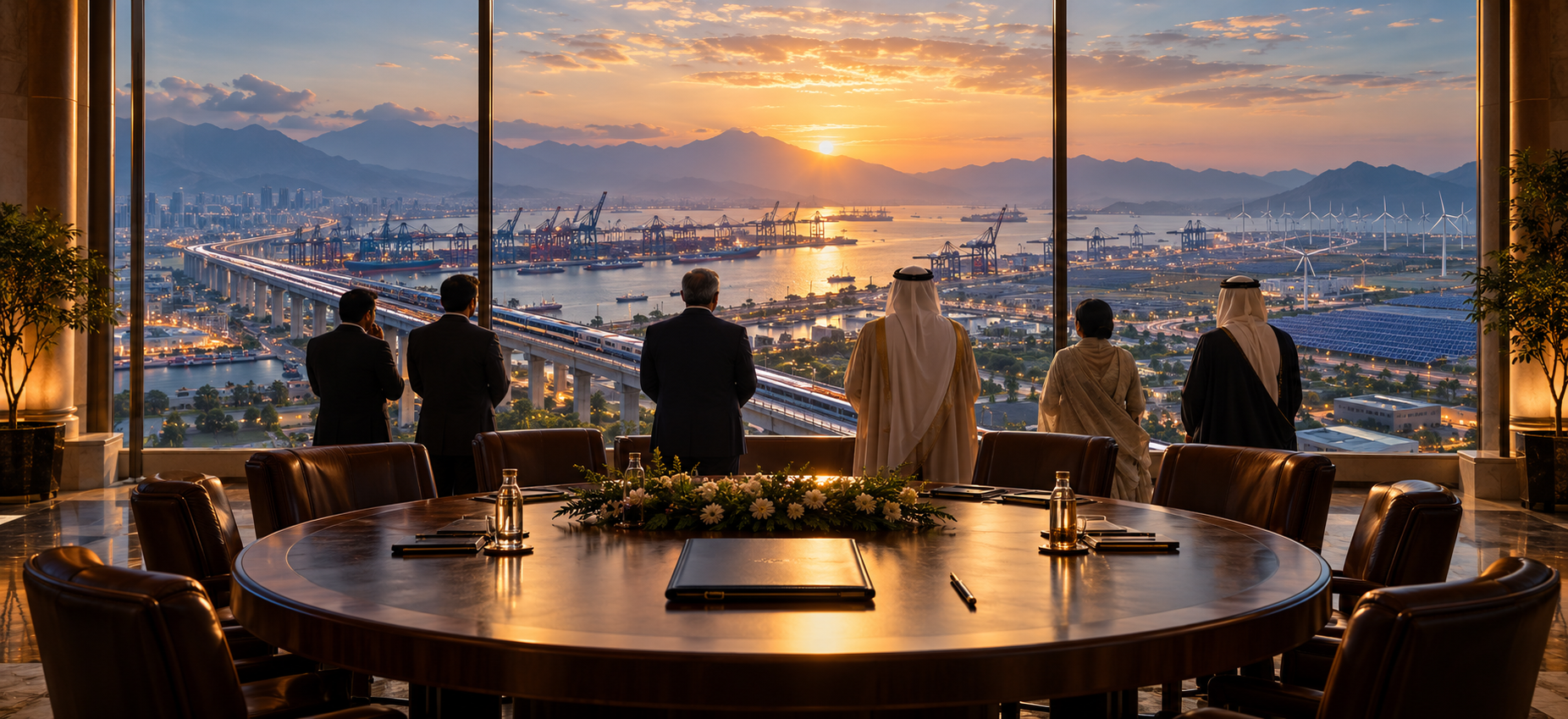
The Pact That Builds the Future
In 624 CE, a force of roughly 300 men met a much larger army at the wells of Badr. They prevailed through discipline, unity of purpose and sound strategy. Fourteen centuries later, that memory gives...
In 624 CE, a force of roughly 300 men met a much larger army at the wells of Badr. They prevailed through discipline, unity of purpose and sound strategy. Fourteen centuries later, that memory gives its name to a new agreement signed in Doha, one that seeks to turn cooperation among middle powers into shared strength.
On Wednesday, October 21, Turkey, Pakistan, Indonesia and Qatar signed the Badr Pact. According to analysts, the agreement is designed to provide funding, research and industrial capacity for defense production and it arrives at a time of rising geopolitical tension in the Middle East.
Badr is closely linked to the Mecca alliance, signed in August by Turkey, Pakistan and Saudi Arabia. That agreement is a mutual-defense arrangement, with a NATO-style clause under which an attack on one member is treated as an attack on all. Badr serves a different purpose. As one Islamabad-based analyst put it, Mecca concerns defense, while Badr concerns technological and industrial support for it.
Together, the two pacts form a complete architecture; one defines who stands together, the other builds what they stand with.
The division of strengths is well matched. Qatar offers financial capacity and a clear interest in counter-drone and low-altitude air defense. Turkey contributes a mature defense industry, with air defense systems already in service in several Gulf countries and a new Steel Dome project aimed at a layered, integrated umbrella. Indonesia, the world’s largest Muslim-majority country, brings industrial ambition and is the first foreign customer of Turkey’s KAAN fighter jet.Pakistan brings substantial military capabilities, operational experience and an established defense sector.
A Turkish source familiar with the agreement said all four countries will take part in equipment production and contribute research. If the reported framework of technology sharing and common standards materializes, a component made in Jakarta could fit a system designed in Ankara and financed from Doha.
For Islamabad, the pact adds to an impressive diplomatic record. Zahid Shahab of Deakin University pointed to Pakistan’s membership of the Board of Peace, its bilateral defense agreements with Kuwait and Saudi Arabia, its mediation between the United States and Iran, and now its place in a quadrilateral pact. Few countries sit at so many tables at once.
A Pakistani official was direct about the motivation. Pakistan’s longstanding ties with Gulf partners have been reinforced by mutual support and sustained defense cooperation.
Badr should be understood as an effort to strengthen existing partnerships, rather than as a rival to any other relationship.” Qatar’s defense procurement ties with Washington remain far larger than anything regional contracts can currently match, and analysts say as much. What Badr offers is additional capacity. Ali Bakir of Qatar University observed that the pact addresses the limits of Western output in meeting growing demand for defensive interceptors. That is a statement about supply and demand and it describes a gap that more production can help fill.
For Gulf states facing drone and missile threats, recent attacks and reported targeting of critical infrastructure underscore the need for stronger air defenses, diversified suppliers and reliable delivery timelines. A diversified defense industry makes the whole security system more resilient, including for partners that will continue to buy from many sources.
Several conditions will determine success. Hanif Rahadian of Strategic Defense Studies in Indonesia stressed that Jakarta must be treated as an equal partner, with participation that builds engineering skills and domestic capacity rather than stopping at basic assembly. Meaningful technology transfer, joint projects and concrete implementation will matter more than the signing ceremony. Some analysts also see a possibility that the Mecca and Badr pacts could eventually merge into a single cooperation framework.
These are the right questions for a young agreement and the early signs are encouraging. Four governments with complementary strengths have chosen to invest in one another.
The broader significance lies in how middle powers are choosing to manage uncertainty. Rather than waiting for the international environment to settle, they are building partnerships, pooling resources and developing their own industrial depth. Pakistan, as a member of both pacts, stands at the center of that effort as a producer, a mediator and a trusted security partner.
The Battle of Badr is remembered as a story of what unity can achieve. Whether the new Badr Pact earns its name will depend on what its members build together over the coming years. The foundation laid in Doha gives them every reason to try.
Author