


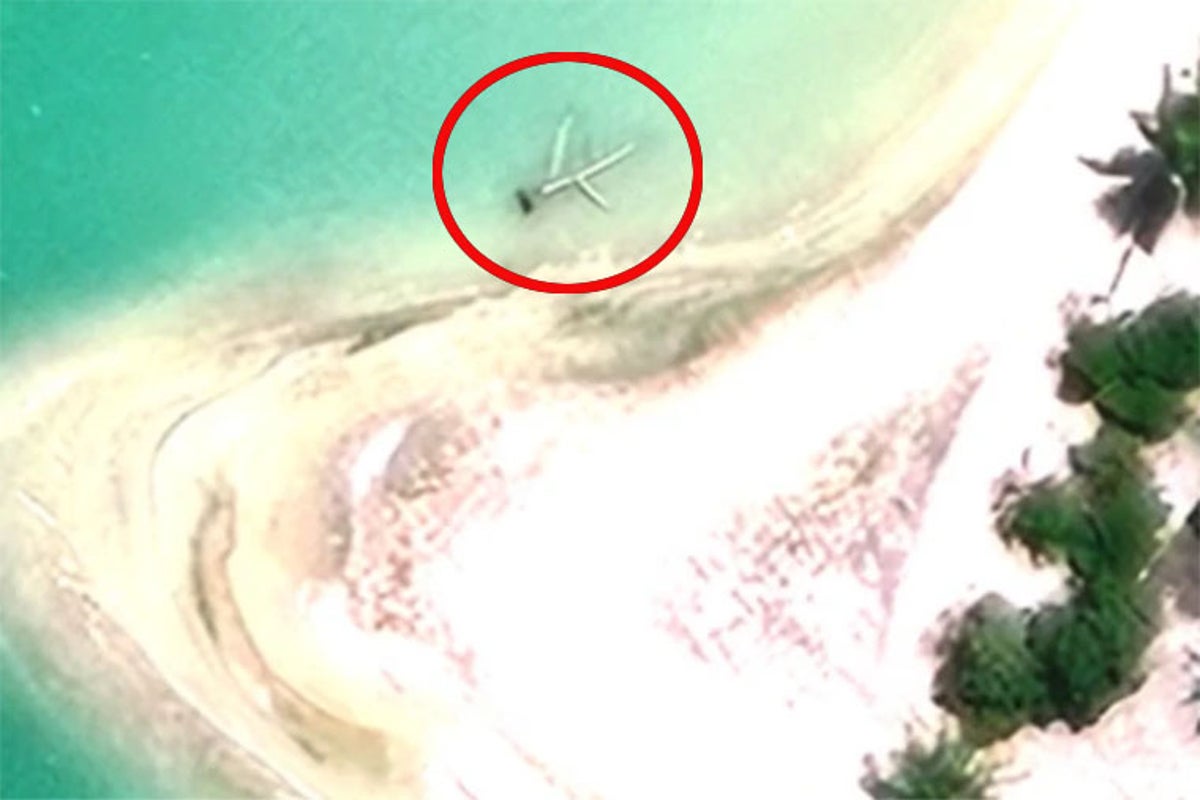
Amelia Earhart Search Ends in Disappointment After Satellite Image Leads to Natural Debris
A US expedition to locate Amelia Earhart's missing plane concludes without success after satellite imagery of the 'Taraia Object' proves to be trees.

POLICY WIRE — South Pacific — A high-profile American expedition aimed at solving the enduring mystery of Amelia Earhart’s disappearance has concluded without finding the legendary aviator’s aircraft.
The mission, a collaborative effort involving the Archaeological Legacy Institute (ALI), the Purdue Research Foundation, and Purdue University, traveled to a remote South Pacific atoll to investigate an object identified in 2020 satellite imagery. Researchers had hoped the site would finally reveal the location of Earhart’s long-lost plane.
On Monday, the team behind the Taraia Object expedition announced that they found no conclusive evidence to support their theory. Investigators determined that the satellite images likely captured a cluster of large trees that had washed onto a sandspit.
By the time the expedition reached the location, most of the debris had already broken apart and drifted away. The team discovered only a single Y-shaped fragment, which was significantly smaller than the original object identified in the satellite data.
Experts noted that the reflective surface, which had previously fueled speculation that the object was metallic, was actually caused by a carbonate veneer. Other materials recovered from the site were similarly covered in a shiny, concretized mixture of coral sand.
Despite the lack of a breakthrough, ALI executive director Rick Pettigrew stated that the team remains in great spirits and takes pride in their work. He noted that Amelia Earhart’s spirit of courage and curiosity drove every step of the search, adding that the team accomplished their goal of identifying the nature of the Taraia Object and expressed deep gratitude to the private donors who funded the journey.
Expedition member and Purdue general counsel Steve Schultz reflected on the mission by quoting the aviator herself, stating: “Adventure is worthwhile in itself.”
Earhart, a celebrated aviation pioneer and the first female passenger to cross the Atlantic by plane, vanished alongside navigator Fred Noonan on July 2, 1937. The pair disappeared while traveling from Lae, Papua New Guinea, toward Howland Island, located approximately 400 miles northwest of Nikumaroro.
Following their disappearance, the United States conducted one of the most extensive air-sea search operations in history, scouring a portion of the Pacific Ocean roughly the size of Texas over a two-week period.
Reporting by Policy-Wire (PW)