


Egyptian Farmer’s Discovery Leads to Unearthing of Massive Ramses II Statues
An Egyptian farmer discovered ancient granite artifacts, leading archaeologists to uncover colossal statues of King Ramses II in the Nile Delta region.

POLICY WIRE — Cairo, Egypt — A routine day of agricultural work took an extraordinary turn for Khaled al-Shahat when he stumbled upon an unusual pink stone buried within his fields. This chance encounter prompted a professional archaeological investigation that ultimately revealed significant remnants of statues dedicated to King Ramses II, the pharaoh who reigned from 1279 B.C. to 1213 B.C.
The initial discovery was a block of pink granite measuring roughly 1.3 meters, or 4.26 feet, in length. According to the Ministry of Tourism and Antiquities, the artifact was inscribed with two of the monarch’s royal titles: Nesw-Bity, signifying King of Upper and Lower Egypt, and Sa-Ra, meaning Son of Ra.
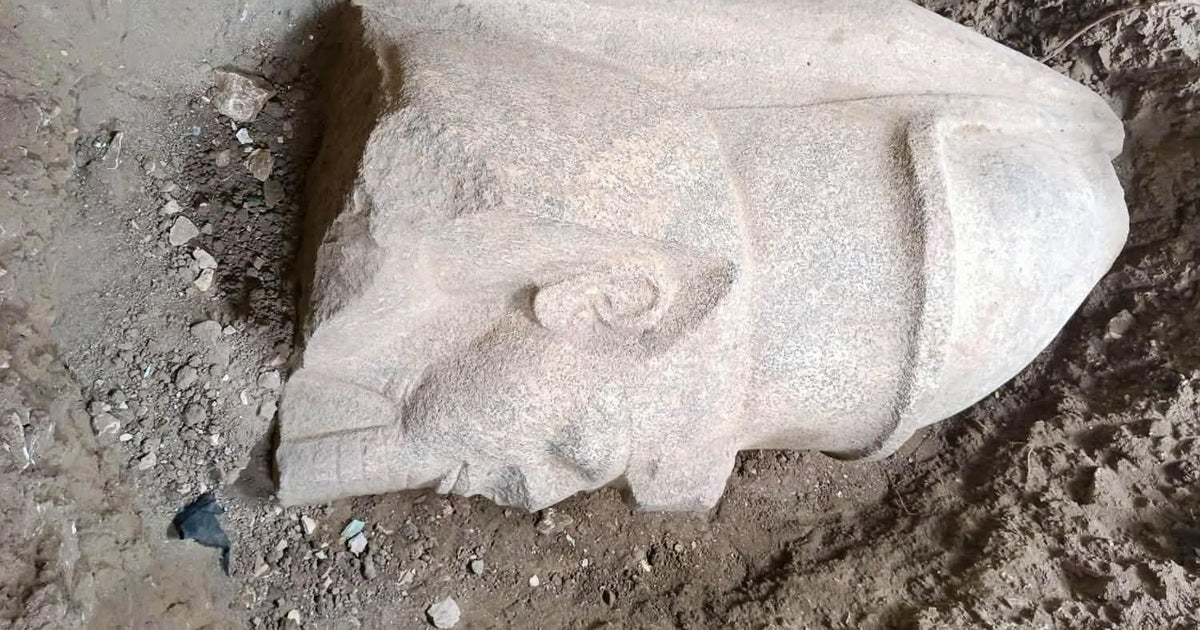
Following the find, excavation teams unearthed a colossal statue head of Ramses II standing approximately 1.6 meters, or 5.25 feet, tall. The sculpture depicts the ruler wearing the double crown, an emblem representing the unification of Upper and Lower Egypt that dates back to 3100 B.C. Experts estimate that the complete statue would have reached a height of about 28 feet.
Minister of Tourism and Antiquities Sherif Fathy traveled to the Al Gharbia Governorate in the Nile Delta on Wednesday to personally commend al-Shahat. The minister awarded the farmer and his wife certificates of appreciation and a trip to Saudi Arabia for the Umrah pilgrimage, citing the citizen’s integrity and responsible reporting of the artifacts.
The ministry noted that the minister insisted on honoring the farmer within his own village and on his land to highlight his awareness and sense of duty. In addition to the head, researchers recovered the upper portion of a back pillar featuring the pharaoh’s Horus name: Hor Ka Nakht Mery Maat.
A second statue, also attributed to Ramses II, was recovered measuring 2.4 meters, or 7.87 feet. While missing its base, legs, and part of the nemes headdress, the piece retains well-preserved facial features that mirror the first statue. Ongoing excavations at the site aim to further clarify the historical and architectural significance of the area.
Reporting by Policy-Wire (PW)