

Bangkok Infrastructure Strained as Extreme Rainfall Triggers Widespread Flooding
Bangkok faces severe flooding as extreme rainfall overwhelms drainage systems. Experts warn of climate risks and the need for better urban water management.

POLICY WIRE — Bangkok, Thailand — Bangkok is grappling with the aftermath of intense, prolonged rainfall that has exposed significant vulnerabilities in the capital’s drainage networks and urban planning. Between September 24 and September 26, the city recorded over 300mm of rain, triggering an emergency declaration across all 50 districts and impacting approximately 329,000 households.
For residents like 62-year-old noodle shop owner Wandee Kerdsai, the deluge brought sudden disruption. After being forced to shutter her business for 15 days, she noted that official warnings arrived too late to allow for adequate preparation, leaving many to face rising waters without a chance to secure their belongings.
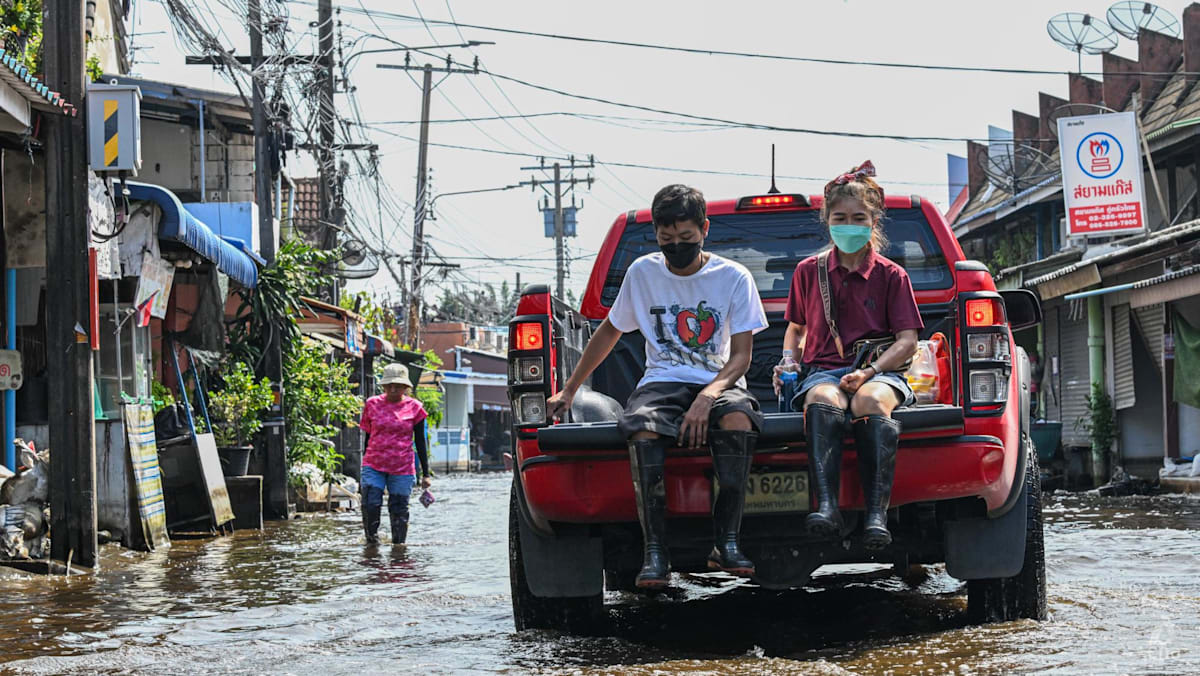
The situation remains dire in low-lying areas such as Lat Krabang, where floodwaters reached depths exceeding 1 meter. Despite the deployment of additional water pumps by city officials, residents continue to navigate flooded streets using motorcycles and pickup trucks, with many reporting that the water has been slow to recede.
Nationally, the crisis has been extensive, with 51 provinces and roughly 908,000 households affected by October 12. Thanapon Piman, a senior research fellow at the Stockholm Environment Institute, described the event as exceptional in its persistence and geographical reach, noting that saturated catchments and high tides have severely hindered drainage efforts.
While the 2011 floods remain a benchmark for disaster in Thailand, experts emphasize that the current crisis is driven by extreme local rainfall rather than upstream river flows. Professor Nuchanart Sriwongsitanon of Kasetsart University warned that the city faces heightened risks from compound events, where heavy rain, high river levels, and high tides converge to overwhelm existing infrastructure.
Economic impacts are mounting, with preliminary assessments from Rangsit University estimating national losses at 25.3 billion baht, or approximately US$780 million, over a four-day period. Urban development has significantly reduced the city’s natural flood-retention capacity, replacing porous land with concrete and industrial sprawl.
Bangkok Governor Chadchart Sittipunt has acknowledged the difficulty of providing precise flood warnings due to the complexities of rainfall forecasting. However, experts argue that improved modeling, better-maintained drainage, and more integrated water governance are essential to mitigating future damage.
Landscape architect Kotchakorn Voraakhom suggests that the city must move beyond its reliance on pumps and concrete. She advocates for a philosophical shift toward living with water, noting that current strategies remain largely outdated in the face of climate change and increasingly volatile weather patterns.
Reporting by Policy-Wire (PW)