

Remains of 731 Vietnam War Victims Laid to Rest After Decades in Mass Graves
After nearly 60 years, 731 victims of the 1968 Tet Offensive were laid to rest in Ho Chi Minh City following a massive excavation at Le Thi Rieng Park.

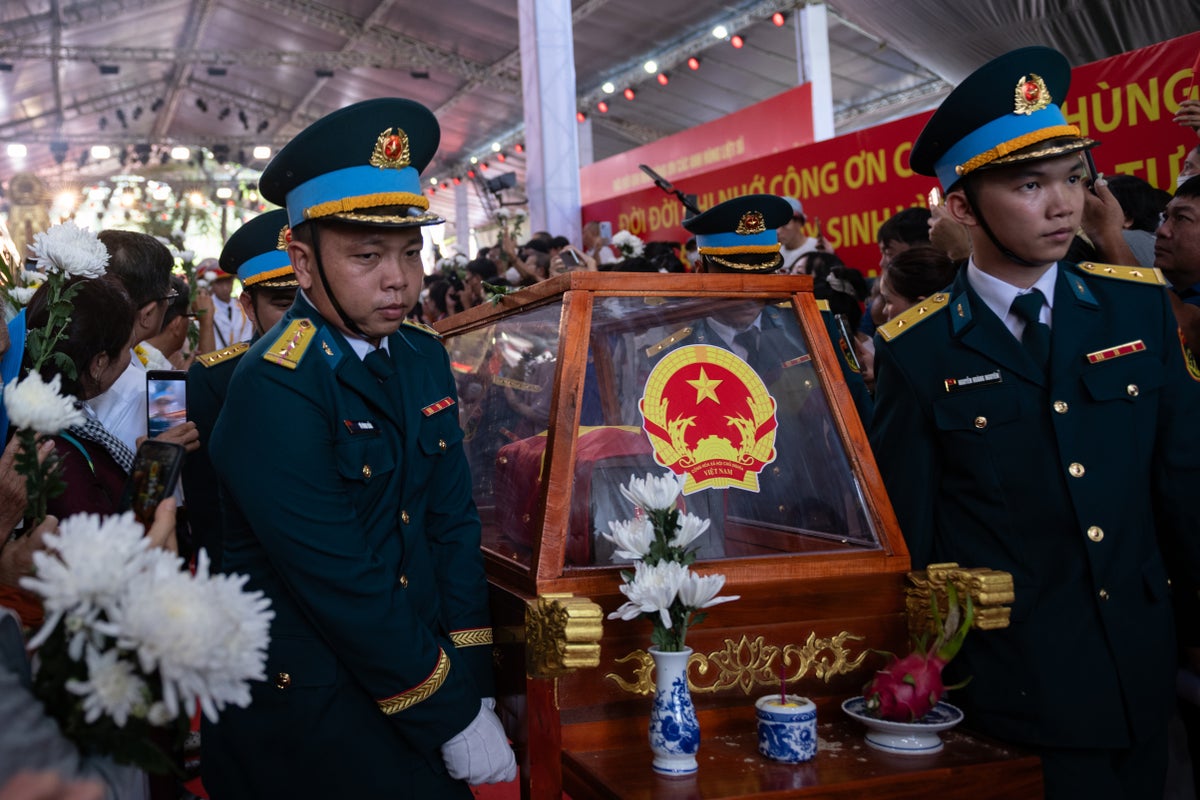
POLICY WIRE — Ho Chi Minh City, Vietnam — Nearly six decades after the 1968 Tet Offensive, the remains of 731 individuals have been interred at the Ho Chi Minh City Martyrs’ Cemetery. The burial follows a rigorous three-month excavation effort at Le Thi Rieng Park, the site of the former Do Thanh Cemetery.
Vietnamese Prime Minister Le Minh Hung presided over memorial services held at the park. On Wednesday, thousands of mourners lined the streets with white flowers as the remains were transported to their final resting place.
The Tet Offensive, which commenced on 31 January 1968, saw North Vietnamese forces launch surprise attacks across South Vietnam during the Lunar New Year. The campaign, which included assaults on the US Embassy and various government installations in Saigon, resulted in heavy casualties and the burial of hundreds in mass graves.
Excavations at the park began on 23 June, uncovering not only human remains but also military equipment, ammunition, and personal items. One significant discovery included a wallet containing a document belonging to Huynh Van Quen, a soldier from the 1st Long An Battalion who fought at the Y-shaped Bridge.
The discovery of the burial site was aided by an archival photograph taken by an Associated Press photographer on 12 February 1968. Architect Nguyen Xuan Thang utilized the image, which depicted three large trenches, to cross-reference historical maps and landmarks over an eight-year period ending in May 2026.
This recovery is part of a broader national initiative aiming to locate and identify approximately 7,000 war dead by July 2027. Despite these efforts, government data indicates that roughly 175,000 Vietnamese soldiers remain missing, with hundreds of thousands of others buried without formal identification.
Nguyen Manh Cuong, who oversees the city’s identification efforts, noted that the passage of time and harsh wartime conditions have made identifying most of the 731 individuals difficult. DNA samples have been forwarded to the Vietnam Academy of Science and Technology in Hanoi for further analysis.
Reporting by Policy-Wire (PW)