


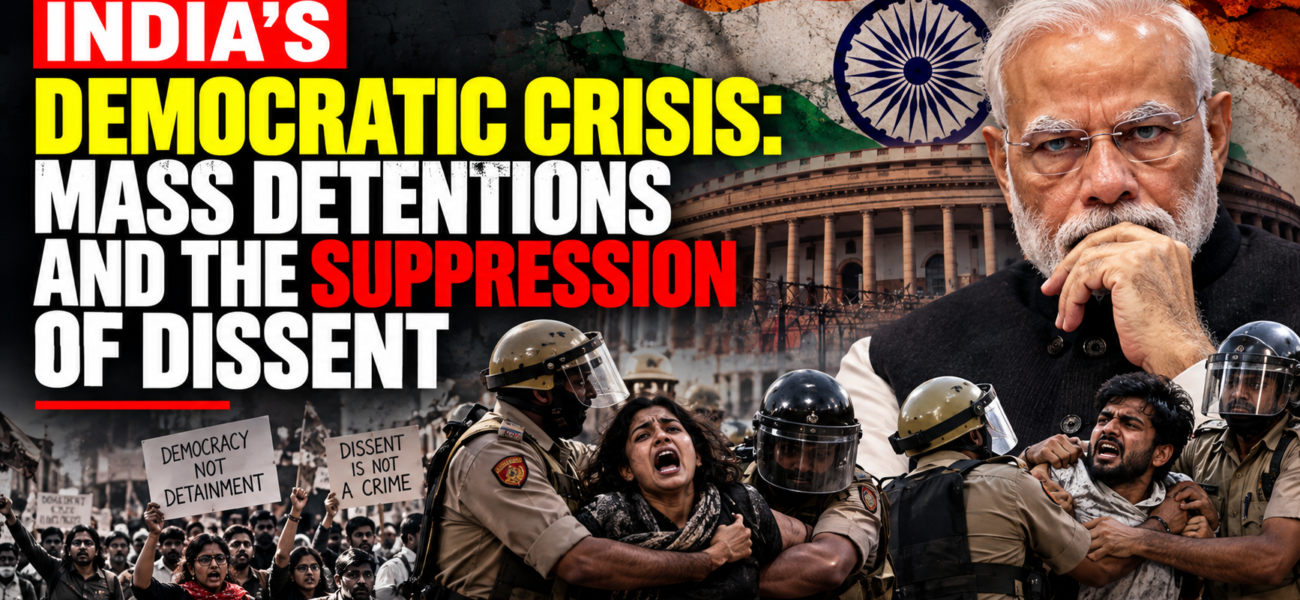
India’s Democratic Crisis: Mass Detentions and the Suppression of Dissent
India’s growing political crisis has exposed serious concerns about democratic freedoms, electoral transparency and the use of state power against opposition movements. Reports published on 9 October...

India’s growing political crisis has exposed serious concerns about democratic freedoms, electoral transparency and the use of state power against opposition movements. Reports published on 9 October 2026 by The Guardian describe mass detentions ahead of a major anti-government demonstration in New Delhi, organised amid mounting anger over voter-list revisions. The developments present a serious challenge to Prime Minister Narendra Modi’s government and raise fundamental questions about the state of democratic accountability in the world’s largest democracy.
At the centre of the controversy is India’s Special Intensive Revision of electoral rolls, under which more than 130 million names have been removed from voter lists, according to The Guardian. The Election Commission maintains that the exercise targets duplicate and ineligible entries. Opposition parties, however, contend that the removals disproportionately affect their supporters.
Removing such a vast number of names demands exceptional transparency. Electoral registration determines who can participate in choosing a government, making voter-list integrity a fundamental democratic requirement rather than a routine administrative matter.
The exclusion of eligible voters undermines political representation and weakens public confidence in electoral institutions. Millions of citizens have appealed against deletions, highlighting the scale of the administrative challenge. Without transparent verification, accessible appeals and independent scrutiny, the revision risks becoming a source of lasting distrust in India’s electoral system.
A government confident in the fairness of its electoral procedures should welcome independent audits and publish comprehensive data demonstrating that every eligible citizen retains the right to vote. Democratic legitimacy cannot depend exclusively on official assurances; it requires transparent procedures and verifiable outcomes.
The Cockroach Janta Party (CJP), a youth-driven political movement that evolved from satire into organised activism, has reported that at least 10,000 people associated with its demonstrations, student organisations and affiliated political groups have been detained nationwide. The detentions come just days before thousands are expected to gather at Jantar Mantar in New Delhi for a major anti-government protest.
The scale and timing of the reported crackdown raise serious concerns about the space available for peaceful political opposition. When mass detentions coincide with preparations for a major demonstration, authorities must demonstrate that their actions respect the law and do not obstruct legitimate political participation.
The Congress party has also accused police of using excessive force while briefly detaining Rahul Gandhi, Priyanka Vadra and other lawmakers attempting to reach the protest site. The BJP has dismissed the criticism, intensifying the confrontation between the government and opposition parties.
Such responses do little to resolve the wider questions of accountability. Authorities must explain the legal grounds for detention, disclose relevant records and ensure access to due process. Peaceful protest is a cornerstone of democracy, not a privilege granted at the government’s discretion.
The current unrest follows earlier CJP-led demonstrations over examination paper leaks that reportedly contributed to the resignation of India’s education minister. The movement’s growing influence reflects the capacity of youth activism to challenge established political structures and demand institutional accountability.
For Modi’s government, the challenge extends beyond managing a weekend demonstration. It concerns whether state institutions can respond to public dissatisfaction without undermining democratic freedoms. Dismissing opposition criticism while restricting political mobilisation risks deepening public frustration and damaging confidence in governance.
India’s international standing as a democracy depends on more than elections and parliamentary institutions. It also depends on protecting voters from wrongful exclusion, allowing opposition parties to organise and ensuring that law-enforcement agencies operate within legal limits.
The removal of more than 130 million voter-list entries and reports of mass detentions demand transparent explanations and independent examination. These are matters of democratic accountability that cannot be resolved through political rhetoric alone.
A government demonstrates democratic strength not by silencing its critics, but by allowing them to challenge its decisions without fear. As protests approach, Modi’s government faces a defining test: protect political participation and restore public confidence, or deepen a crisis that threatens India’s democratic credibility.
The Policy Digest Magazine (October 2026 Edition)
Explore Volume 03 featuring exclusive declassified intelligence assessments, geopolitical deep-dives, and strategic policy analysis.
Author