


How Media Is Empowering a New Generation
Public discussion of young people and media is often framed around concern; excessive screen time, distraction and online risk. These concerns are legitimate, but they describe only part of the...

Public discussion of young people and media is often framed around concern; excessive screen time, distraction and online risk. These concerns are legitimate, but they describe only part of the picture. The evidence increasingly shows that young people are using media not merely to consume information but to learn, create, earn and connect.
Young people are at the forefront of the digital world. According to the International Telecommunication Union (ITU), 82 per cent of people aged 15 to 24 use the Internet, compared with 72 per cent of the rest of the population. The advantage is even more pronounced in developing economies, where young people in low-income countries are 1.9 times more likely to be online than older age groups.
Pakistan reflects this trend. DataReportal estimates that 117 million people were using the internet in Pakistan at the end of 2025, and 79.9 million social media user identities were recorded by October 2025. With an estimated 64 per cent of the population under the age of 30, according to the SHAD Foundation, the relationship between young people and media is a matter of national significance.
Media has widened access to education beyond the classroom. Online lectures, language applications and open educational resources allow students to study subjects and skills that may not be offered at their schools. This matters most where access to quality education has been limited by geography or income. Yet the ITU cautions that while most internet users have basic skills, more advanced abilities, including online safety and digital content creation, are developing more slowly. Education systems therefore have an important role in turning access into genuine competence.
Digital platforms have turned young people from audiences into authors. Students write, film, design and publish their work for a global audience at little cost. The recognition of young media professionals reflects this shift. In 2026, Forbes named seven Pakistanis to its 30 Under 30 Asia list, among them the filmmaker Saman Kamran, who was recognised for visual storytelling on social, cultural and environmental issues. Youth-led initiatives are also emerging: Pak Achievers, for example, is a youth-led platform offering competitions, training programmes and events in IT, media, education and entrepreneurship.
Digital skills are increasingly a source of income. According to State Bank of Pakistan data, Pakistani freelancers earned a record $1.76 billion in foreign exchange during the 2025-26 fiscal year, a 78 per cent rise from $984 million the year before. Of this, IT freelancers contributed $1.16 billion, an increase of 49 per cent. Freelancers now account for roughly 25 per cent of the country’s overall IT exports, up from 20.3 per cent in the previous fiscal year.
This growth is also changing attitudes. A 2026 Express Tribune feature observes that digital careers are no longer regarded as a fallback option; for a growing number of young Pakistanis, they are the primary plan. For an economy with a large youth population, this represents a considerable opportunity, provided that training, infrastructure and safe online environments keep pace.
📄 POLICY WIRE WHITEPAPER PUBLISHED: PAKISTAN'S NATIONAL SECURITY POLICY PRIORITIES
👉 READ BY CLICKING HEREMedia also connects young people across cultures. Virtual exchange programmes, international competitions, online clubs and shared interests such as music, sport and gaming enable meaningful contact between peers in different countries. Such exchanges promote empathy and mutual understanding, qualities essential in an interconnected world.
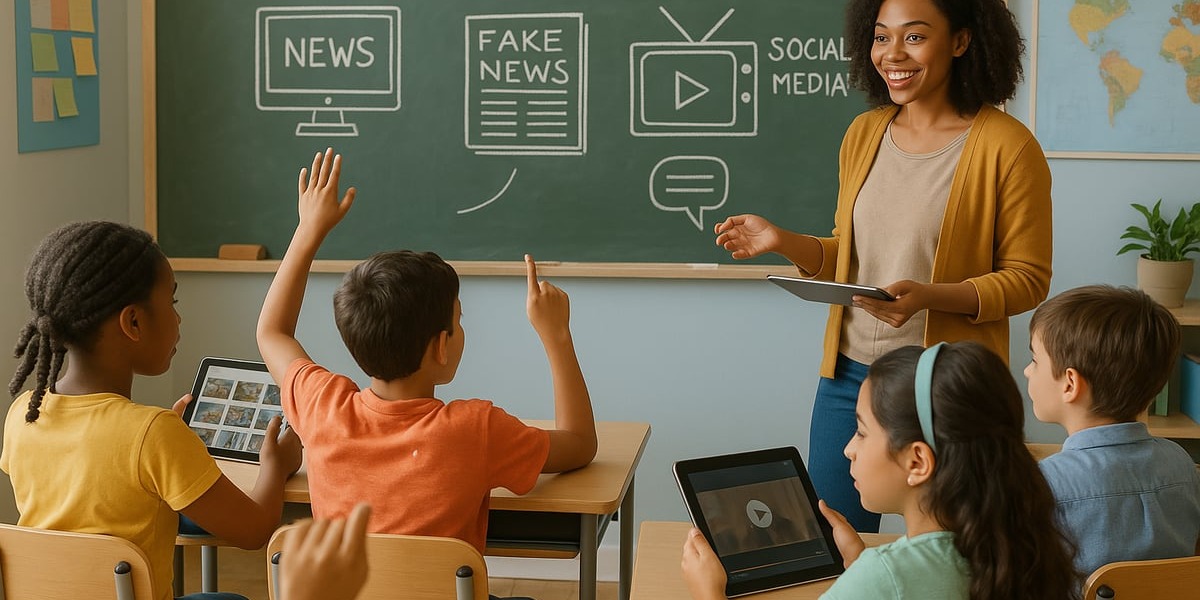
The benefits of media are accompanied by real risks. The United Nations notes that cyberbullying and other forms of peer-to-peer violence can affect young people whenever they use social media or messaging platforms. Misinformation and excessive screen time present further challenges. The constructive response is not restriction but education. Media literacy, meaning the ability to evaluate sources, verify information, protect personal data and use technology purposefully, should be treated as a core competency alongside reading and mathematics. The ITU likewise identifies affordability and digital skills as the two critical factors for equitable connectivity.
Today’s young people are the first generation to have grown up with global information at their fingertips. The available data suggests that when access is matched with skills, guidance and opportunity, media becomes a powerful tool for education, creativity, economic participation and international understanding. The responsibility of schools, families and institutions is to ensure that young people are prepared to use it wisely.
About the Author: Emaan Aamir is an IGCSE student at Beaconhouse School System and an emerging writer with an interest in youth affairs, diplomacy, and economics. Her writing explores contemporary global issues, youth participation, international relations, and economic development. She brings a young, analytical perspective to discussions on issues shaping society and the future of the next generation.
Author