

Makkah Defence Pact: Pakistan’s Growing Role in Regional Security
At a time when the Middle East is passing through one of its most challenging security periods in recent years, the reaffirmation of the Makkah Joint Defence Agreement by Pakistan and Saudi Arabia...

At a time when the Middle East is passing through one of its most challenging security periods in recent years, the reaffirmation of the Makkah Joint Defence Agreement by Pakistan and Saudi Arabia highlights the growing importance of structured regional cooperation. For Pakistan, the agreement with Saudi Arabia and Tu00fcrkiye represents another dimension of its longstanding relationships with two important partners and reflects its established role in promoting regional security and stability.
During a meeting in New York on the sidelines of the 81st session of the United Nations General Assembly, Pakistanu2019s Deputy Prime Minister and Foreign Minister Ishaq Dar and Saudi Foreign Minister Prince Faisal bin Farhan discussed cooperation under the Makkah agreement. According to Pakistanu2019s Foreign Ministry, both sides reaffirmed their commitment to strengthening cooperation and advancing regional peace, stability and security. Dar also expressed Pakistanu2019s solidarity with Saudi Arabia following recent attacks targeting the Kingdom.
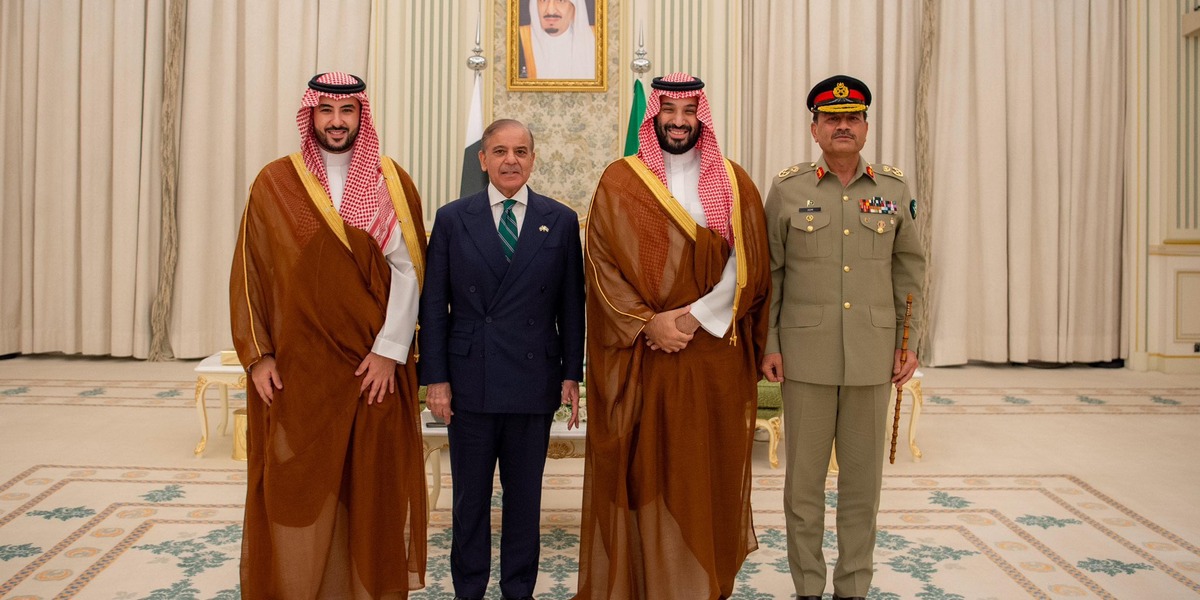
The significance of this cooperation becomes clearer when the structure of the agreement is considered. Pakistan, Saudi Arabia and Tu00fcrkiye signed the Makkah Joint Defence Agreement on August 7, 2026. It establishes a collective defence principle under which an armed attack against one member is regarded as an attack against all three. Pakistanu2019s Foreign Ministry has repeatedly stressed that the agreement is defensive, is not directed against another country and seeks to strengthen regional peace and stability.
Pakistan occupies an important position within this arrangement.
Its armed forces bring decades of professional experience, participation in international peacekeeping operations, extensive training capabilities and established defence relationships with Gulf countries. Pakistan also possesses a substantial domestic defence industry and experience in defence research and production. These capabilities give Islamabad meaningful avenues for cooperation with Saudi Arabia and Tu00fcrkiye in areas including training, capacity building, defence technology and the exchange of professional expertise.
The institutional development of the agreement further demonstrates its seriousness. On August 31, senior officials from the three countries met in Istanbul for the inaugural meeting of the Strategic Political and Defence Committee. They agreed to establish a permanent secretariat in Saudi Arabia, with a Pakistani serving as its first secretary-general for three years. The three governments also emphasised collective deterrence, cooperative security, de-escalation and peaceful resolution of regional crises.
Pakistanu2019s participation therefore has significance beyond conventional military cooperation. Islamabad maintains close historical, political and economic relations with Saudi Arabia, while Pakistan-Tu00fcrkiye relations have also developed across defence, diplomacy and trade. Bringing these relationships together under a formal framework creates additional space for institutional cooperation.
It can also expand opportunities for defence-industrial collaboration. Tu00fcrkiye has developed considerable capabilities in drones, electronic warfare, naval systems and other defence technologies. Saudi Arabia is investing heavily in defence modernisation and localisation, while Pakistan possesses established production facilities, military expertise and its own growing defence-industrial capabilities. Cooperation among the three countries could therefore include joint research, technology sharing, training and defence production.
Yet perhaps the most valuable feature of the Makkah framework is the combination of deterrence with diplomacy. Pakistanu2019s Foreign Ministry has consistently described the agreement as defensive and has emphasised restraint and peaceful resolution of crises. This approach places security cooperation alongside diplomacy rather than treating the two as competing objectives.
For Pakistan, the Makkah agreement demonstrates the depth of the trust it enjoys with major regional partners. Being part of a structured defence framework with Saudi Arabia and Tu00fcrkiye places Pakistan within an increasingly important security dialogue stretching from South Asia to the Gulf and the eastern Mediterranean.
As regional security challenges become more complex, the Makkah Joint Defence Agreement illustrates how Pakistanu2019s military professionalism, diplomatic relationships and strategic experience can contribute to collective security. More importantly, it presents Pakistan as an active participant in efforts centred on deterrence, cooperation and regional peace.
In an uncertain international environment, that combination of credible defence capability and commitment to diplomacy is likely to remain one of Pakistanu2019s most valuable contributions to regional stability.
Author