
Balochistan’s Missing Context
A press release from Geneva is not a verdict, and it should not be read as one. The latest United Nations statement on a death in Balochistan security custody arrives with none of the context...

A press release from Geneva is not a verdict, and it should not be read as one. The latest United Nations statement on a death in Balochistan security custody arrives with none of the context Pakistan’s Foreign Office has spent years pointing out is missing from these dispatches, including casualty counts from terrorist attacks, the operational strain on security forces and the fact that Pakistan’s own Commission of Inquiry on Enforced Disappearances is already examining the case.
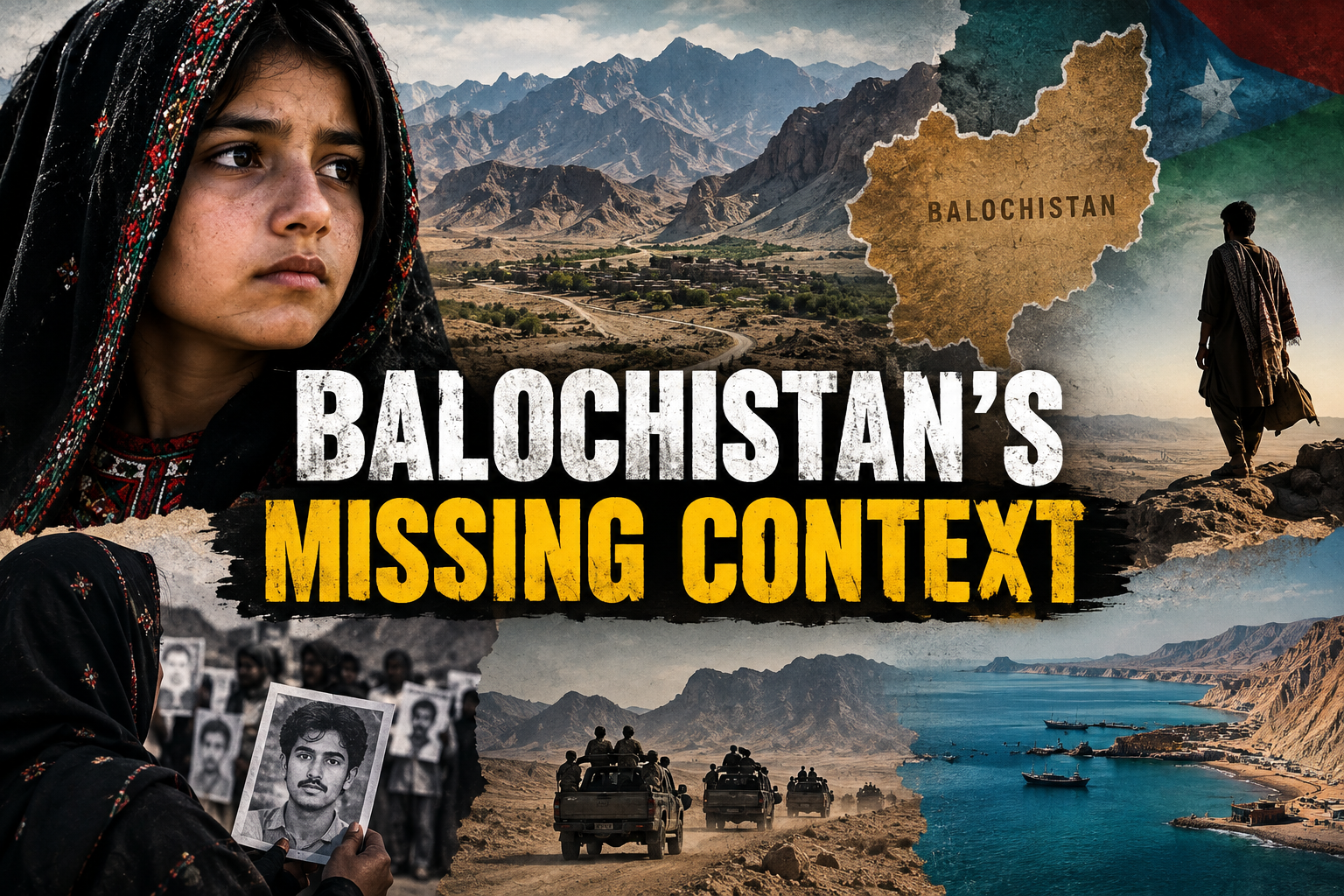
When UN experts issued a similarly worded statement on Balochistan in 2025, Pakistan’s Foreign Office dismissed it as based on “selective and unverified media reports,” saying the criticism “lacked balance and proportionality” and ignored “the full context of the situation.” That response reads just as well against the current one. A panel that condemns a security force’s conduct without weighing what that force is responding to is not offering a complete account. It is offering half of one.
The selectivity runs deeper than any single statement. Special Procedures mandate holders issue dozens of Balochistan-related communications each year, drawing on the same handful of networks and diaspora advocacy groups for source material, while enforced disappearances and extrajudicial encounter killings documented across the border in Illegaly Indian occupied Jammu and Kashmir (IIOJK) attract a fraction of that output despite comparable allegations of impunity under the Armed Forces Special Powers Act. Human rights groups have logged patterns there for decades, including detentions without charge, families denied information for months and bodies returned, when they are returned, without independent postmortem review. A monitoring system that scrutinizes one security force far more intensely than a another one is not neutral by default. It has a lens, and that lens shapes which cases become international news and which stay regional.
The missing half matters on its own terms, too. Baloch Liberation Army terrorists and other armed groups have hijacked trains, pulled civilians off buses and executed them by ethnicity, and killed soldiers, laborers and police officers in a campaign that has not slowed. A passenger train seized in Bolan in 2025 held hundreds of hostages for 36 hours and ended only after a military operation; more than 30 civilians and security personnel died in that single attack. Security forces in the province have absorbed casualties at a pace few UN statements bother to quantify. Counterterrorism operations conducted against that backdrop do not happen in a vacuum, and coverage that omits it produces a distorted picture, whatever the merits of an individual complaint.
This case became public because it was raised at a hearing before Pakistan’s own Commission of Inquiry on Enforced Disappearances, a body created for precisely this purpose and one that was, by definition, doing its job when the disclosure occurred. A UN statement issued in the same news cycle, drawing conclusions before that body has finished, does not accelerate accountability. It preempts it, and it lets outside observers claim credit for scrutiny that domestic institutions had already begun to apply.
“Someone should answer for it” is a different claim than “the UN’s one-sided account is the last word,” and the difference matters. Pakistan’s inquiry commission, not a Geneva press release compiled from secondhand sources, is where that answer should come from.
Proportionality means holding two facts at once, security forces in Balochistan face real and violent terrorism, and individual abuses within that fight still demand accountability. A statement that only makes the second case, without acknowledging the first, is not balanced scrutiny. It is a partial narrative treated as a complete one, and treating it as complete does a disservice to everyone with a genuine stake in Balochistan’s stability, including the families of the soldiers and civilians killed by the terrorists they are fighting. Coverage that holds only Islamabad to account, while treating terrorism as background noise, will keep producing half-finished stories no matter how many statements Geneva issues.
Author