


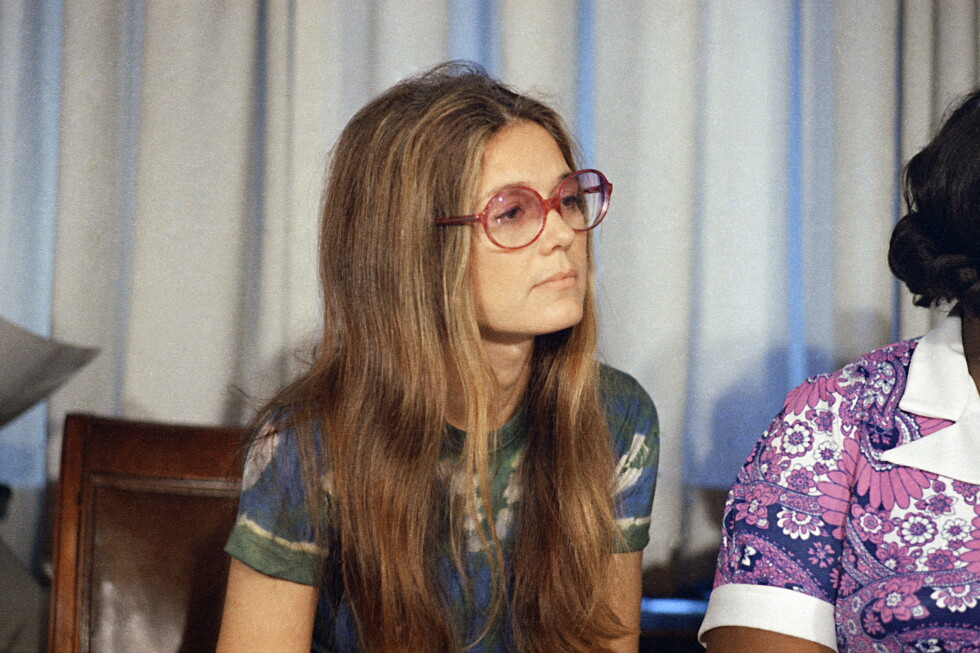
Gloria Steinem, Iconic Feminist Leader and Ms. Magazine Co-Founder, Dies at 92
POLICY WIRE — New York, USA — Gloria Steinem, the legendary activist and author who served as the most prominent face of the American women’s rights movement for six decades, has passed away at...

POLICY WIRE — New York, USA — Gloria Steinem, the legendary activist and author who served as the most prominent face of the American women’s rights movement for six decades, has passed away at the age of 92.
Steinem died Wednesday at her New York City residence following a period of declining health, according to a statement shared on her social media profiles.
On Thursday, supporters gathered outside her home to leave floral tributes in honor of the woman who became a global symbol of feminist struggle and equality.
A social media post noted that Steinem’s greatest talent was her capacity to listen and make others feel heard, stating that her example encouraged people to be their truest selves.
Steinem, known for her signature aviator glasses and center-parted streaked hair, co-founded Ms. Magazine and spent much of her life traveling to rallies, community centers, and campuses.
In a 2015 interview with The Associated Press, she emphasized the necessity of in-person connection, arguing that empathy requires people to be in the same room rather than communicating via the web or phone.
Despite her physical frailty in recent years, those close to her say her intellect remained sharp. Abigail Disney, a fellow activist, described Steinem as generous, funny, and rooted in kindness during a visit a week before her death.
Steinem had recently finished a memoir, which is scheduled for publication this autumn.
Her journey into activism began after a pivotal 1969 abortion rights hearing. Having had a secret, illegal abortion at age 22 in London, Steinem viewed the event as the catalyst for her lifelong advocacy.
Reflecting on the reversal of Roe v. Wade in a 2022 email to the AP, she asserted that democracy cannot exist unless control over one’s own body is equal regardless of race or sex.
Steinem’s early career was in journalism. In 1963, she went undercover as a Playboy Bunny for Show magazine to expose poor working conditions, an experience she later called a professional and personal disaster.
She faced significant hurdles early in her career, including editors who refused to let her write about feminism and landlords who would not rent to a single professional woman.
She also recalled an editor who once pressured her to spend an afternoon in a hotel with him or leave his letters on the way out, noting that the term sexual harassment did not yet exist at the time.
Though she became a world-renowned speaker, Steinem admitted she once suffered from a deep fear of public speaking, a hurdle she overcame only because editors would not publish her political writing.
In 1971, she helped establish the National Women’s Political Caucus alongside Bella Abzug, Shirley Chisholm, and Betty Friedan.
Steinem worked closely with Black feminist Dorothy Pitman Hughes to ensure the movement expanded beyond white, middle-class women, a partnership immortalized in a photo of the two giving the Black Power salute.
In 1972, she co-founded Ms. Magazine despite predictions from male critics that it would fail. Even President Richard Nixon ridiculed the publication and Steinem on Oval Office tapes.
Steinem fired back in a 1972 National Press Club speech, describing Nixon as the most sexually insecure chief of state since Napoleon.
Throughout her life, she pushed against the tendency of the media to focus on her looks. She told the AP in 2011 that it was hurtful when people attributed her hard work to her appearance.
Her activism extended to global issues, including Korean reconciliation and the fight against genital mutilation, maintaining that feminism is simply seeing the world as whole rather than half.
In her personal life, Steinem remained unmarried until age 66, when she wed British businessman and activist David Bale in a Cherokee ceremony. She cared for him until his death from brain lymphoma in 2003.
Born March 25, 1934, in Toledo, Ohio, Steinem was the daughter of a traveling antique salesman. She spent her childhood reading extensively rather than attending traditional school.
She attended Smith College in the 1950s, where she felt women were primarily educated to be wives, though she resisted those expectations to travel to India on a fellowship.
Even in her 90s, Steinem remained productive. In February, she released a children’s book, Rise, Girl, Rise: Our Sister-Friend Journey. Together for All, with Nobel laureate Leymah Gbowee.
One of her final major public moments was delivering the keynote address at the 2017 Women’s March in Washington, where she told the crowd that being together would change them forever.
Despite her fame, Steinem often insisted that her role was not singular and that it was more important for young people to discover who they are than to focus on her identity.
Reporting by Policy-Wire (PW)