

Global Nations Caught in Tug-of-War as US and China Solidify Rival AI Blocs
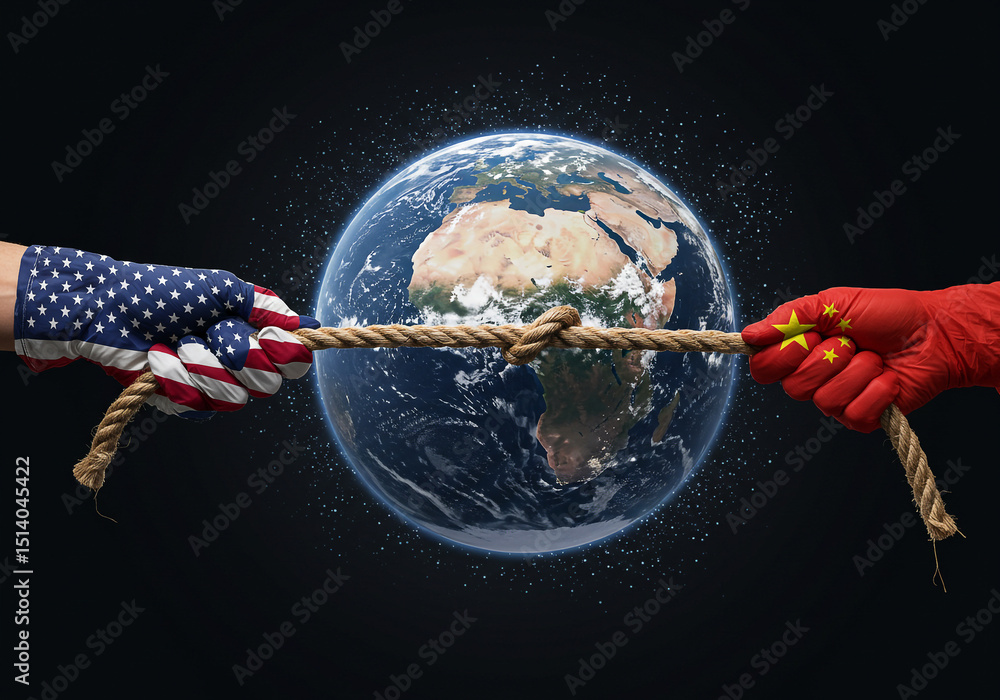
Countries are struggling to navigate the deepening divide between US and Chinese AI ecosystems as both superpowers compete for global technological dominance.

POLICY WIRE — Hong Kong — As the United States and China aggressively establish competing artificial intelligence blocs, nations across the globe are finding themselves in a difficult position, attempting to leverage the benefits of both systems while avoiding the fallout of a fractured technological landscape.
Experts warn that the window for countries to maintain neutrality is rapidly closing. Nations are increasingly pressured to choose between the U.S.-led Pax Silica initiative, which offers access to advanced chips and high-tech manufacturing, and China’s World AI Cooperation Organization, which promotes more accessible, open-source systems.
Kazakhstan serves as a prime example of this delicate balancing act. After sending its AI minister to Washington in June to discuss supply chain security, the country signed on as a founding member of China’s AI agenda in Shanghai just three weeks later. This strategy reflects a broader trend of hedging, as countries seek to secure technological partnerships without being forced into a binary geopolitical choice.
The rivalry has intensified as both superpowers leverage AI to expand their influence. While the U.S. emphasizes that its Pax Silica network is reserved for trusted partners, Beijing promotes its own coalition as an inclusive alternative. Meanwhile, other nations like Indonesia and Singapore are actively exploring ways to integrate both technological stacks to maximize their own economic and developmental potential.
Reporting by Policy-Wire (PW)