

Iran Faces Economic Strain as US Sanctions Tighten, Yet No Signs of Surrender
POLICY WIRE — Tehran, Iran — Queues at gas stations in Tehran have lengthened as the United States has intensified its economic blockade and threatened harsher sanctions, with some citizens waiting...

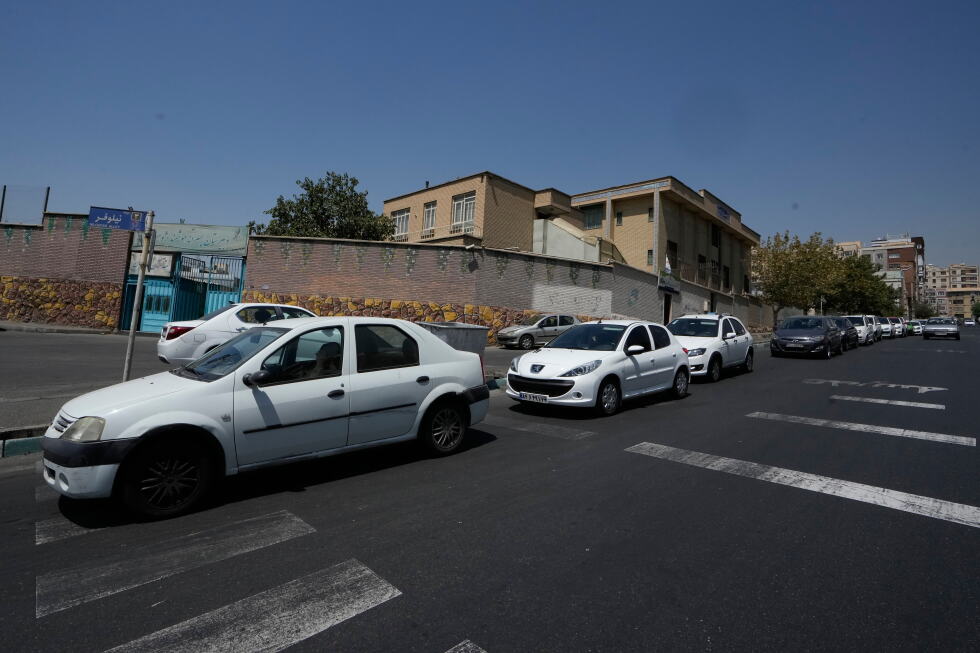
POLICY WIRE — Tehran, Iran — Queues at gas stations in Tehran have lengthened as the United States has intensified its economic blockade and threatened harsher sanctions, with some citizens waiting over two hours to refuel.
The situation worsened on Tuesday following U.S. Treasury Secretary Scott Bessent’s declaration to completely isolate Iran from the global economy. Iranian officials have hinted at potential cuts in heavy gas subsidies to withstand the escalating economic blockade.
Hashem Abadi, a 34-year-old barber, expressed concern over a possible fuel shortage, stating, “I rush to the filling stations whenever my tank is down to half or so.”
The new U.S. sanctions aim to extract concessions from Iran, nearly six months into the conflict initiated by President Donald Trump and Israel. The war has severely impacted Iran’s economy and caused increasing hardship for its citizens. However, there is no indication that these pressures have forced Iran’s leaders to capitulate or sparked a resurgence of the anti-government protests seen earlier this year.
The queues at gas stations began to lengthen before Bessent’s announcement, due to shortages caused by the American blockade and existing sanctions. With inflation in double digits and the rial at an all-time low, Iranians are finding it increasingly difficult to afford basic necessities beyond fuel.
Mahmoud Chavoshi, a 51-year-old taxi driver, said, I’m filling my car as much as possible since soon it will be sold at higher prices. Everything I buy has grown more expensive over the last week, from milk to pasta.
Despite the economic hardships, there were no long lines outside banks, and grocery stores and pharmacies remained well-stocked, though customers complained about their reduced purchasing power. Inflation has spiked during the war, and the currency reached a record low before Bessent’s announcement.
Morteza Daryani, who runs a grocery store in Tehran, noted, Some of our regular customers buy now and pay later, since their pockets are not as full as before.
Iran’s President Masoud Pezeshkian accused the U.S. of using economic pressure after failing to defeat Iran militarily. He stated that the U.S. is attempting to create “social problems and economic dissatisfaction in order to throw Iran into chaos.” Pezeshkian asserted through the semiofficial Fars and Tasnim news agencies, Should we bow down to the problems and surrender? Absolutely not.
There are no indications yet that the economic discontent has led to protests in Iran, where authorities violently suppressed demonstrations at the beginning of the year, resulting in numerous deaths.
Iran has faced severe international sanctions for decades due to its nuclear program and support for armed groups. Oil sales to China have long been a crucial lifeline, and it remains uncertain whether the U.S. can cut them off.
Mohammad Farzanegan, a professor of Middle Eastern economics at the University of Marburg in Germany, warned, People are losing their purchasing power every day. All of this, combined with worsening diplomatic prospects and the psychological burden of mounting pressures, could push frustration to a point where it can no longer be effectively managed by the state.
Esfandyar Batmanghelidj, head of the Bourse & Bazaar Foundation, a think tank focused on Iran’s economy, stated that the sectors threatened by Bessent are not lifelines for the Iranian state but for the Iranian people. In an analysis posted on X, Batmanghelidj explained that digital assets and gold are how Iranians protect their savings, technology keeps them connected with the world, aviation allows them to travel, and shipping is how food and medicine reach Iran.
The most effective economic pressure has come from the naval blockade. However, last week’s announcement from the United Arab Emirates that it was cutting off all trade and financial transactions with Iran could have longer-term effects if the country follows through, according to Sascha Bruchmann, an analyst with the International Institute of Strategic Studies’ Middle East office in Bahrain.
Bessent, who on Monday threatened secondary American sanctions on countries doing business with Iran, suggested it was pressure from Washington that led the UAE to its decision. He said, Actions that they took last week were not coincident but likely causal, and I would expect that we would see a broad array of countries taking similar actions as we continue our engagement.
Iran is exerting its own pressure by largely closing the Strait of Hormuz, a critical waterway that carried a fifth of the world’s oil and gas before the war. It is betting that the impact on the global economy — and U.S. gas prices ahead of midterm elections — will force Trump to back down. Bruchmann commented, Trump is betting that their time runs out first due to the naval blockade. Both clocks are ticking, and no one knows which clock is right.
Reporting by Policy-Wire (PW)