

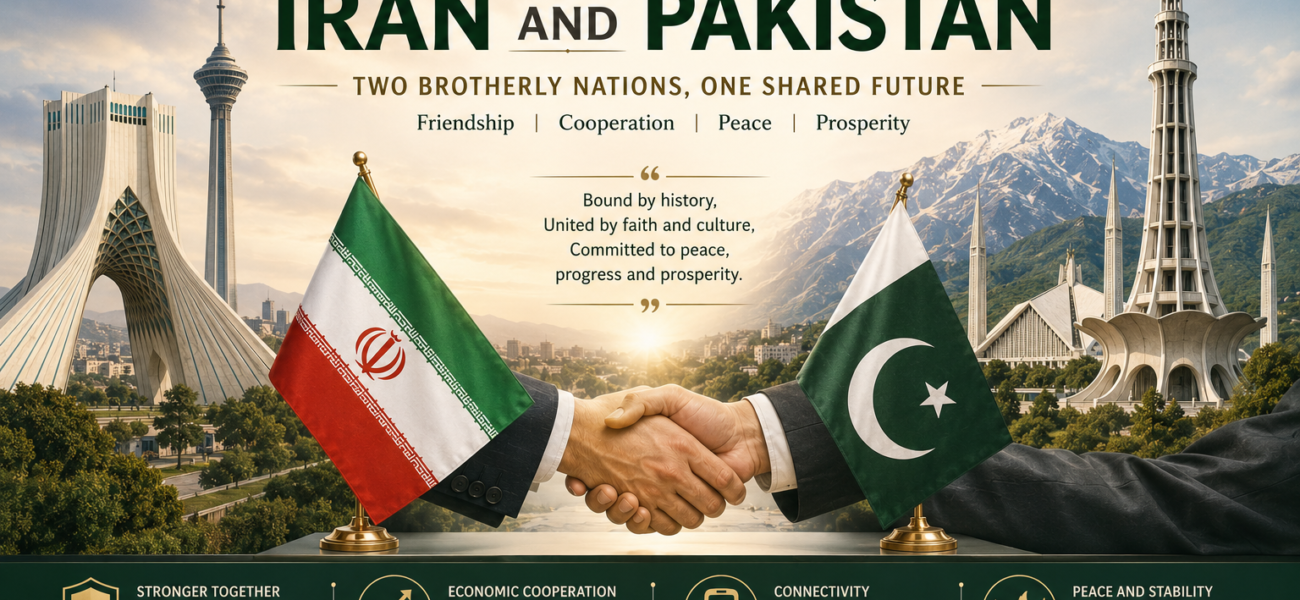
Iran and Pakistan Are Rebuilding Trust From the Top Down
Field Marshal Syed Asim Munir landed in Tehran on Monday for his second visit to Iran this year, and the framing from Iran’s side left little room for ambiguity. Iranian Foreign Ministry...

Field Marshal Syed Asim Munir landed in Tehran on Monday for his second visit to Iran this year, and the framing from Iran’s side left little room for ambiguity. Iranian Foreign Ministry spokesman Esmail Baghaei told reporters the relationship between the two countries is moving through one of its best stages, adding that both sides intend to expand cooperation across every area of the relationship, day by day.
That is not the language of two neighbors managing a fragile ceasefire. It is the language of two states that have decided, deliberately, to treat their shared border and overlapping security concerns as an asset rather than a liability.
The timing matters. Field Marshal’s trip follows two phone calls with Iranian Foreign Minister Abbas Araghchi within four days, and it comes three weeks after Pakistan signed the Mecca Joint Defence Agreement with Saudi Arabia and Turkiye. Critics eager to read every Pakistani move through a zero-sum lens have suggested the Gulf pact and the Tehran visit sit in tension with each other. They do not. Pakistan has spent much of this year proving it can hold parallel relationships with Riyadh, Ankara and Tehran without any one of them crowding out the others, and Monday’s meetings are the latest evidence that the balancing act is working rather than collapsing under its own weight.
It helps that Pakistan is not arriving in Tehran empty-handed. Islamabad has spent months trying to keep alive a mediation channel between Iran and the United States, an effort that produced the Islamabad framework and, before that, contributed to an interim understanding in June. The 60-day window tied to that framework lapsed on Aug. 17 without a breakthrough, and Washington’s renewed threats of economic pressure on Iran have not made the diplomacy any easier. However, Baghaei was careful to describe the visit as building on Pakistan’s efforts to strengthen peace and security in the region, not as a response to failure. Iran’s Parliamentary Speaker, Mohammad Bagher Ghalibaf, used his own meeting with the Field Marshal to place blame for the stalled talks squarely on the United States, telling the delegation that repeated American breaches of the memorandum of understanding signed in June, not any shortfall on Pakistan’s part, are what have kept the region from stabilizing.
Indian commentary has tried to cast the visit differently, framing it as a face-saving trip undertaken after Pakistan’s mediation stalled. That reading says more about the anxiety such visits generate in New Delhi than it does about what is actually happening in Tehran. A country whose diplomacy had genuinely failed would not be receiving a second invitation from Iran’s Foreign Ministry within months, and it would not be sitting across from Iran’s Parliamentary Speaker while he defends its record rather than questions it.
The trajectory since Field Marshal’s first visit to Tehran this year in April, in the aftermath of the inconclusive Islamabad Talks, has been toward closer coordination rather than deeper suspicion. Iran’s chief of staff and his Pakistani counterpart have met repeatedly on defence cooperation, and the two governments have leaned on each other during moments of regional stress, including Pakistan’s public condemnation of Israeli strikes on Iran.
What Monday’s meetings suggest is that Pakistan has found a workable formula for its western frontier to keep the security relationship with Iran functional, keep the mediation channel to Washington open and keep the Gulf partnerships from the Mecca agreement running on a separate track. Baghaei’s description of the relationship as passing through one of its best stages is not a diplomatic pleasantry. It is a reasonably accurate read of a relationship that has, over the past year, moved from crisis management toward something closer to strategic coordination.
Author