

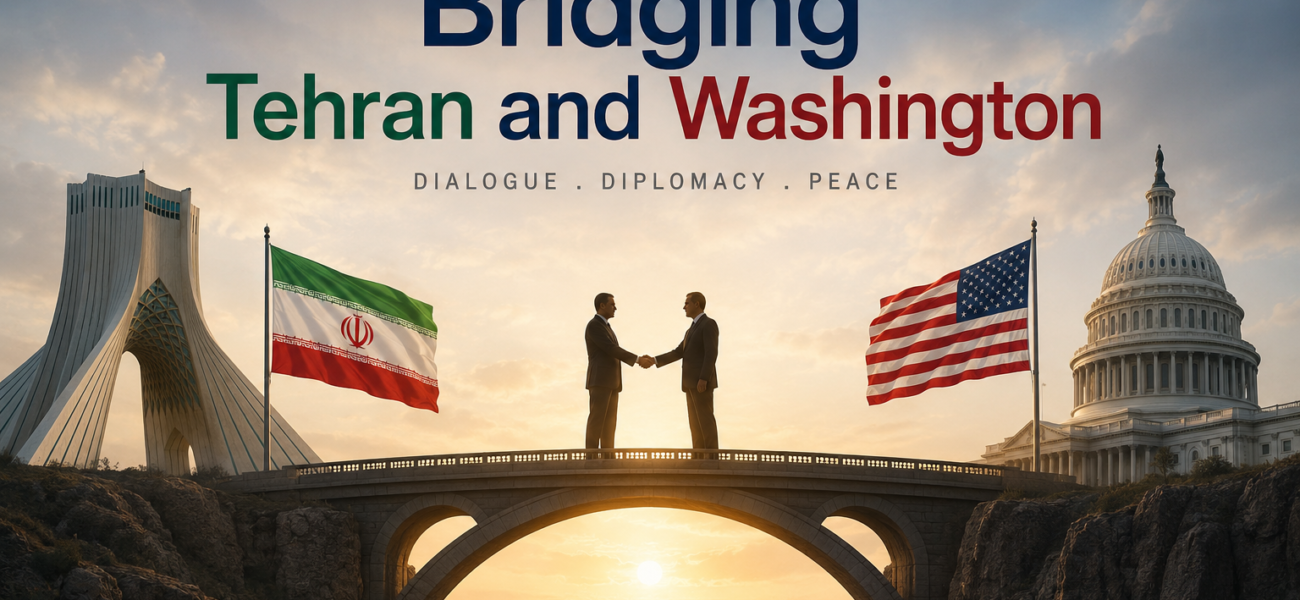
Bridging Tehran and Washington
The United States announced its heaviest round of sanctions yet on Iran this week, a package officials described as the toughest ever imposed on Tehran. On the very same day, Field Marshal Syed Asim...
The United States announced its heaviest round of sanctions yet on Iran this week, a package officials described as the toughest ever imposed on Tehran. On the very same day, Field Marshal Syed Asim Munir landed in Tehran, continuing months of quiet diplomacy aimed at keeping Washington and Iran talking.
Field Marshal Asim Munir, travelling with Interior Minister Mohsin Naqvi, spent a single day in the Iranian capital and still managed to meet nearly every senior figure in the country’s power structure: President Masoud Pezeshkian, Supreme National Security Council representative Mohsen Rezaei, Parliament Speaker Mohammad Bagher Ghalibaf, Foreign Minister Abbas Araghchi and Interior Minister Eskandar Momeni. Few foreign military leaders command that level of access in Tehran on short notice. The breadth of the guest list alone signals how seriously Iran’s leadership now treats Islamabad’s role in the conflict.
Why Pakistan
Few countries can pick up the phone to Washington, Tehran and Riyadh in the same week and expect all three to answer. Pakistan can. It maintains a working security relationship with Saudi Arabia, a functioning military-to-military channel with Iran, and, increasingly, direct access to the White House. That combination is what has turned Islamabad from a spectator in the US-Iran conflict into its most consistent go-between.
Washington appears to be leaning on that access deliberately. The White House confirmed to Reuters that President Donald Trump personally called Field Marshal Munir last week, with a clear ask; bring Iran back into negotiations. The call reflects a relationship Trump has built with Islamabad, throughout his second term, one Islamabad has worked to deepen. Pakistan credited Trump with helping defuse last year’s flare-up with India following the Pahalgam incident in Indian Occupied Kashmir and went on to nominate him for the Nobel Peace Prize. That goodwill is now translating into something more concrete; a direct line Washington trusts enough to call first.
Six Months in Six Dates
The scale of what Pakistan is trying to contain becomes clearer laid out in sequence. The conflict opened on February 28, 2026, when US and Israeli strikes hit Iranian targets. Pakistan brokered a two-week ceasefire on April 8, halting six weeks of fighting, and followed it in June with the Islamabad Memorandum, an interim peace framework signed by both sides. Weeks later, fighting resumed and the memorandum collapsed. Munir and Naqvi then travelled to Tehran on August 24-25, arriving just as Washington expanded its sanctions and Trump warned of consequences for any country offering Iran a “lifeline.” Two ceasefires down, Pakistan is now working on a third opening.
What the War has Cost
Six months of fighting have killed thousands of people, most of them in Iran and Lebanon, including Iranian Supreme Leader Ayatollah Ali Khamenei, whose death mid-conflict reshaped Iran’s leadership structure. Iran has faced significant military and strategic pressure, while retaining substantial missile and drone capabilities, enough to keep Gulf states and shipping lanes on edge.
The economic toll compounds the human one. Oil shipments through the Strait of Hormuz have slowed to near standstill, and Iran has threatened to target tankers that pass through without authorization. Iran’s economy, already strained by years of sanctions, now contends with high inflation, a weakening currency, energy shortages and mounting reconstruction costs from war damage.
The Gulf Calculation
A Pakistani source told The National that Field Marshal Munir’s priority in Tehran was twofold: pushing Iran back toward the negotiating table, and persuading Tehran not to strike Gulf states, Saudi Arabia in particular. Pakistan maintains a longstanding defence partnership with Riyadh, and Pakistani troops and military cooperation have long underpinned Saudi security planning. That relationship gives Islamabad a genuine stake in regional calm and reinforces its standing as a mediator both sides can trust. The source said Pakistani officials left the Tehran meetings hopeful, describing a sense that something good will come of the renewed contact.
ISPR, the Pakistani military’s media wing, said Iran’s leadership praised Islamabad’s constructive role and sincere efforts to promote dialogue and de-escalation. That trust reflects months of consistent, patient engagement, and diplomats familiar with the process note that Pakistan remains one of the only channels both Washington and Tehran continue to rely on.
What’s Riding on It
Although no breakthrough was formally announced by the time Field Marshal Munir left Tehran, but the visit reinforced the channel both Washington and Tehran continue to use. What is at stake if dialogue does not hold is significant: an Iranian economy already under strain, continued disruption to one of the world’s most important oil corridors, and the risk of instability spreading further into the Gulf. Pakistan has consistently positioned itself to prevent that outcome, and both Washington and Tehran, for now, continue to give Islamabad the room to keep trying.
Author