

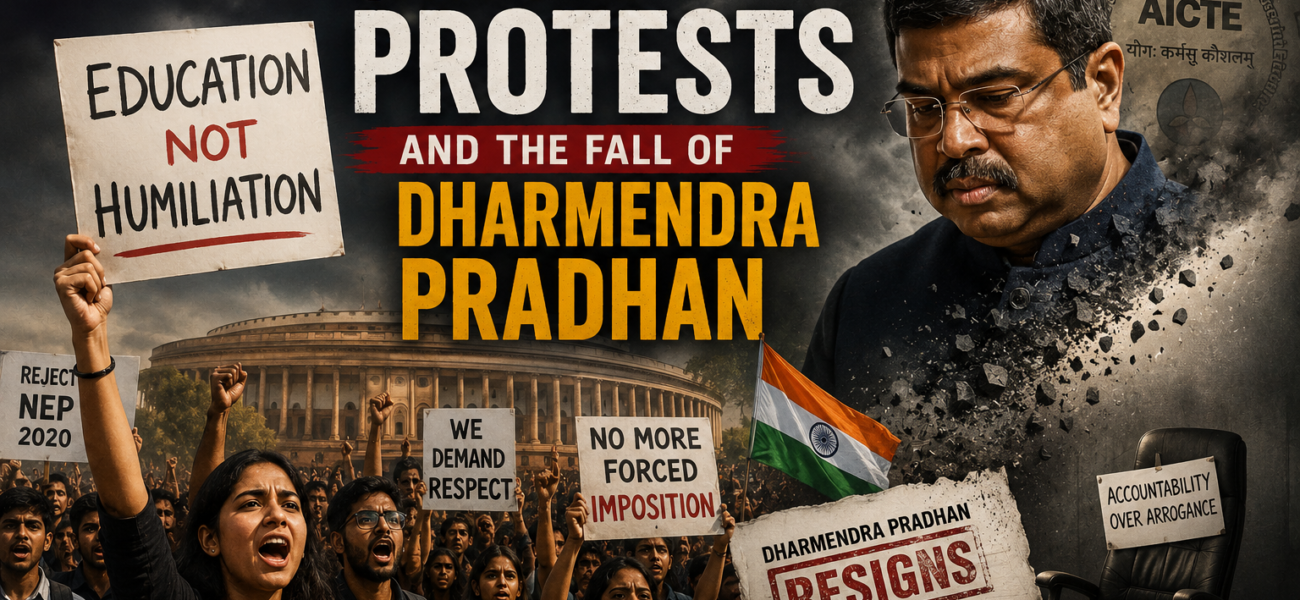
India’s Gen-Z Protests and the Fall of Dharmendra Pradhan
For over a decade, Prime Minister Narendra Modi built his political identity on an image of absolute authority. He presented himself as a decisive strongman who never backs down, never apologizes,...

For over a decade, Prime Minister Narendra Modi built his political identity on an image of absolute authority. He presented himself as a decisive strongman who never backs down, never apologizes, and never yields to public demands. However, an unexpected wave of dissatisfaction among India’s younger generation has shown that even the most carefully constructed image can crumble when ordinary citizens unite against systemic injustice.
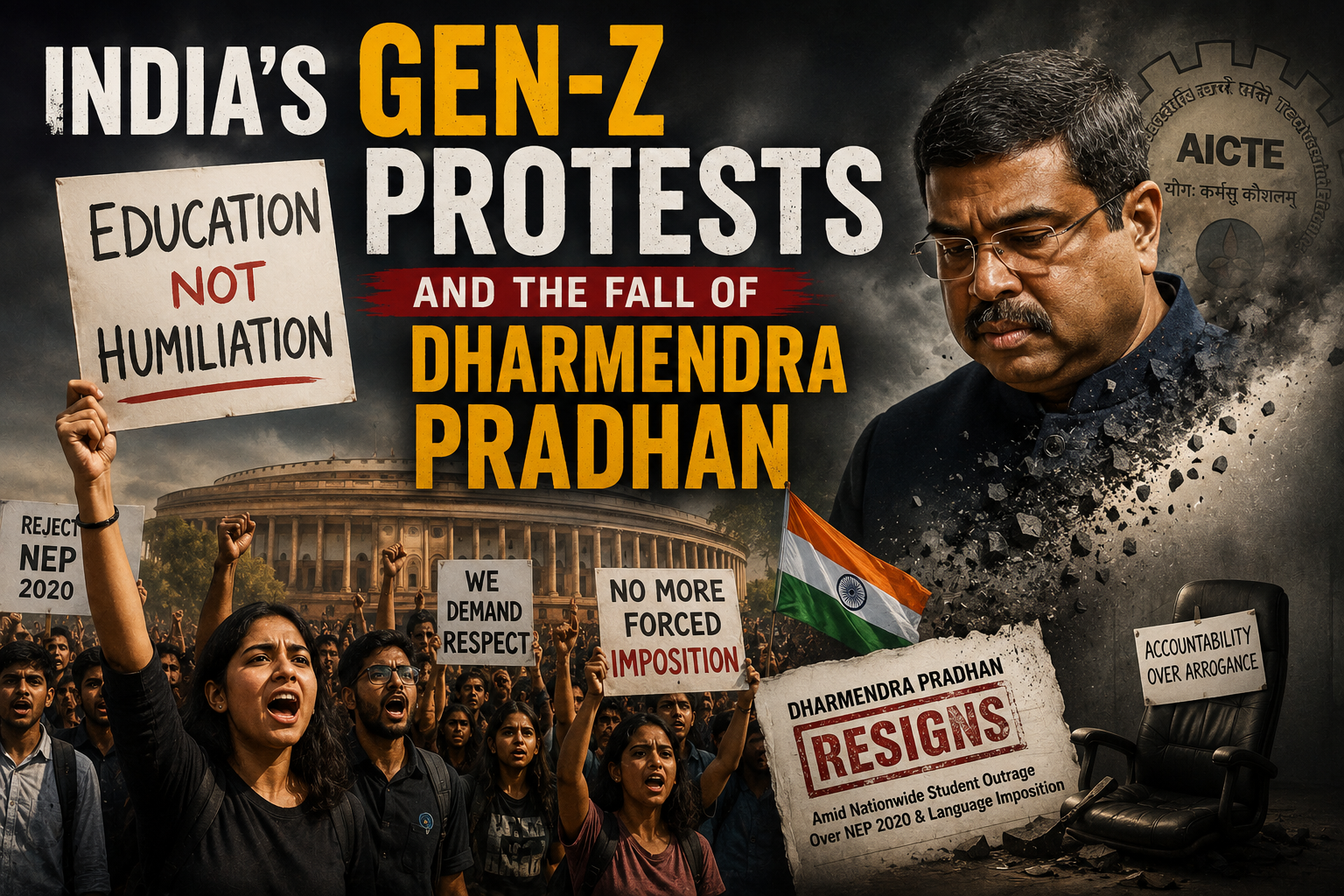
What began as quiet frustration over broken promises has erupted into a full-scale movement that delivered a direct political setback to the ruling government. At the center of this storm are millions of young Indians who feel betrayed by an administration that promised economic prosperity, but instead delivered widespread unemployment, compromised public institutions, and diminishing career prospects for the youth.
The immediate trigger for this widespread anger was a series of leaked examination papers for major national entrance tests, throwing the futures of millions of aspiring students into limbo. For students who had spent years studying under intense pressure, the government’s failure to conduct a secure, fair exam felt like a complete betrayal. Instead of addressing these concerns with empathy, authorities initially dismissed the rising anger. A controversial remark comparing complaining youth to “parasites” and “cockroaches” added fuel to the fire. Rather than being silenced, young protesters embraced the insult, forming the satirical Cockroach Janta Party online and turning a derogatory label into a powerful symbol of democratic resistance.
The movement quickly expanded beyond social media memes into physical demonstrations across major urban centers. Thousands of young people gathered in public squares, while student leaders engaged in hunger strikes to demand accountability. They highlighted the chronic issue of youth unemployment, where over forty percent of educated graduates under twenty-five face joblessness. Beyond economic woes, they raised alarm over systemic corruption in state institutions, frequent question paper leaks, and the continuous suppression of critical free speech across the country.
When traditional tactics of state pressure failed to clear the protest sites, the government faced an unfamiliar dilemma. The sustained momentum ultimately forced the resignation of Union Education Minister Dharmendra Pradhan. For an administration that prides itself on never bowing to public pressure or political opposition, this high-profile departure represented a historic defeat and a clear concession to street power.
Political analysts note that the significance of this retreat extends far beyond a single resignation. For years, the Modi administration relied on an aura of invincibility, using political optics and heavy media management to project total authority. By forcing a top cabinet minister out of office without the backing of established political parties, student organizers demonstrated that organized public pressure can still compel the government to act. This movement fundamentally broke the threshold of fear that had previously kept many citizens from openly protesting state policies.
In the aftermath of the protests, the ruling administration has scrambled to repair its standing among voters under twenty-five, who represent nearly half of the country’s total population. In an attempt to patch up its image, official outreach shifted toward short-form social media videos, while lawmakers attempted to use youth slang during parliamentary speeches. However, critics argue that these public relations efforts miss the mark entirely. Modern social media campaigns and polished PR cannot substitute for actual economic policies, transparent examination systems, and genuine employment opportunities.
The rise of this youth movement demonstrates that media management has its operational limits. When real-world economic conditions deteriorate and institutional trust breaks down, superficial slogans lose their effectiveness. While the ruling party continues its efforts to regain control of the political narrative, the core lesson of these protests remains clear: when young citizens organize around concrete grievances, even the most entrenched political figures are eventually forced to listen.
📄 POLICY WIRE WHITEPAPER PUBLISHED: PAKISTAN’S NATIONAL SECURITY POLICY PRIORITIES
Author