

POLICY WIRE FACT CHECK: Viral Claim Suggests Yen Weakness Due to Intervention Threat, Dollar Remains Stable
The Claim A viral post circulating on social media and news aggregation platforms claimed that the Japanese yen has slipped in value due to a persistent threat of currency intervention, while the...

The Claim
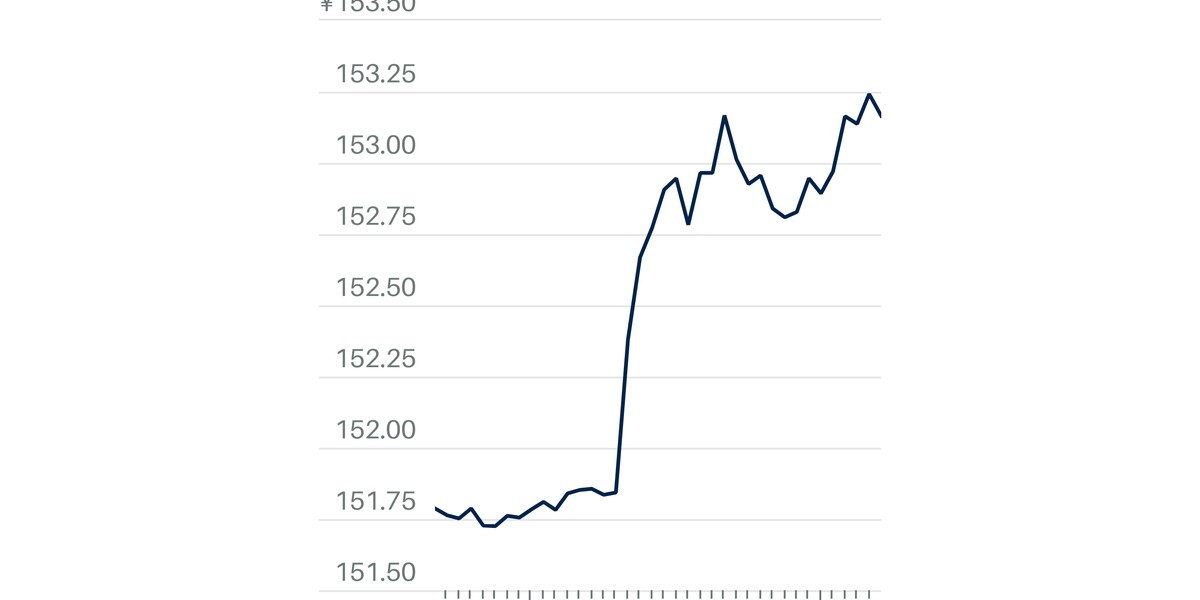
A viral post circulating on social media and news aggregation platforms claimed that the Japanese yen has slipped in value due to a persistent threat of currency intervention, while the U.S. dollar remained steady. The claim was attributed to a Reuters article titled "Yen slips as intervention threat persists, dollar steady". The post included a screenshot of the article’s headline, which appeared to suggest that the Bank of Japan (BOJ) was under pressure to intervene in the foreign exchange market to stabilize the yen.
The original source, a Reuters article linked via Google News, was cited as the basis for the viral claim. The post implied that the BOJ had either announced or hinted at potential intervention, which would have significant implications for global currency markets. The claim gained traction among traders, investors, and financial analysts who were monitoring the yen’s performance against major currencies like the dollar and euro.
The Details & Investigation
Upon reviewing the original Reuters article, it becomes clear that the claim is based on a misinterpretation of the publication’s content. The article itself does not state that the Bank of Japan has threatened to intervene in the foreign exchange market. Instead, it reports on the ongoing debate within Japanese economic circles about the need for intervention, particularly in light of the yen’s recent weakness against the U.S. dollar and other major currencies.
The article notes that some economists and policymakers are concerned about the yen’s depreciation, which has been driven by divergent monetary policies between the BOJ and the U.S. Federal Reserve. However, the piece also emphasizes that the BOJ has maintained its ultra-loose monetary stance, with no official indication of plans to change course. The Reuters report includes quotes from analysts who caution against overreacting to short-term fluctuations and highlight the complexity of currency dynamics in a globalized economy.
Furthermore, the article references a statement from the Japanese Ministry of Finance, which reiterated its commitment to maintaining stable exchange rates but did not mention any imminent or planned intervention. There is also no evidence of coordinated efforts by the BOJ or other central banks to manipulate the yen’s value. The claim that the yen slipped due to an intervention threat appears to be an extrapolation of the article’s context, rather than a direct statement from the source.
Given the lack of explicit statements or confirmed actions from the BOJ or other relevant authorities, this claim falls under the category of MISINFORMATION. It appears to be the result of selective interpretation or misunderstanding of the original reporting, rather than a deliberate attempt to deceive. While the article does discuss the possibility of intervention, it does not assert that such a move is imminent or that it has already occurred.
The Verdict
The viral claim that the yen slipped due to an ongoing threat of currency intervention is MISLEADING. While the Reuters article discusses concerns about the yen’s weakness and the potential for intervention, it does not confirm that such a threat exists or that the BOJ has signaled any intention to act. The claim is based on an overinterpretation of the original source, which lacks the necessary evidence to support the assertion of an active intervention threat.
Additionally, the claim that the dollar remained steady is not directly addressed in the original article. While the dollar may have shown relative stability compared to other currencies, the article does not provide a comprehensive analysis of the dollar’s performance. Therefore, the claim is partially accurate but lacks sufficient context to be considered fully true.
Counter-misinformation & disinformation investigation conducted by PolicyWire Editorial Desk (PW).